Mother and Child Health Research Department, Qualitative Health Research Unit, Institute for Clinical Effectiveness and Health Policy - IECS, Buenos Aires, Argentina.
Instituto de Enfermedades Infecciosas y Parasitología Antonio Vidal, Unidad de Investigación Científica, Facultad de Ciencias Médicas UNAH, Tegucigalpa, Honduras.
BMC Womens Health. 2020 Sep 12;20(1):199. doi: 10.1186/s12905-020-01066-7.
Zika virus (ZIKV) infection during pregnancy has severe consequences on the new-born. The World Health Organization declared the Zika outbreak to be a Public Health Emergency of International Concern (PHEIC) in 2016. Health facilities in the regions most affected by Zika lacked the capacity to respond to the increased demand for contraception. The objectives were to explore healthcare users' perceptions regarding contraception, Zika prevention during pregnancy and post-abortion care (PAC) services in the context of a Zika outbreak in Tegucigalpa, Honduras, and to follow these services over time.
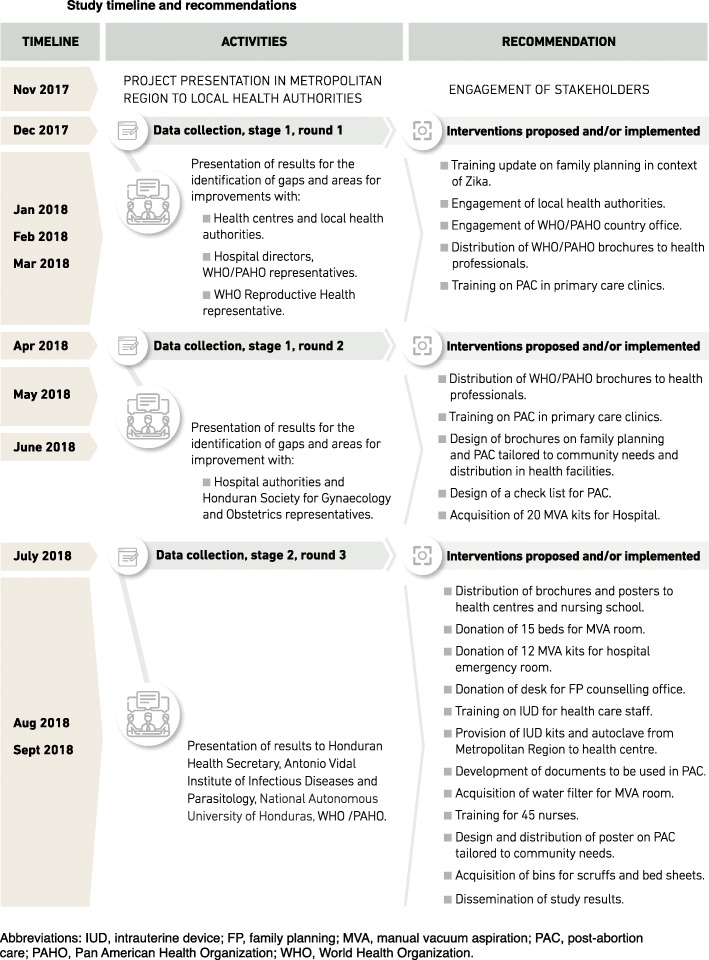
This study was part of a broader implementation research study. We used qualitative research consistent with grounded theory approach. Semi-structured interviews and focus groups were performed with women and their partners who used contraceptive services or received PAC services. Data were collected in two stages from December 2017 to July 2018. Themes explored included contraception, Zika and PAC services.
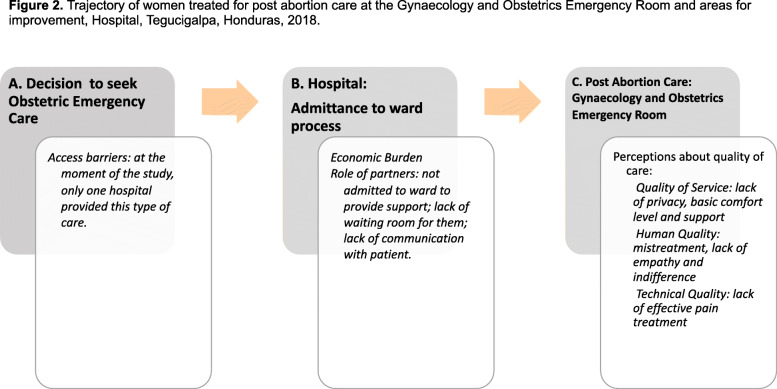
Participants had positive attitude towards the use of contraceptive methods and demanded more information on safety, efficacy and on side effects. Health care services were inconsistent in the provision of information on Zika and contraception services. ZIKV vector transmission was known but fewer participants were aware of risk of sexual transmission of Zika. Barriers to access healthcare services included contraceptive and PAC services included distance to healthcare facilities, disorganized admission process, long waiting times and out-of-pocket expenditure to purchase medicines. Furthermore, poor quality, mistreatment and abuse of women seeking PAC was prevalent. Some positive changes were noted over time, such as improvements in infrastructure including improved privacy and cleanliness, removal of fees, requisite to bring clean water to hospital.
Our results highlight the challenges and areas for improvement in policy and practice related to contraceptive services and PAC in the context of ZIKV infection. Public policies to prevent epidemics should focus more on providing proper sanitation; removing barriers to access and use of effective contraception as human rights priority. Zika epidemic has highlighted weaknesses in health systems that obstruct access to and use of sexual and reproductive health services. The study results call for increased efforts to improve access, especially for women of low socio-economic status and intervene at different levels to eradicate discrimination and improve equity in the provision of health care. Qualitative methods can capture the community perspectives and can provide useful information to develop interventions to improve services.
寨卡病毒(ZIKV)感染孕妇会对新生儿造成严重后果。世界卫生组织于 2016 年宣布寨卡疫情为国际关注的突发公共卫生事件(PHEIC)。受寨卡影响最严重的地区的卫生机构缺乏应对避孕需求增加的能力。目的是探讨在洪都拉斯特古西加尔巴寨卡疫情背景下,医疗保健使用者对避孕、孕期预防寨卡和流产后护理(PAC)服务的看法,并随着时间的推移跟踪这些服务。
本研究是更广泛的实施研究的一部分。我们使用与扎根理论方法一致的定性研究。对使用避孕服务或接受 PAC 服务的妇女及其伴侣进行了半结构式访谈和焦点小组。数据于 2017 年 12 月至 2018 年 7 月分两个阶段收集。探讨的主题包括避孕、寨卡和 PAC 服务。
参与者对使用避孕方法持积极态度,并要求提供更多关于安全性、有效性和副作用的信息。卫生保健服务在提供寨卡和避孕服务信息方面不一致。ZIKV 媒介传播是已知的,但较少的参与者意识到寨卡性传播的风险。获得医疗保健服务的障碍包括避孕和 PAC 服务,包括医疗设施的距离、混乱的入院程序、长时间的等待时间和购买药品的自付费用。此外,寻求 PAC 的妇女普遍存在医疗质量差、虐待和滥用的情况。随着时间的推移,注意到一些积极的变化,例如基础设施的改善,包括改善隐私和清洁度、取消费用、需要向医院提供清洁水。
我们的研究结果强调了与寨卡病毒感染背景下的避孕服务和 PAC 相关的政策和实践中的挑战和改进领域。预防流行病的公共政策应更加注重提供适当的卫生设施;消除获得和使用有效避孕措施的障碍,将其作为人权的优先事项。寨卡疫情凸显了卫生系统在获得和使用性健康和生殖健康服务方面的弱点。研究结果呼吁加大努力改善获得服务的机会,特别是对社会经济地位较低的妇女,并在不同层面进行干预,以消除歧视,改善提供保健服务的公平性。定性方法可以捕捉社区的观点,并为改善服务提供有用的信息。