Department of Respiratory and Critical Care Medicine, NHC Key Laboratory of Pulmonary Diseases, Union Hospital, Tongji Medical College, Huazhong University of Science and Technology, Wuhan 430022, China.
Department of Respiratory and Critical Care Medicine, NHC Key Laboratory of Pulmonary Diseases, Union Hospital, Tongji Medical College, Huazhong University of Science and Technology, Wuhan 430022, China.
Bioorg Chem. 2020 Nov;104:104257. doi: 10.1016/j.bioorg.2020.104257. Epub 2020 Sep 2.
Oseltamivir is a first-line antiviral drug, especially in primary hospitals. During the ongoing outbreak of coronavirus disease 2019 (COVID-19), most patients with COVID-19 who are symptomatic have used oseltamivir. Considering its popular and important role as an antiviral drug, it is necessary to evaluate oseltamivir in the treatment of COVID-19.
To evaluate the effect of oseltamivir against COVID-19.
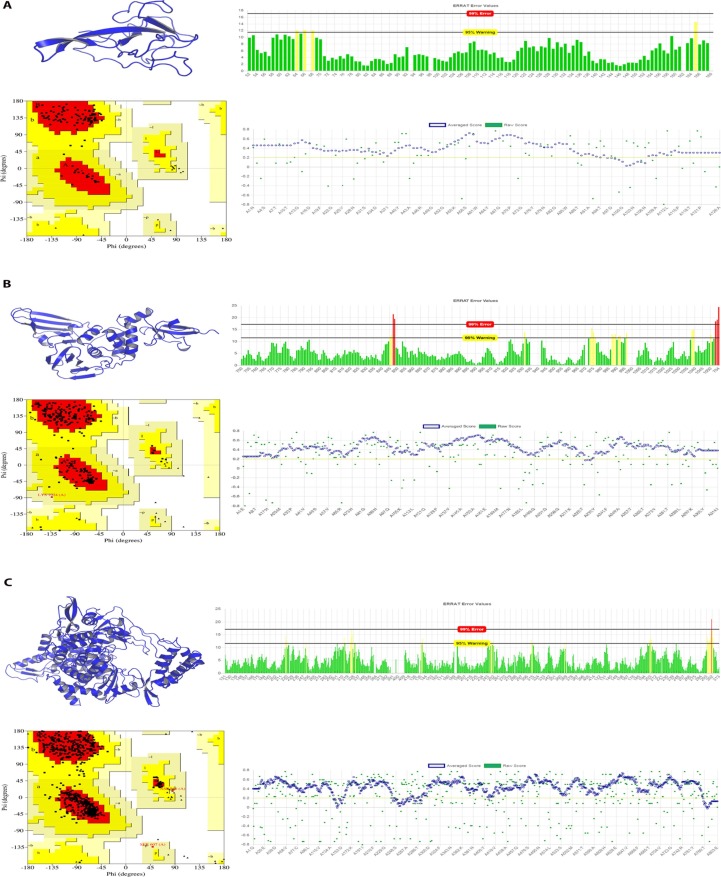
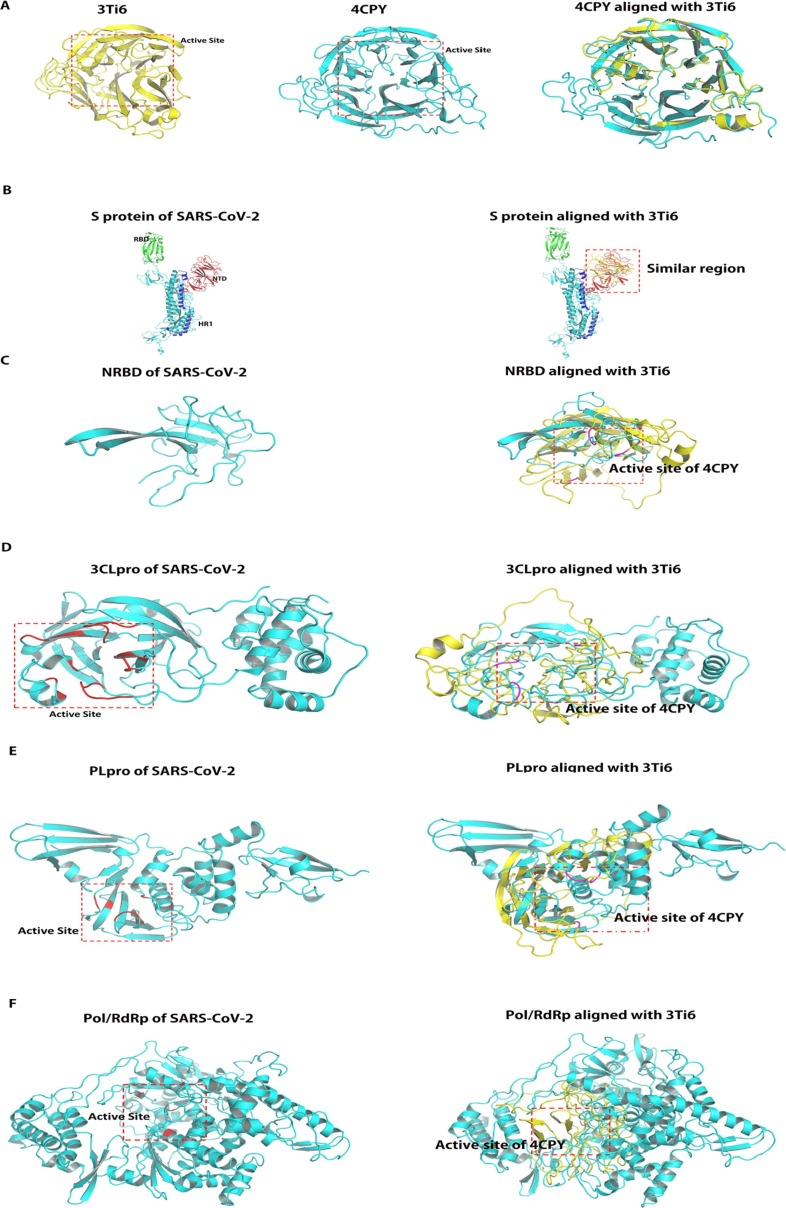
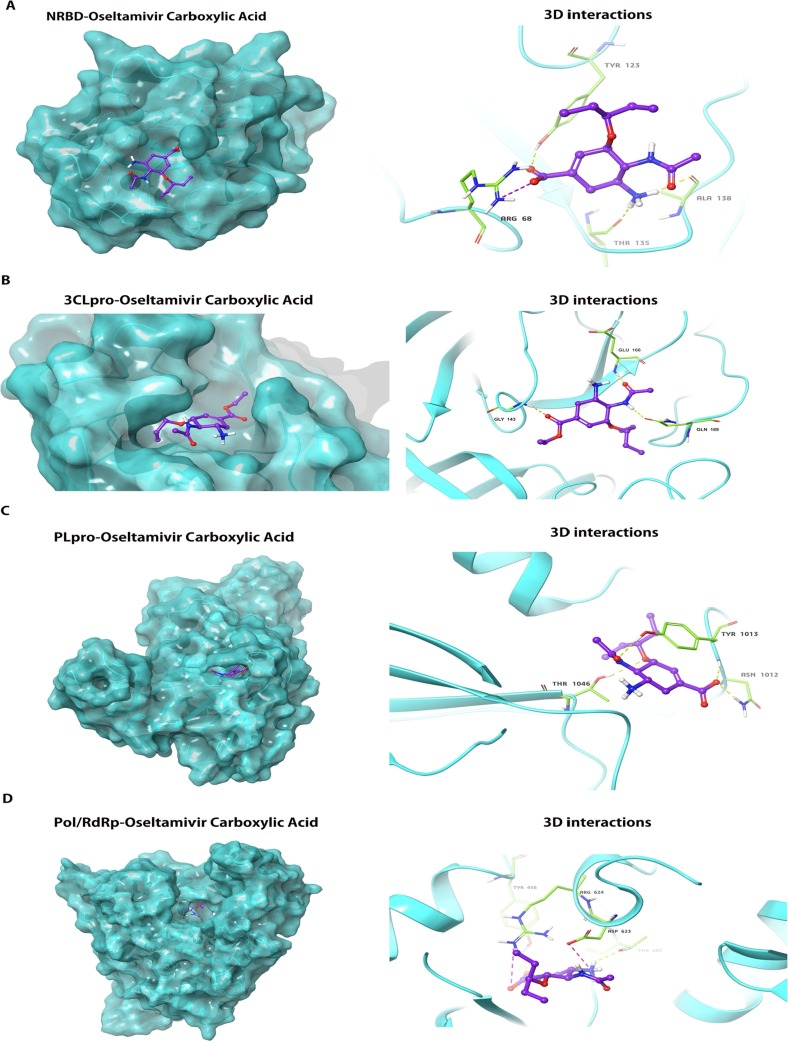
Swiss-model was used to construct the structure of the N-terminal RNA-binding domain (NRBD) of the nucleoprotein (NC), papain-like protease (PLpro), and RNA-directed RNA polymerase (RdRp) of severe acute respiratory syndrome coronavirus 2 (SARS-CoV-2). TM-align program was performed to compare the structure of the viral proteins with the structure of the neuraminidase of influenza A. Molecular docking was used to analyze the theoretical possibility of effective binding of oseltamivir with the active centers of the viral proteins. In vitro study was used to evaluate the antiviral efficiency of oseltamivir against SARS-CoV-2. By clinical case analysis, we statistically evaluated whether the history of oseltamivir use influenced the progression of the disease.
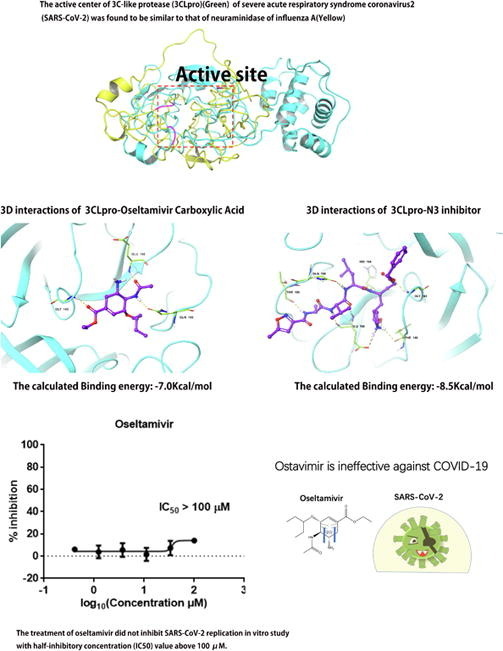
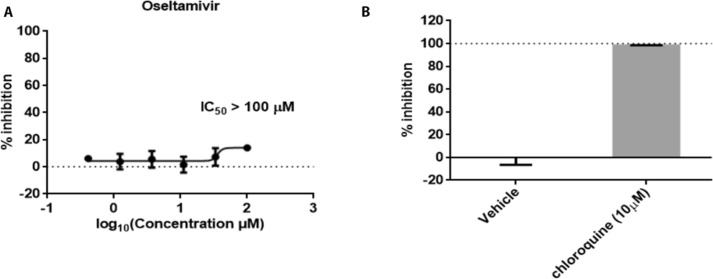
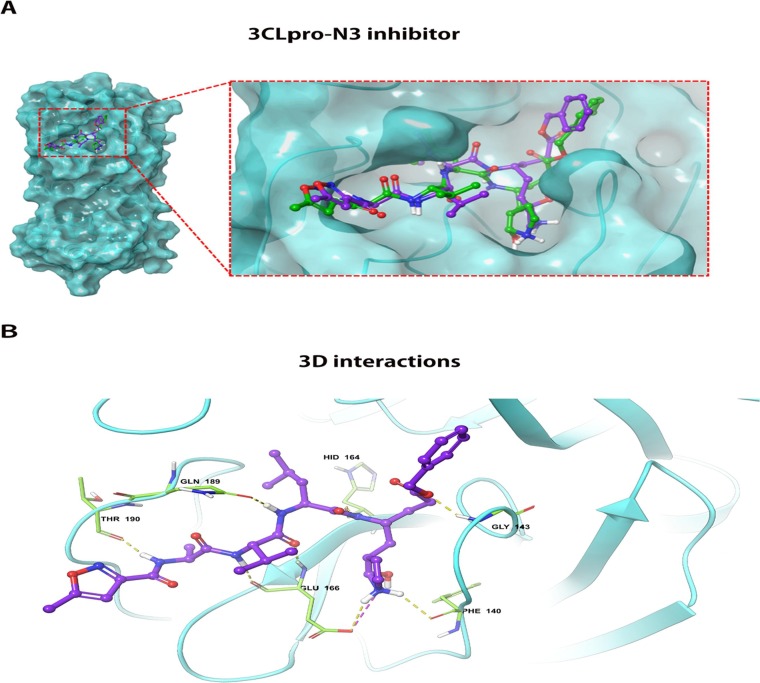
The structures of NRBD, PLpro, and RdRp were built successfully. The results from TM-align suggested that the S protein, NRBD, 3C-like protease (3CLpro), PLPrO, and RdRp were structurally similar to the influenza A neuraminidase, with TM-scores of 0.30077, 0.19254, 0.28766, 0.30666, and 0.34047, respectively. Interestingly, the active center of 3CL pro was found to be similar to the active center from the neuraminidase of influenza A. Through an analysis of molecular docking, we discovered that oseltamivir carboxylic acid was more favorable to bind to the active site of 3CLpro effectively, but its inhibitory effect was not strong compared with the positive group. Finally, we used in vitro study and retrospective case analysis to verify our speculations. We found that oseltamivir is ineffective against SARS-CoV-2 in vitro study and the clinical use of oseltamivir did not improve the patients' symptoms and signs and did not slow the disease progression.
We consider that oseltamivir isn't suitable for the treatment of COVID-19. During the outbreak of novel coronavirus, when oseltamivir is not effective for the patients after they take it, health workers should be highly vigilant about the possibility of COVID-19.
奥司他韦是一种一线抗病毒药物,特别是在基层医院。在 2019 年冠状病毒病(COVID-19)持续爆发期间,大多数有症状的 COVID-19 患者都使用了奥司他韦。考虑到它作为抗病毒药物的广泛和重要作用,有必要评估奥司他韦在 COVID-19 治疗中的作用。
评估奥司他韦对 COVID-19 的疗效。
使用 Swiss-model 构建严重急性呼吸综合征冠状病毒 2(SARS-CoV-2)的核衣壳蛋白(NC)、木瓜蛋白酶样蛋白酶(PLpro)和 RNA 依赖性 RNA 聚合酶(RdRp)的 N 端 RNA 结合域(NRBD)结构。使用 TM-align 程序比较病毒蛋白的结构与流感 A 神经氨酸酶的结构。分子对接用于分析奥司他韦与病毒蛋白的活性中心有效结合的理论可能性。通过体外研究评估奥司他韦对 SARS-CoV-2 的抗病毒效率。通过临床病例分析,我们统计评估了使用奥司他韦是否会影响疾病的进展。
成功构建了 NRBD、PLpro 和 RdRp 的结构。TM-align 的结果表明,S 蛋白、NRBD、3C 样蛋白酶(3CLpro)、PLPrO 和 RdRp 的结构与流感 A 神经氨酸酶相似,TM-scores 分别为 0.30077、0.19254、0.28766、0.30666 和 0.34047。有趣的是,3CL pro 的活性中心被发现与流感 A 神经氨酸酶的活性中心相似。通过分子对接分析,我们发现奥司他韦羧酸更有利于有效地结合 3CLpro 的活性位点,但与阳性组相比,其抑制作用不强。最后,我们通过体外研究和回顾性病例分析来验证我们的推测。我们发现奥司他韦在体外研究中对 SARS-CoV-2 无效,并且奥司他韦的临床使用并没有改善患者的症状和体征,也没有减缓疾病的进展。
我们认为奥司他韦不适合治疗 COVID-19。在新型冠状病毒爆发期间,当患者服用奥司他韦后没有效果时,医务人员应该高度警惕 COVID-19 的可能性。