Department of Geriatric Psychiatry, Shanghai Mental Health Center, Shanghai Jiaotong University School of Medicine, Shanghai, China.
Alzheimer's Disease and Related Disorders Center of Shanghai Jiaotong University, 600 South Wan Ping Road, Shanghai, 200030, China.
Alzheimers Res Ther. 2020 Sep 14;12(1):110. doi: 10.1186/s13195-020-00678-3.
Sodium oligomannate (GV-971), a marine-derived oligosaccharide, is a novel agent that may improve cognition in AD patients.
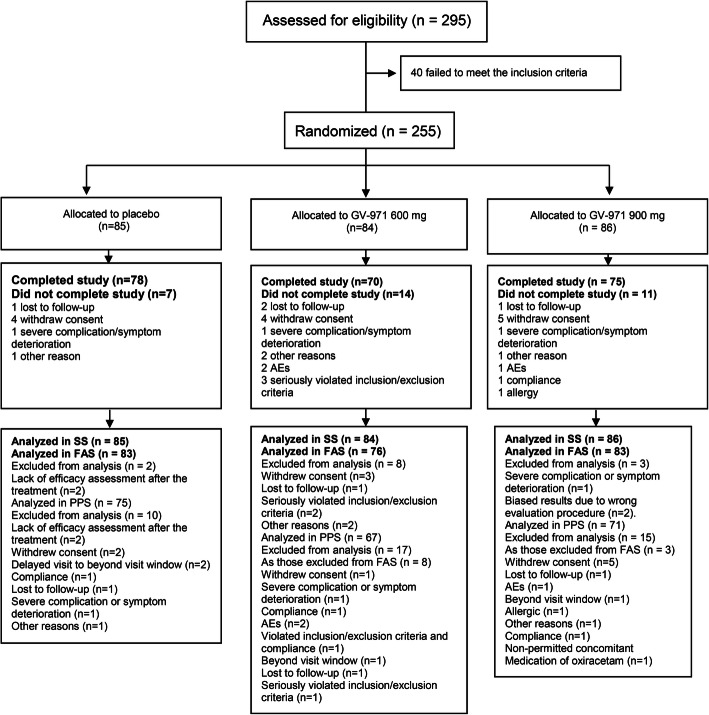
The 24-week multicenter, randomized, double-blind, placebo parallel controlled clinical trial was conducted in AD in China between 24 October 2011 and 10 July 2013. The study included a 4-week screening/washout period, followed by a 24-week treatment period. Patients were randomized in a 1:1:1 ratio to receive GV-971 900 mg, 600 mg, or placebo capsule in treatment period, respectively. The primary outcome was cognitive improvement as assessed by changes in Alzheimer's Disease Assessment Scale-cognitive subscale 12-item (ADAS-cog12) scores from baseline to week 24. The secondary efficacy outcomes included CIBIC-Plus, ADCS-ADL, and NPI at 24 weeks after treatment compared with baseline. A subgroup study was assessment of the change in cerebral glucose metabolism by fluorodeoxyglucose positron emission tomography measurements.
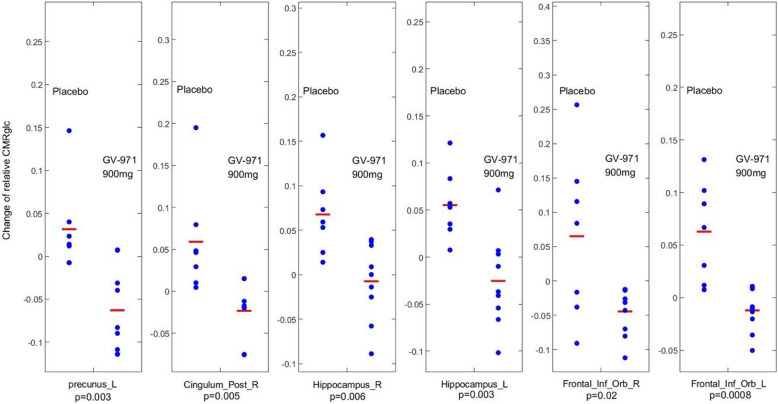
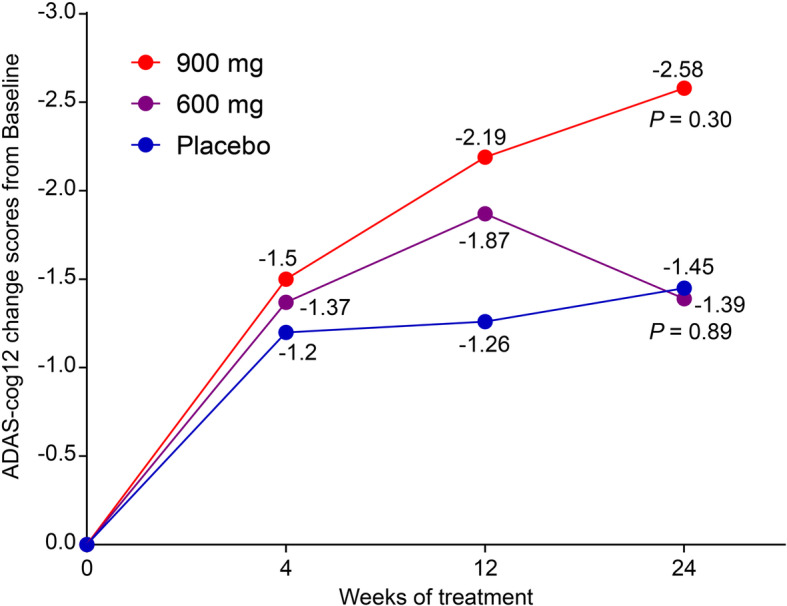
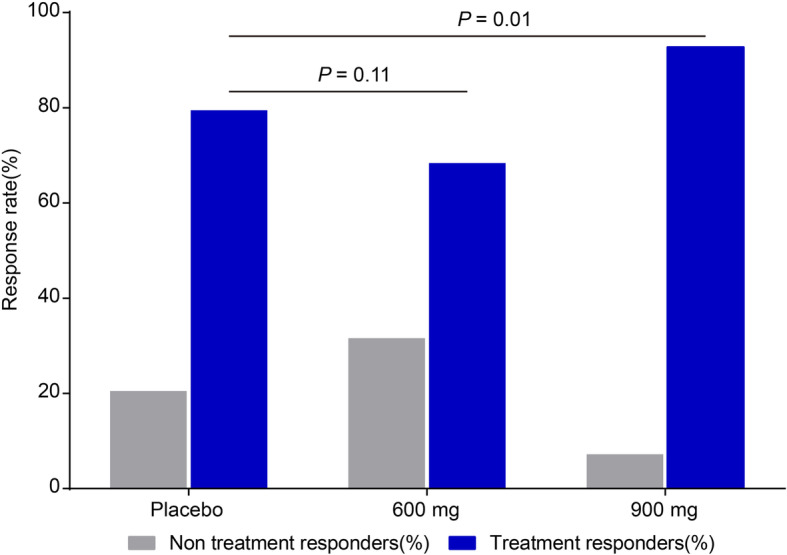
Comparing with the placebo group (n = 83, change - 1.45), the ADAS-cog12 score change in the GV-971 600-mg group (n = 76) was - 1.39 (p = 0.89) and the GV-971 900-mg group (n = 83) was - 2.58 (p = 0.30). The treatment responders according to CIBIC-Plus assessment were significantly higher in the GV-971 900-mg group than the placebo group (92.77% vs. 79.52%, p < 0.05). The GV-971 900-mg subgroup showed a lower decline of cerebral metabolic rate for glucose than the placebo subgroup at the left precuneus, right posterior cingulate, bilateral hippocampus, and bilateral inferior orbital frontal at uncorrected p = 0.05. The respective rates of treatment-related AEs were 5.9%, 14.3%, and 3.5%.
GV-971 was safe and well tolerated. GV-971 900 mg was chosen for phase III clinical study.
ClinicalTrials.gov, NCT01453569 . Registered on October 18, 2011.
钠寡糖(GV-971)是一种新型海洋衍生寡糖,可能改善 AD 患者的认知功能。
本 24 周、多中心、随机、双盲、安慰剂平行对照临床试验于 2011 年 10 月 24 日至 2013 年 7 月 10 日在中国进行,纳入 AD 患者。研究包括 4 周的筛选/洗脱期和 24 周的治疗期。患者按 1:1:1 的比例随机接受 GV-971 900mg、600mg 或安慰剂胶囊治疗。主要疗效终点为阿尔茨海默病评定量表认知分量表 12 项(ADAS-cog12)评分从基线到 24 周的变化。次要疗效终点包括治疗 24 周后与基线相比的 CIBIC-Plus、ADCS-ADL 和 NPI。亚组研究评估了氟代脱氧葡萄糖正电子发射断层扫描测量的脑葡萄糖代谢变化。
与安慰剂组(n=83,变化-1.45)相比,GV-971 600mg 组(n=76)的 ADAS-cog12 评分变化为-1.39(p=0.89),GV-971 900mg 组(n=83)为-2.58(p=0.30)。根据 CIBIC-Plus 评估,GV-971 900mg 组的治疗应答者明显高于安慰剂组(92.77%比 79.52%,p<0.05)。GV-971 900mg 亚组在左侧楔前叶、右侧后扣带回、双侧海马和双侧下眶额皮质的脑葡萄糖代谢率下降低于安慰剂亚组,未校正 p 值均为 0.05。相应的治疗相关不良事件发生率分别为 5.9%、14.3%和 3.5%。
GV-971 安全且耐受良好。选择 GV-971 900mg 进行 III 期临床试验。
ClinicalTrials.gov,NCT01453569。于 2011 年 10 月 18 日注册。