Jia Le, Pang Minghui, Fan Man, Tan Xuan, Wang Yiqian, Huang Menglin, Liu Yijing, Wang Qin, Zhu Yanhong, Yang Xiangliang
National Engineering Research Center for Nanomedicine, College of Life Science and Technology, Huazhong University of Science and Technology, Wuhan 430074, China.
Hubei Key Laboratory of Bioinorganic Chemistry and Materia Medica, School of Chemistry and Chemical Engineering, Huazhong University of Science and Technology, Wuhan 430074, China.
Theranostics. 2020 Aug 7;10(22):9956-9969. doi: 10.7150/thno.46089. eCollection 2020.
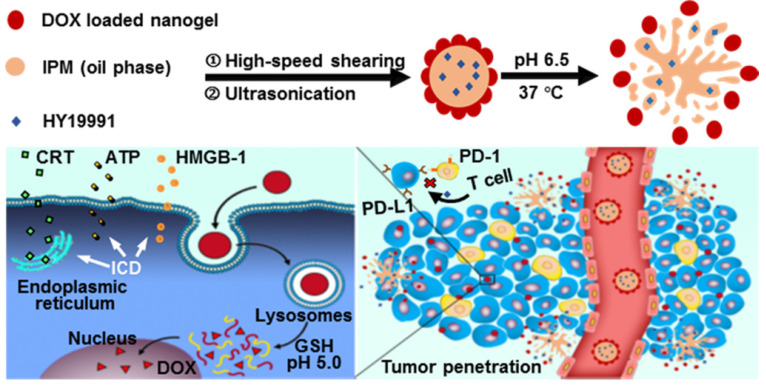
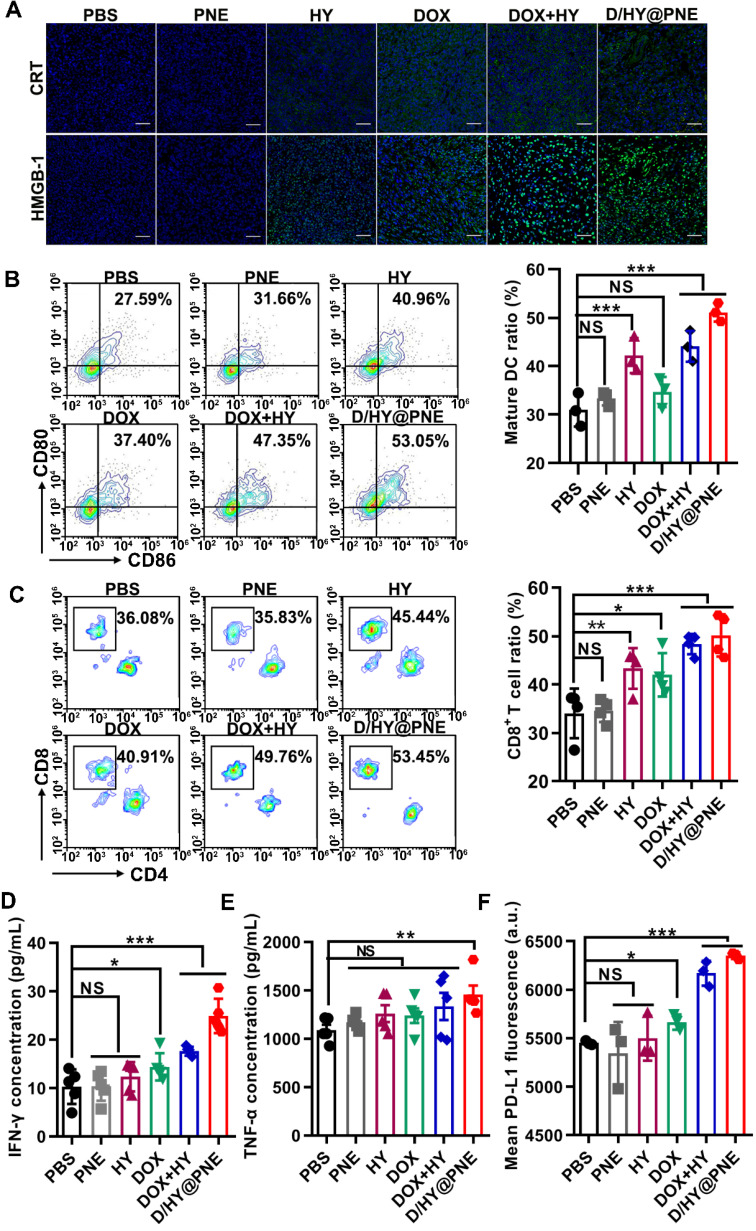
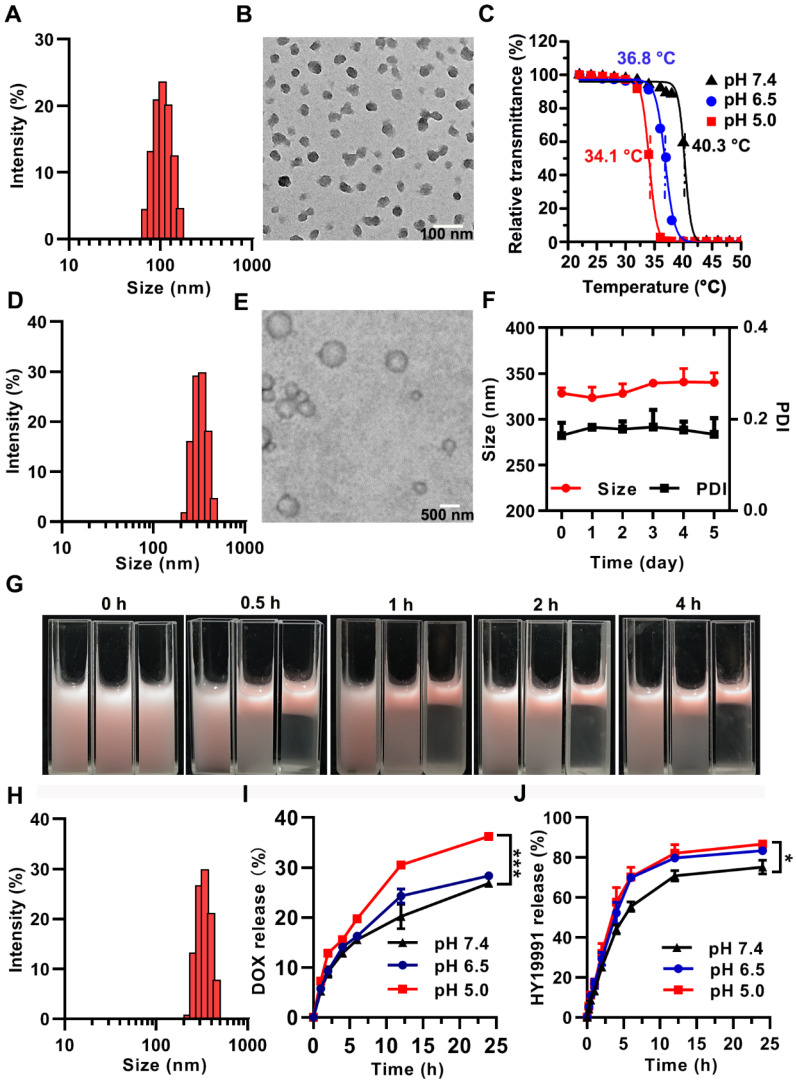
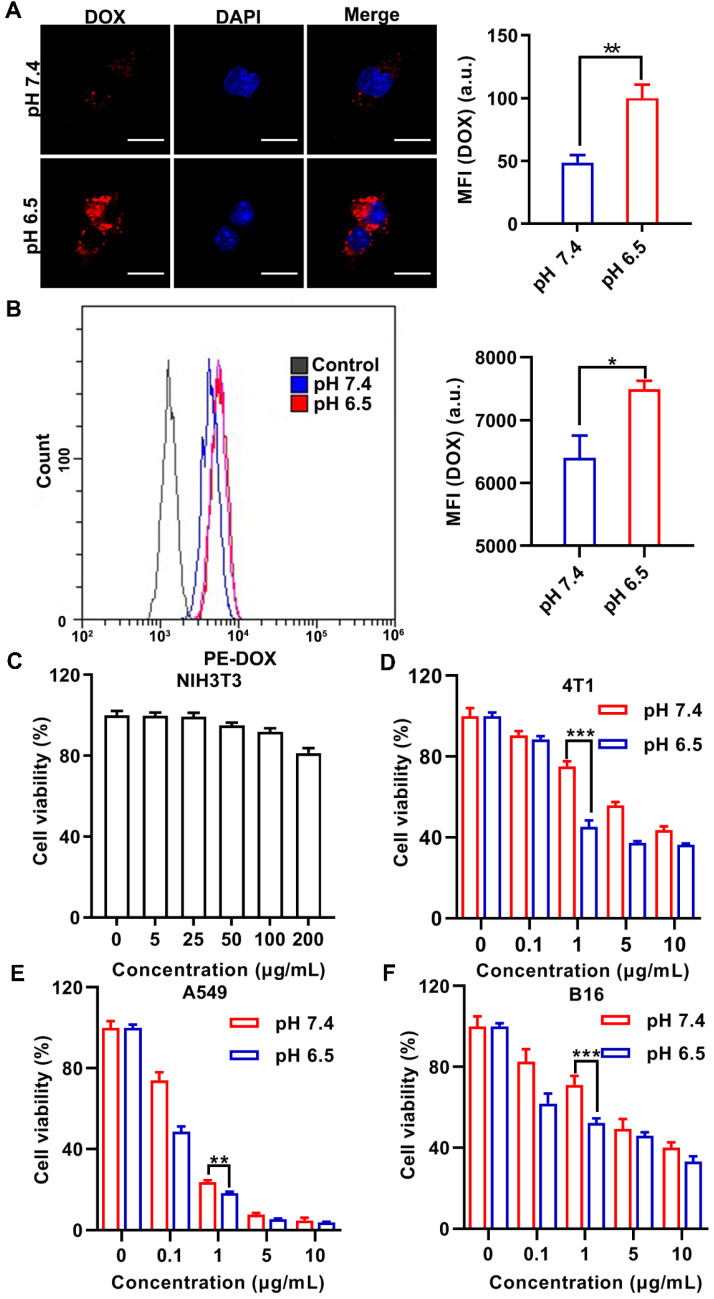
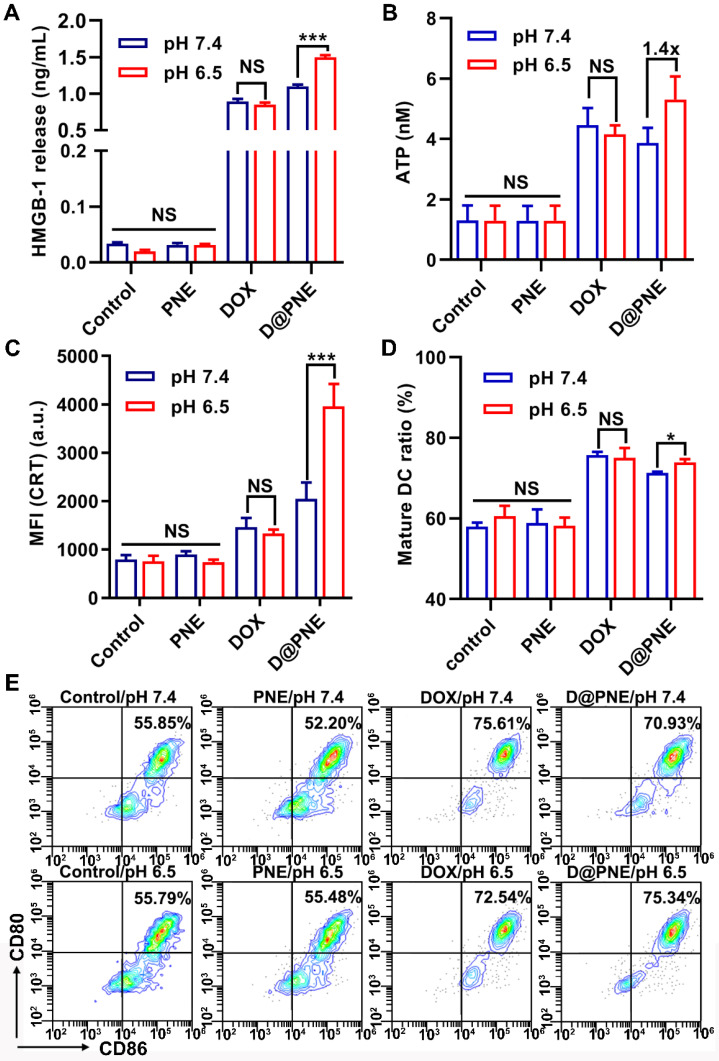
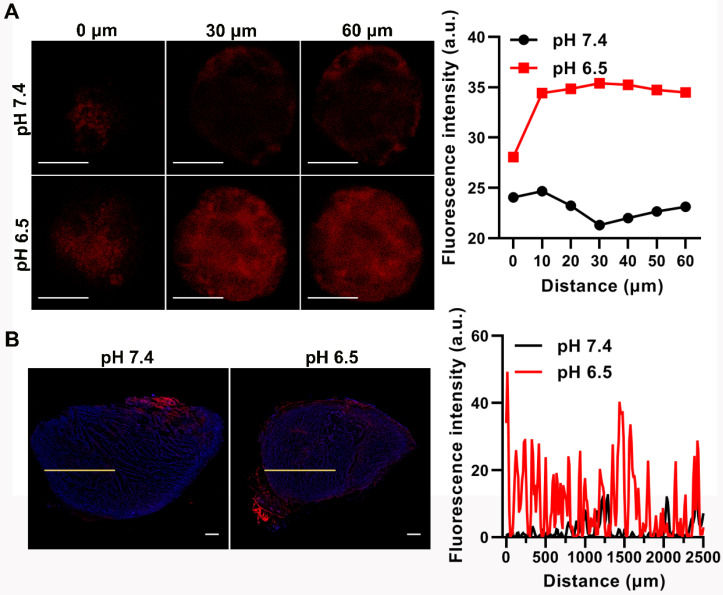
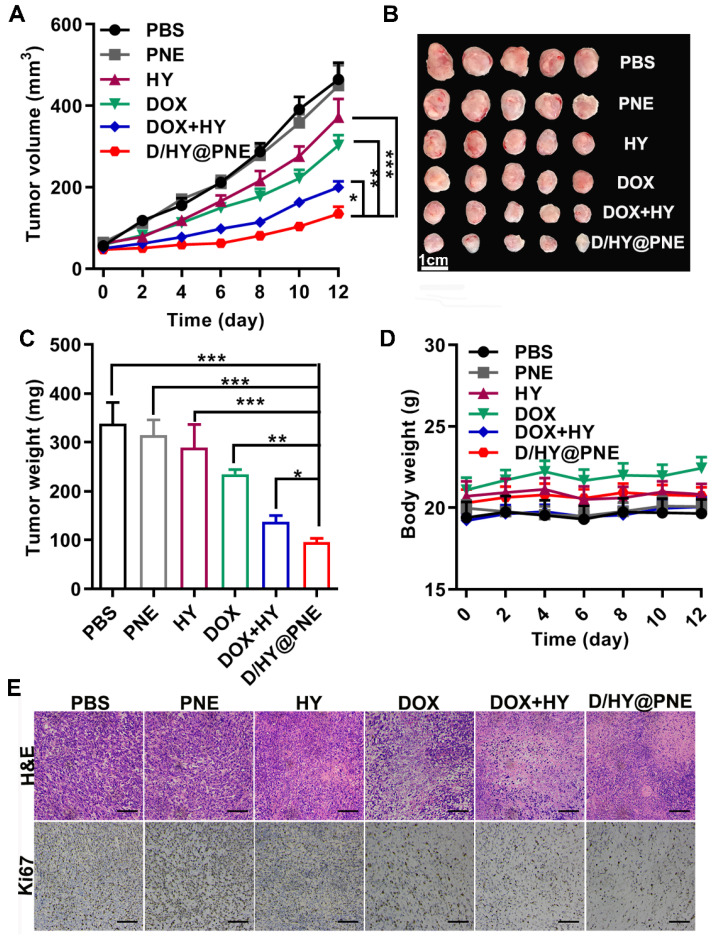
Immune checkpoint (ICP) blockade therapy combined with chemotherapy is a promising treatment strategy for tumors. Chemotherapeutic agents usually function inside the tumor cells, while ICP inhibitors are efficacious out of the tumor cells. It is desirable to effectively co-deliver an ICP inhibitor and a chemotherapy agent to different sites of a tumor. We have designed an effective drug delivery system to accomplish both objectives. We designed a Pickering nanoemulsion (PNE) using multi-sensitive nanogels with pH-responsive, hydrophilicity-hydrophobicity switch, and redox-responding properties as an oil/water interfacial stabilizer. The D/HY@PNE was employed for specified spatial delivery of the chemotherapy agent doxorubicin (DOX) and ICP inhibitor HY19991 (HY). We systematically investigated the pH-responsive disassembly of PNE, the release of DOX and HY from D/HY@PNE in the tumor microenvironment, enhanced tumor penetration of DOX, immunogenic cell death (ICD), antitumor efficacy, and the immune response induced by D/HY@PNE and . D/HY@PNE disassembled to release the ICP inhibitor HY and DOX-loaded nanogels due to the hydrophilicity-hydrophobicity reversal of nanogels in the acidic tumor microenvironment. Quantitative analysis indicates that D/HY@PNE presents enhanced tumor penetration behavior and effectively induces ICD. The strong immune response induced by D/HY@PNE was due to the efficient synergetic combination of chemotherapy and immunotherapy and resulted in enhanced antitumor efficacy in 4T1 tumor-bearing mice. This novel strategy highlights the promising potential of a universal platform to co-deliver different therapeutic or diagnostic reagents with spatial regulation to improve the anti-tumor effect.
免疫检查点(ICP)阻断疗法联合化疗是一种很有前景的肿瘤治疗策略。化疗药物通常在肿瘤细胞内发挥作用,而ICP抑制剂在肿瘤细胞外有效。理想的情况是将ICP抑制剂和化疗药物有效地共同递送至肿瘤的不同部位。我们设计了一种有效的药物递送系统来实现这两个目标。我们使用具有pH响应、亲水性-疏水性切换和氧化还原响应特性的多敏感纳米凝胶作为油/水界面稳定剂,设计了一种皮克林纳米乳液(PNE)。D/HY@PNE用于化疗药物阿霉素(DOX)和ICP抑制剂HY19991(HY)的特定空间递送。我们系统地研究了PNE的pH响应性分解、DOX和HY从D/HY@PNE在肿瘤微环境中的释放、DOX增强的肿瘤穿透性、免疫原性细胞死亡(ICD)、抗肿瘤疗效以及D/HY@PNE诱导的免疫反应。由于纳米凝胶在酸性肿瘤微环境中的亲水性-疏水性逆转,D/HY@PNE分解以释放ICP抑制剂HY和负载DOX的纳米凝胶。定量分析表明,D/HY@PNE呈现出增强的肿瘤穿透行为并有效地诱导ICD。D/HY@PNE诱导的强烈免疫反应是由于化疗和免疫疗法的有效协同组合,并导致4T1荷瘤小鼠的抗肿瘤疗效增强。这种新策略突出了一个通用平台在空间调控下共同递送不同治疗或诊断试剂以提高抗肿瘤效果方面的潜在前景。