Department of Chemical and Biomolecular Engineering, The Institute for NanoBioTechnology, Physical Sciences-Oncology Center, Johns Hopkins University, Baltimore, MD 21218, USA.
Department of Chemical and Biomolecular Engineering, The Institute for NanoBioTechnology, Physical Sciences-Oncology Center, Johns Hopkins University, Baltimore, MD 21218, USA; Department of Materials Science and Engineering, Johns Hopkins University, Baltimore, MD 21218, USA; Department of Biomedical Engineering, Johns Hopkins University School of Medicine, Baltimore, MD 21205, USA; Department of Oncology, Johns Hopkins University School of Medicine, Baltimore, MD 21205, USA.
Cell Stem Cell. 2020 Nov 5;27(5):798-812.e6. doi: 10.1016/j.stem.2020.08.005. Epub 2020 Sep 14.
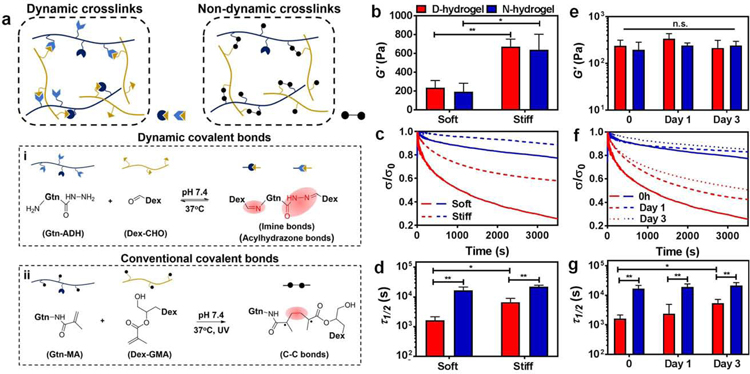
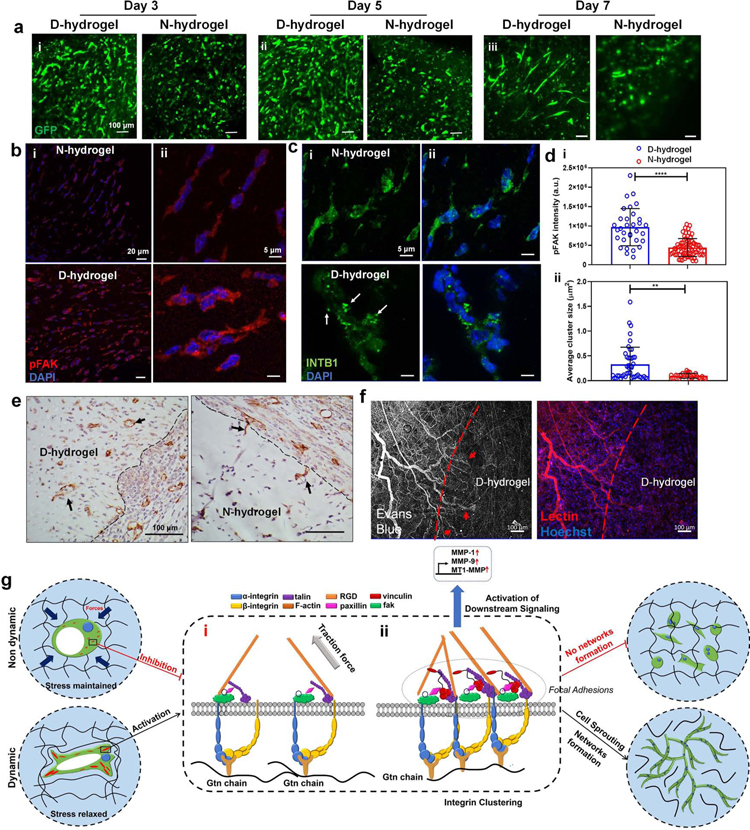
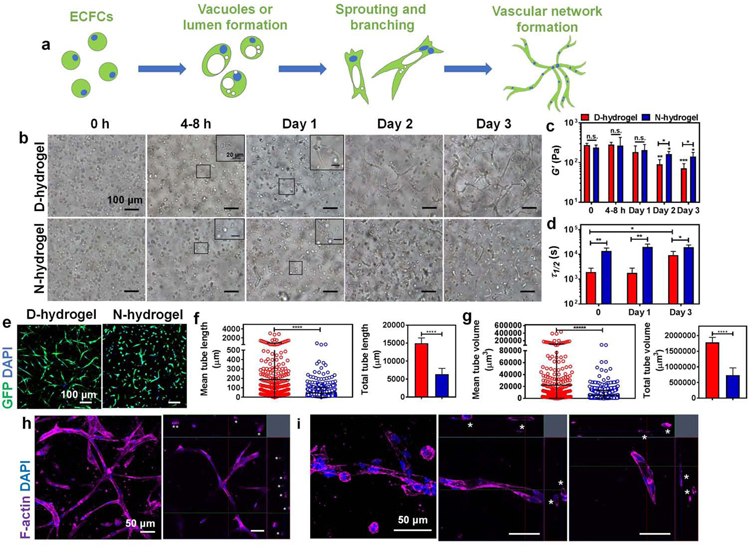
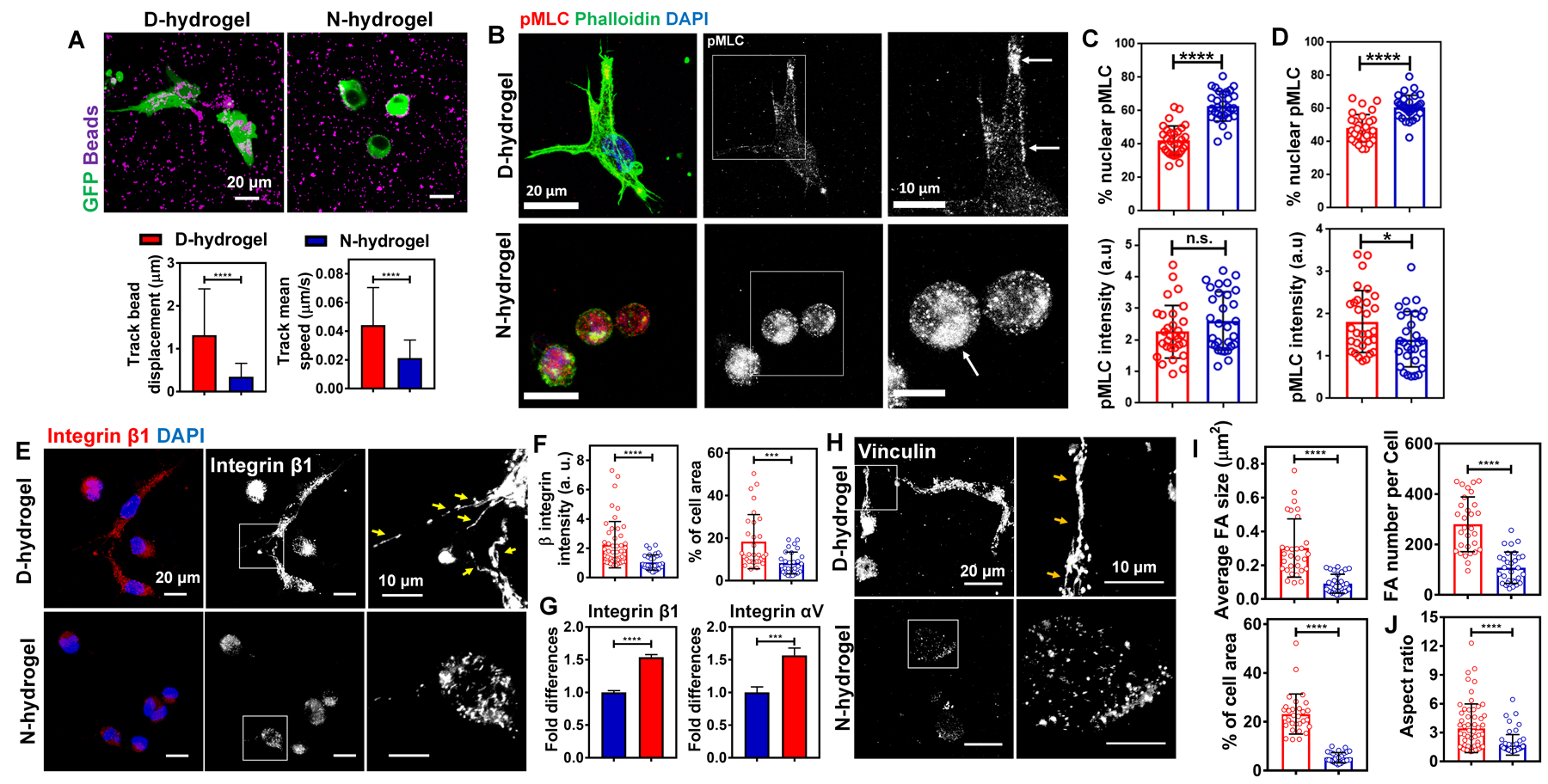
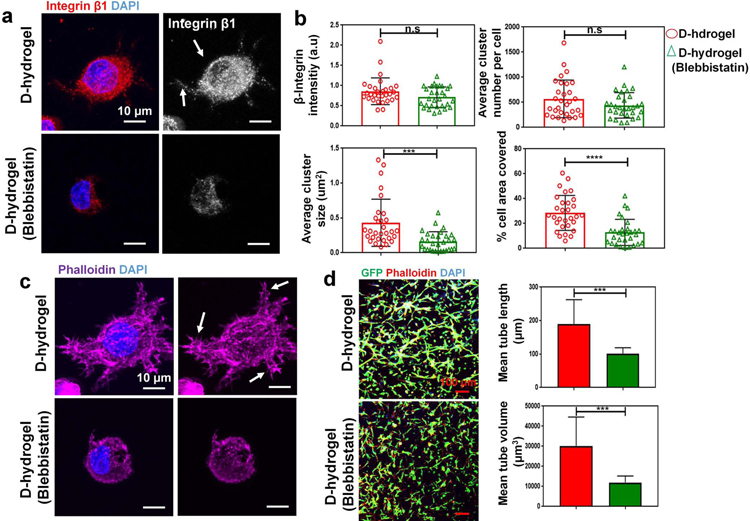
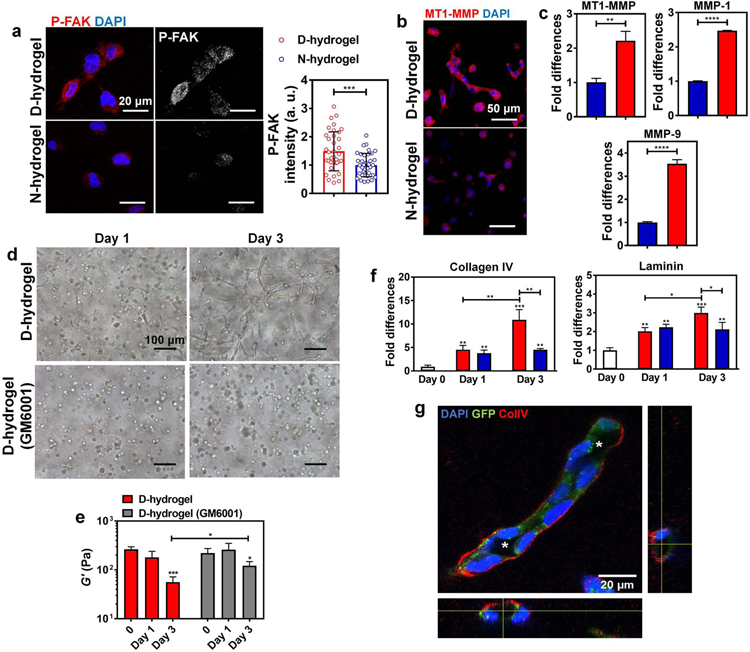
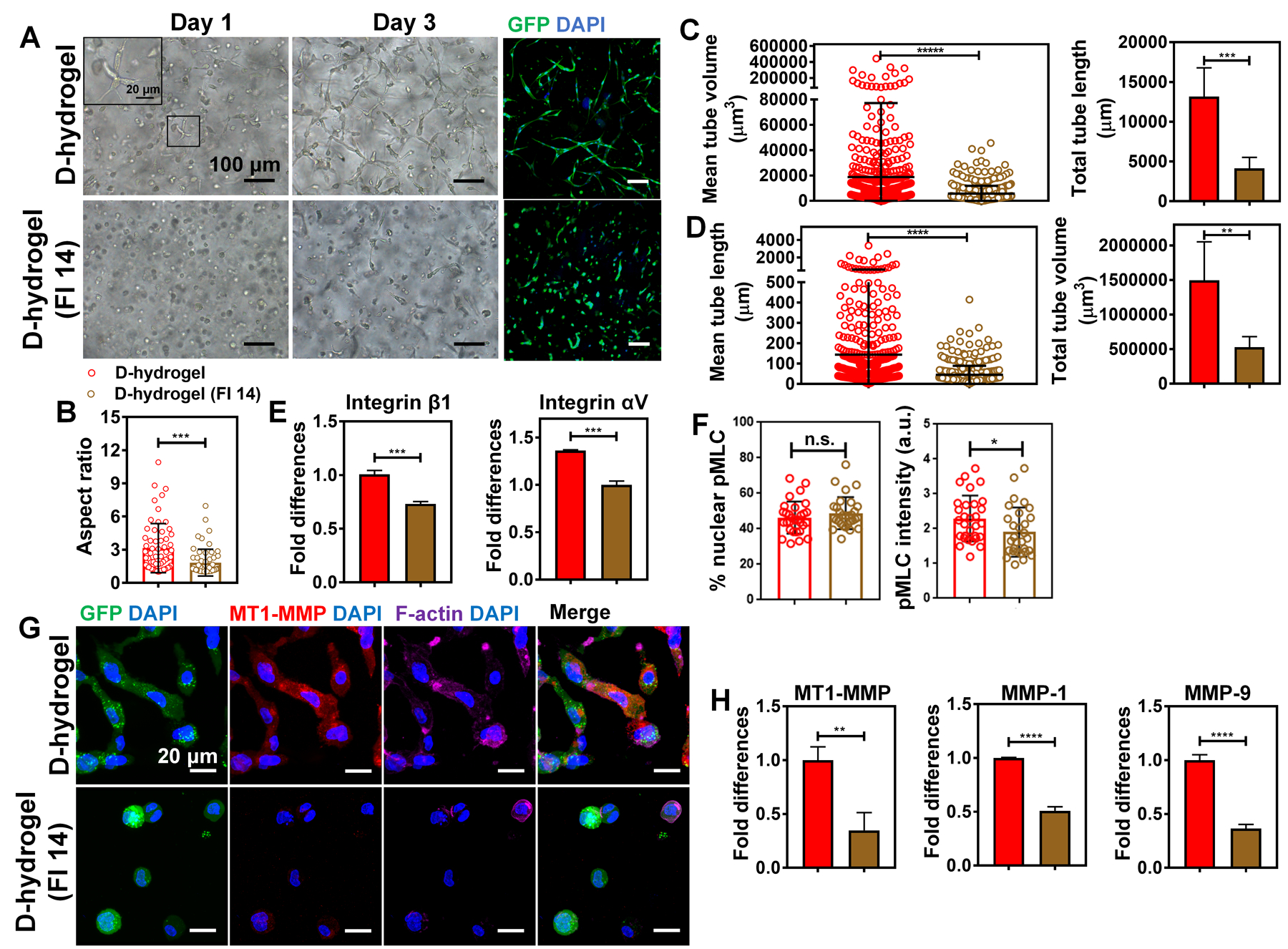
Matrix dynamics influence how individual cells develop into complex multicellular tissues. Here, we develop hydrogels with identical polymer components but different crosslinking capacities to enable the investigation of mechanisms underlying vascular morphogenesis. We show that dynamic (D) hydrogels increase the contractility of human endothelial colony-forming cells (hECFCs), promote the clustering of integrin β1, and promote the recruitment of vinculin, leading to the activation of focal adhesion kinase (FAK) and metalloproteinase expression. This leads to the robust assembly of vasculature and the deposition of new basement membrane. We also show that non-dynamic (N) hydrogels do not promote FAK signaling and that stiff D- and N-hydrogels are constrained for vascular morphogenesis. Furthermore, D-hydrogels promote hECFC microvessel formation and angiogenesis in vivo. Our results indicate that cell contractility mediates integrin signaling via inside-out signaling and emphasizes the importance of matrix dynamics in vascular tissue formation, thus informing future studies of vascularization and tissue engineering applications.
基质动力学影响单个细胞如何发育成复杂的多细胞组织。在这里,我们开发了具有相同聚合物成分但交联能力不同的水凝胶,以研究血管形态发生的基础机制。我们表明,动态(D)水凝胶增加了人内皮集落形成细胞(hECFC)的收缩性,促进了整合素β1 的聚类,并促进了 vinculin 的募集,导致粘着斑激酶(FAK)和金属蛋白酶表达的激活。这导致了强大的脉管系统的组装和新基底膜的沉积。我们还表明,非动态(N)水凝胶不会促进 FAK 信号转导,并且僵硬的 D-和 N-水凝胶受到血管形态发生的限制。此外,D-水凝胶促进 hECFC 微血管形成和体内血管生成。我们的结果表明,细胞收缩性通过内翻信号转导介导整合素信号转导,并强调了基质动力学在血管组织形成中的重要性,从而为血管生成和组织工程应用的未来研究提供了信息。