Department of Research and Programs, Kenyatta National Hospital, Nairobi, Kenya.
Department of Global Health, University of Washington, Seattle, WA.
J Acquir Immune Defic Syndr. 2020 Dec 15;85(5):535-542. doi: 10.1097/QAI.0000000000002500.
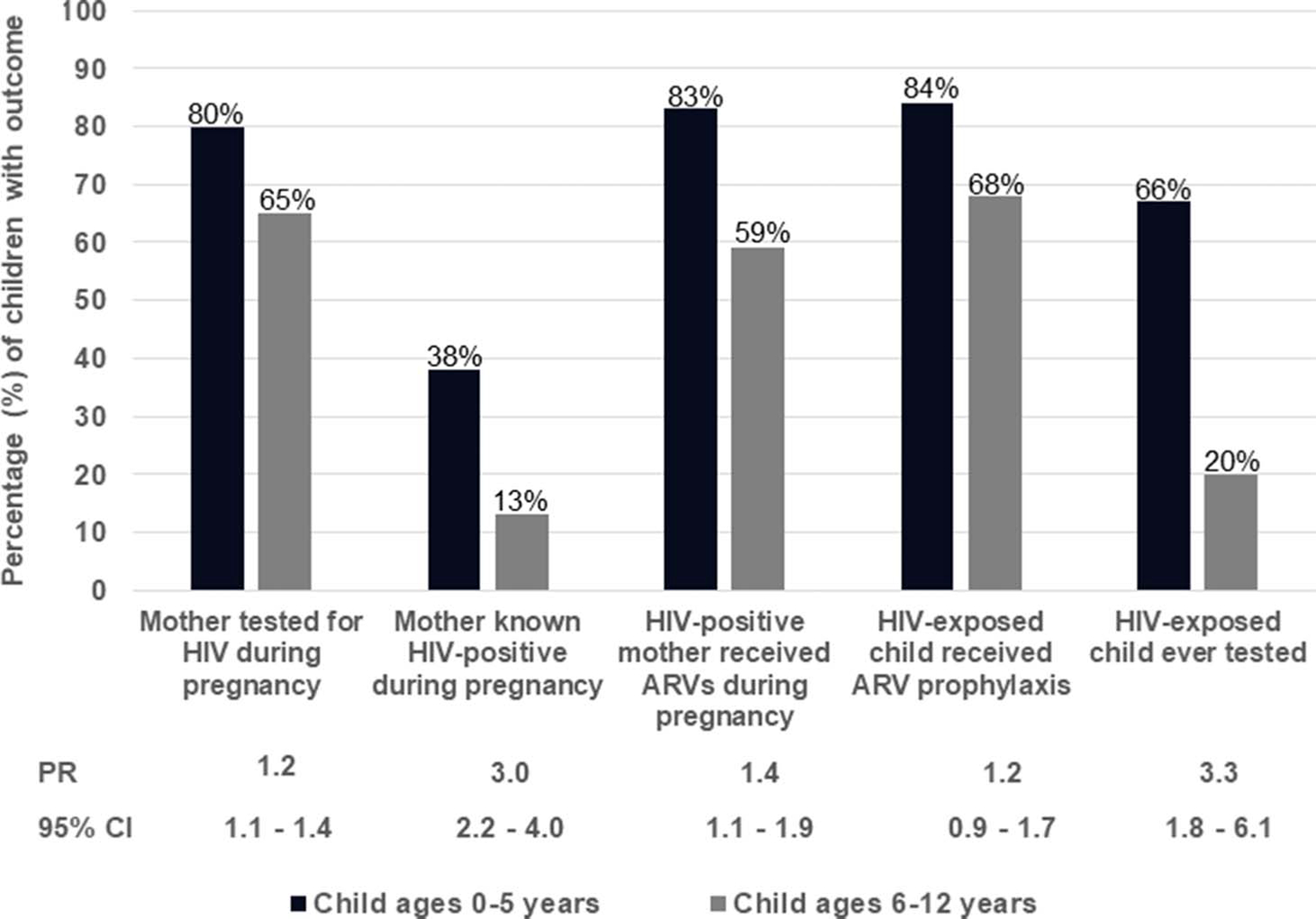
Gaps in HIV testing of children persist, particularly among older children born before the expansion of the prevention of mother-to-child transmission of HIV programs.
The Counseling and Testing for Children at Home study evaluated an index-case pediatric HIV testing approach. Caregivers receiving HIV care at 7 health facilities in Kenya (index cases), who had children of unknown HIV status aged 0-12 years, were offered the choice of clinic-based testing (CBT) or home-based testing (HBT). Testing uptake and HIV prevalence were compared between groups choosing HBT and CBT; linkage to care, missed opportunities, and predictors of HIV-positive diagnosis were identified.
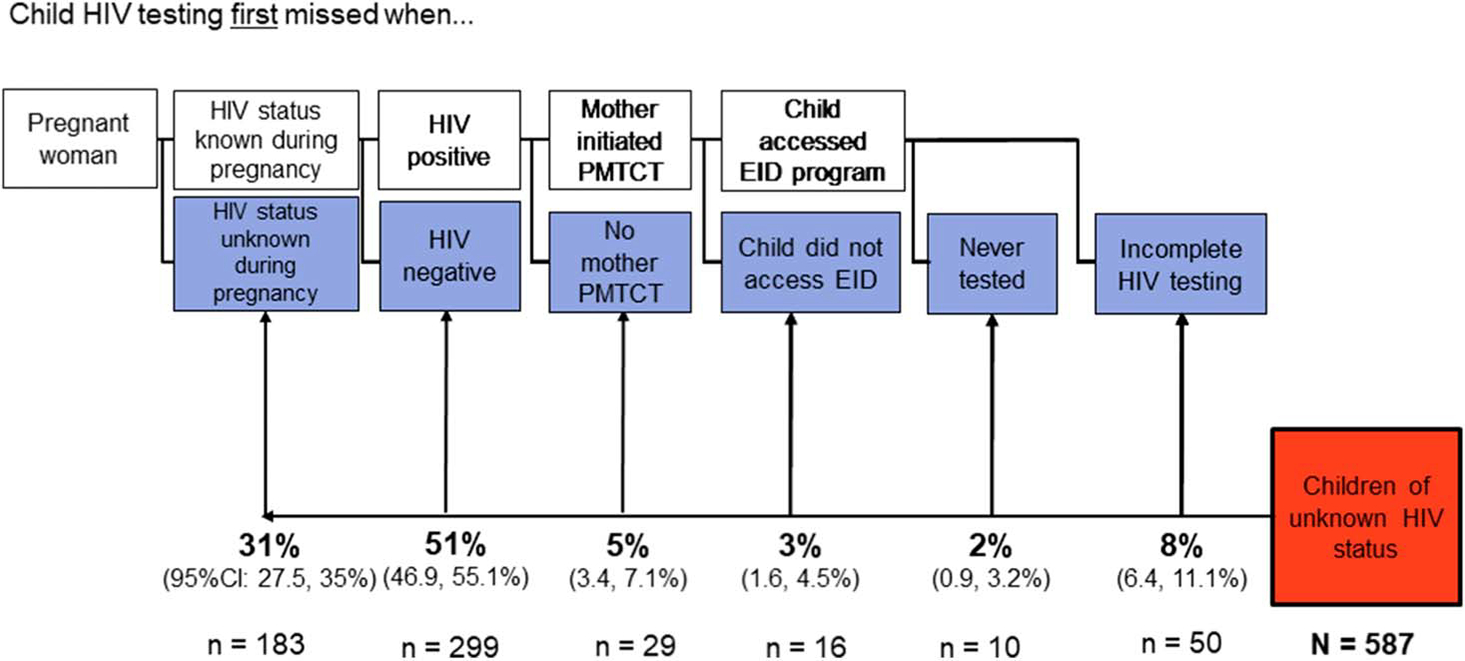
Among 493 caregivers, 70% completed HIV testing for ≥1 child. Most caregivers who tested children chose CBT (266/347, 77%), with 103 (30%) agreeing to same-day testing of an untested accompanying child. Overall HIV prevalence among 521 tested children was 5.8% (CBT 6.8% vs HBT 2.4%; P = 0.07). Within 1 month of diagnosis, 88% of 30 HIV-positive children had linked to care, and 54% had started antiretroviral treatment. For 851 children eligible for testing, the most common reason for having an unknown HIV status was that the child's mother was not tested for HIV or had tested HIV negative during pregnancy (82%).
Testing uptake and HIV prevalence were moderate with nonsignificant differences between HBT and CBT. Standardized offer to test children accompanying caregivers is feasible to scale-up with little additional investment. Linkage to care for HIV-positive children was suboptimal. Lack of peripartum maternal testing contributed to gaps in pediatric testing.
儿童的 HIV 检测仍存在差距,尤其是在预防母婴传播 HIV 项目扩大之前出生的大龄儿童中。
在家中为儿童咨询和检测研究评估了一种索引病例儿科 HIV 检测方法。在肯尼亚的 7 个卫生设施接受 HIV 护理的照顾者(索引病例),其有年龄在 0-12 岁之间、HIV 状况未知的子女,他们可以选择在诊所进行检测(CBT)或在家中进行检测(HBT)。比较选择 HBT 和 CBT 的组之间的检测参与率和 HIV 流行率;确定了与护理的联系、错失的机会以及 HIV 阳性诊断的预测因素。
在 493 名照顾者中,有 70%的人完成了至少 1 名儿童的 HIV 检测。大多数选择为子女进行检测的照顾者选择了 CBT(266/347,77%),其中有 103 人(30%)同意对未检测过的随行子女进行同日检测。521 名接受检测的儿童的总体 HIV 流行率为 5.8%(CBT 为 6.8%,HBT 为 2.4%;P=0.07)。在诊断后 1 个月内,30 名 HIV 阳性儿童中有 88%已与护理机构建立联系,54%已开始接受抗逆转录病毒治疗。对于 851 名符合检测条件的儿童,其 HIV 状况未知的最常见原因是儿童的母亲未接受 HIV 检测或在怀孕期间 HIV 检测呈阴性(82%)。
HBT 和 CBT 之间的检测参与率和 HIV 流行率均处于中等水平,差异无统计学意义。对照顾者随行子女进行标准化检测的提议具有可行性,可以在不增加额外投资的情况下扩大规模。HIV 阳性儿童与护理机构的联系不理想。围产期产妇检测的缺乏导致儿科检测存在差距。