Mitra Sarmistha, Kaushik Neha, Moon Il Soo, Choi Eun Ha, Kaushik Nagendra Kumar
Plasma Bioscience Research Center/Applied Plasma Medicine Center, Department of Electrical and Biological Physics, Kwangwoon University, Seoul 01897, Korea.
Department of Anatomy, Dongguk University College of Medicine, Gyeongju 38066, Korea.
Biomedicines. 2020 Sep 12;8(9):348. doi: 10.3390/biomedicines8090348.
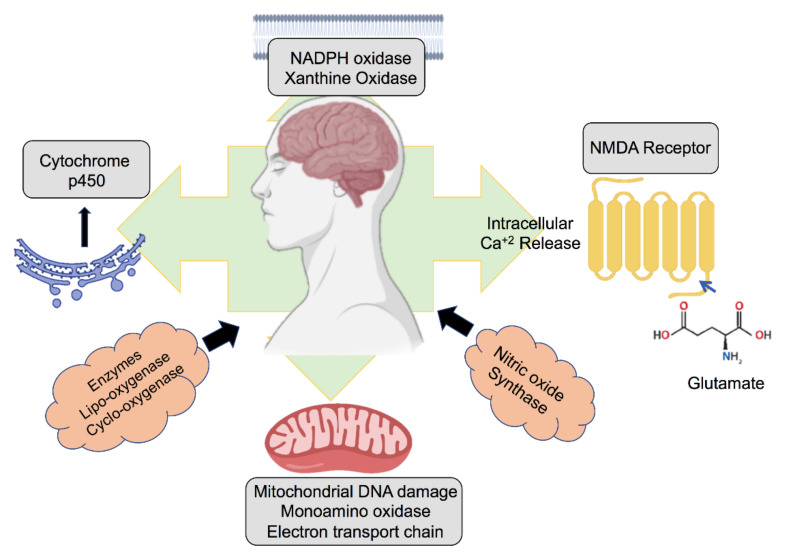
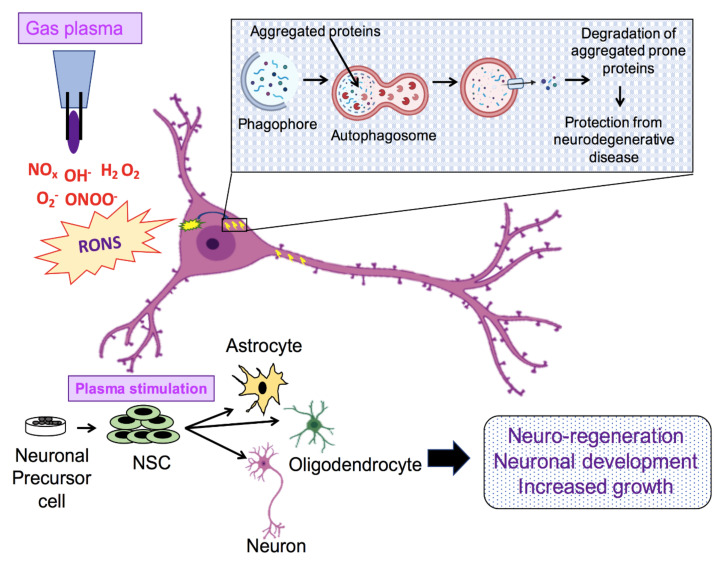
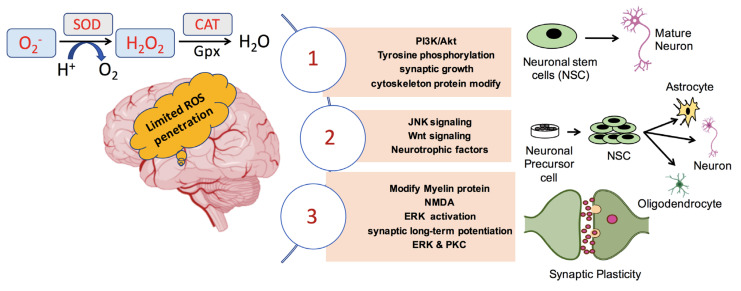
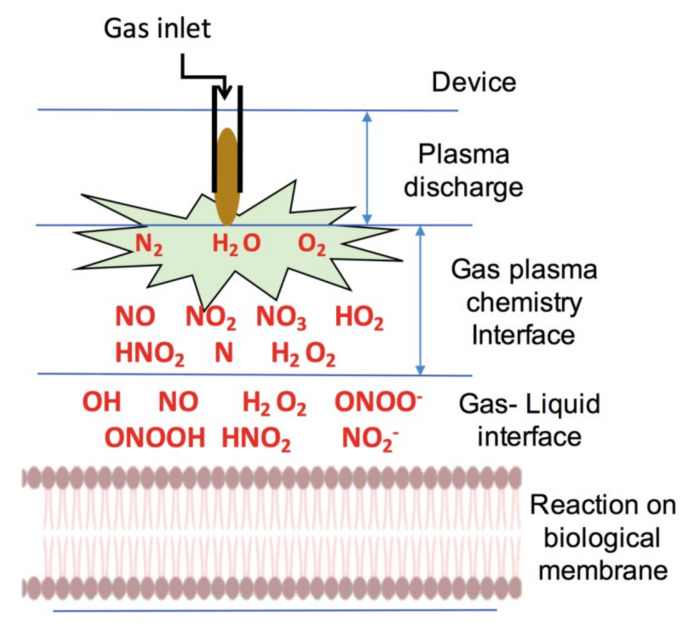
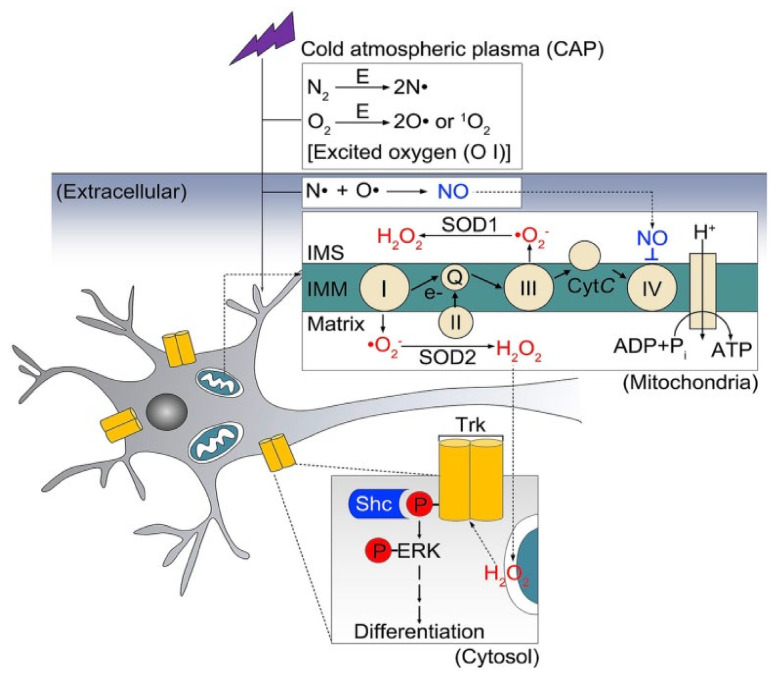
Reactive oxygen species (ROS) are critical signaling molecules for neuronal physiology that stimulate growth and development and play vital roles in several pathways when in a balanced state, but they cause neurodegeneration when unbalanced. As ROS levels above a certain threshold cause the activation of the autophagy system, moderate levels of ROS can be used as treatment strategies. Currently, such treatments are used together with low-level laser or photodynamic therapies, photo-bio modulation, or infrared treatments, in different chronic diseases but not in the treatment of neurodegeneration. Recently, non-thermal plasma has been successfully used in biomedical applications and treatments, and beneficial effects such as differentiation, cell growth, and proliferation, stimulation of ROS based pathways have been observed. Besides the activation of a wide range of biological signaling pathways by generating ROS, plasma application can be an effective treatment in neuronal regeneration, as well as in neuronal diseases. In this review, we summarize the generation and role of ROS in neurons and provide critical insights into their potential benefits on neurons. We also discuss the underlying mechanisms of ROS on neuronal development. Regarding clinical applications, we focus on ROS-based neuronal growth and regeneration strategies and in the usage of non-thermal plasma in neuronal and CNS injury treatments.
活性氧(ROS)是神经元生理学中的关键信号分子,在平衡状态下刺激生长和发育,并在多种途径中发挥重要作用,但失衡时会导致神经退行性变。由于超过一定阈值的ROS水平会激活自噬系统,适度的ROS水平可作为治疗策略。目前,此类治疗与低强度激光或光动力疗法、光生物调制或红外治疗一起用于不同的慢性疾病,但未用于神经退行性变的治疗。最近,非热等离子体已成功用于生物医学应用和治疗,并观察到了诸如分化、细胞生长和增殖、基于ROS途径的刺激等有益效果。除了通过产生ROS激活广泛的生物信号通路外,等离子体应用在神经元再生以及神经元疾病中可能是一种有效的治疗方法。在本综述中,我们总结了ROS在神经元中的产生和作用,并对其对神经元的潜在益处提供了关键见解。我们还讨论了ROS对神经元发育的潜在机制。关于临床应用,我们重点关注基于ROS的神经元生长和再生策略以及非热等离子体在神经元和中枢神经系统损伤治疗中的应用。