Morris Daniel C, Jaehne Anja K, Chopp Michael, Zhang Zhanggang, Poisson Laila, Chen Yalei, Datta Indrani, Rivers Emanuel P
Department of Emergency Medicine, Henry Ford Hospital, Detroit, MI 48202, USA.
Department of Neurology Research, Henry Ford Hospital, Detroit, MI 48202, USA.
J Clin Med. 2020 Sep 11;9(9):2930. doi: 10.3390/jcm9092930.
Septic Emergency Department (ED) patients provide a unique opportunity to investigate early sepsis. Recent work focuses on exosomes, nanoparticle-sized lipid vesicles (30-130 nm) that are released into the bloodstream to transfer its contents (RNA, miRNA, DNA, protein) to other cells. Little is known about how early changes related to exosomes may contribute to the dysregulated inflammatory septic response that leads to multi-organ dysfunction. We aimed to evaluate proteomic profiles of plasma derived exosomes obtained from septic ED patients and healthy controls.
This is a prospective observational pilot study evaluating a plasma proteomic exosome profile at an urban tertiary care hospital ED using a single venipuncture blood draw, collecting 40 cc Ethylenediaminetetraacetic acid (EDTA) blood.
We recruited seven patients in the ED within 6 h of their presentation and five healthy controls. Plasma exosomes were isolated using the Invitrogen Total Exosome Isolation Kit. Exosome proteomic profiles were analyzed using fusion mass spectroscopy and Proteome Discoverer. Principal component analysis (PCA) and differential expression analysis (DEA) for sepsis versus control was performed.
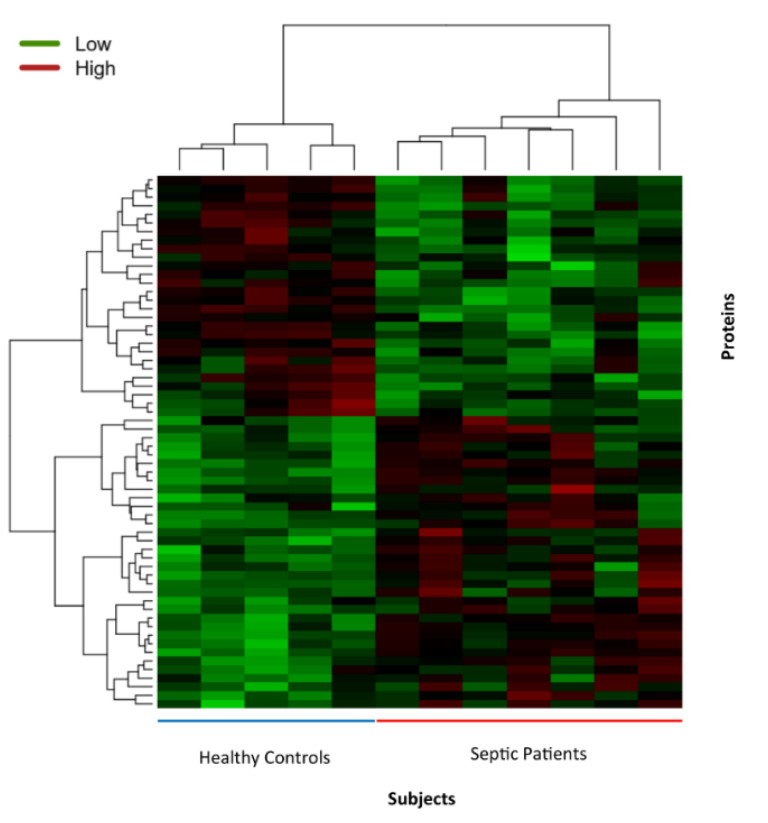
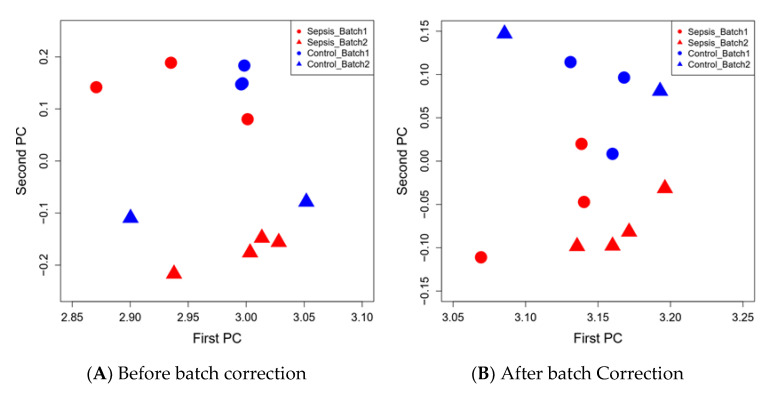
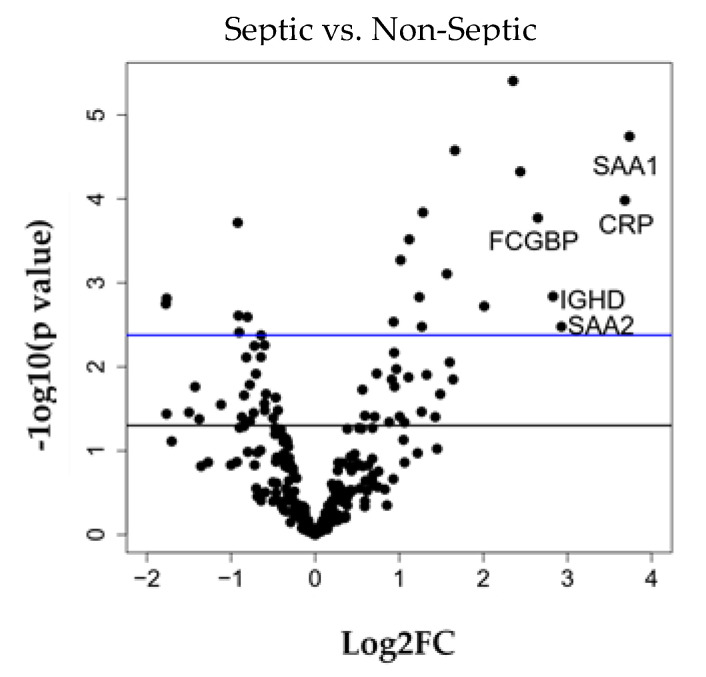
PCA of 261 proteins demonstrated septic patients and healthy controls were distributed in two groups. DEA revealed that 62 (23.8%) proteins differed between the exosomes of septic patients and healthy controls, -value < 0.05. Adjustments using the False Discovery Rate (FDR) showed 23 proteins remained significantly different (FDR < 0.05) between sepsis and controls. Septic patients and controls were classified into two distinct groups by hierarchical clustering using the 62 nominally DE proteins. After adjustment multiple comparisons, three acute phase proteins remained significantly different between patients and controls: Serum amyloid A-1, C-reactive protein and Serum Amyloid A-2. Inflammatory response proteins immunoglobulin heavy constant Δ and Fc-fragment of IgG binding protein were increased.
Exosome proteomic profiles of septic ED patients differ from their healthy counterparts with regard to acute phase response and inflammation.
脓毒症急诊科患者为研究早期脓毒症提供了独特机会。近期研究聚焦于外泌体,即纳米级脂质囊泡(30 - 130纳米),其释放到血液中并将内容物(RNA、miRNA、DNA、蛋白质)传递给其他细胞。对于与外泌体相关的早期变化如何导致脓毒症中失调的炎症反应进而引发多器官功能障碍,我们了解甚少。我们旨在评估脓毒症急诊科患者和健康对照者血浆来源外泌体的蛋白质组学特征。
这是一项前瞻性观察性试点研究,在一家城市三级医疗医院急诊科,通过单次静脉采血收集40毫升乙二胺四乙酸(EDTA)血液,评估血浆蛋白质组学外泌体特征。
我们招募了7名在就诊6小时内到达急诊科的患者和5名健康对照者。使用Invitrogen总外泌体分离试剂盒分离血浆外泌体。使用融合质谱和蛋白质组发现者分析外泌体蛋白质组学特征。对脓毒症患者与对照进行主成分分析(PCA)和差异表达分析(DEA)。
对261种蛋白质的PCA显示脓毒症患者和健康对照者分布在两组。DEA显示脓毒症患者和健康对照者的外泌体中有62种(23.8%)蛋白质存在差异,P值<0.05。使用错误发现率(FDR)进行调整后,脓毒症与对照之间仍有23种蛋白质存在显著差异(FDR<0.05)。使用62种名义上差异表达的蛋白质通过层次聚类将脓毒症患者和对照分为两个不同的组。经过多重比较调整后,患者和对照之间仍有三种急性期蛋白质存在显著差异:血清淀粉样蛋白A - 1、C反应蛋白和血清淀粉样蛋白A - 2。炎症反应蛋白免疫球蛋白重链恒定区Δ和IgG结合蛋白的Fc片段增加。
脓毒症急诊科患者的外泌体蛋白质组学特征在急性期反应和炎症方面与其健康对照者不同。