Chemistry Research Laboratory, University of Oxford, Oxford, United Kingdom.
Department of Biochemistry and Molecular Biology, Complex Carbohydrate Research Center, Center for Tropical and Emerging Global Diseases, University of Georgia, Athens, Georgia, USA.
J Biol Chem. 2020 Dec 4;295(49):16545-16561. doi: 10.1074/jbc.RA120.013998. Epub 2020 Sep 15.
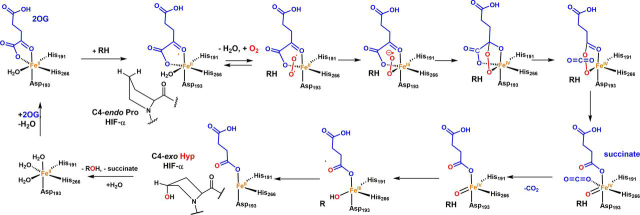
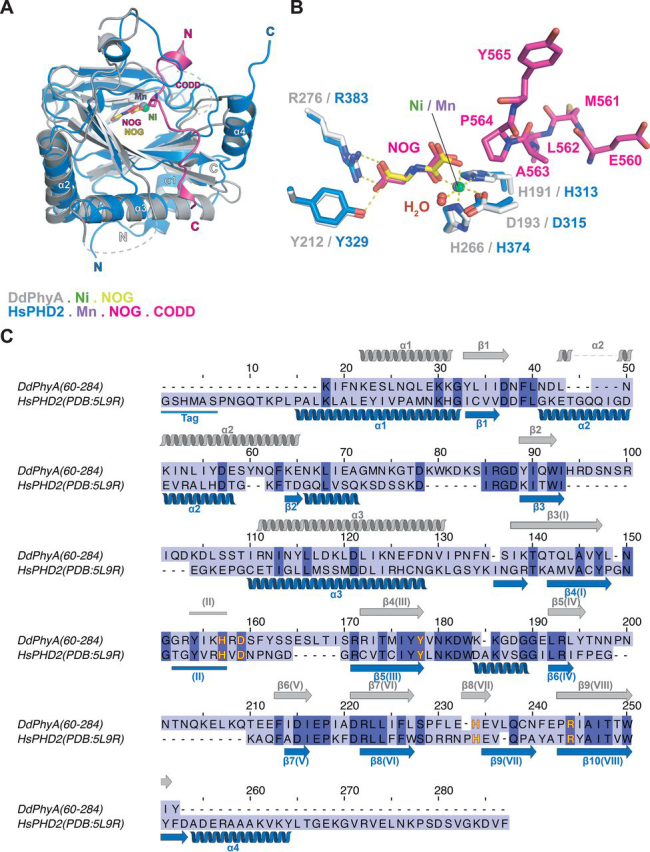
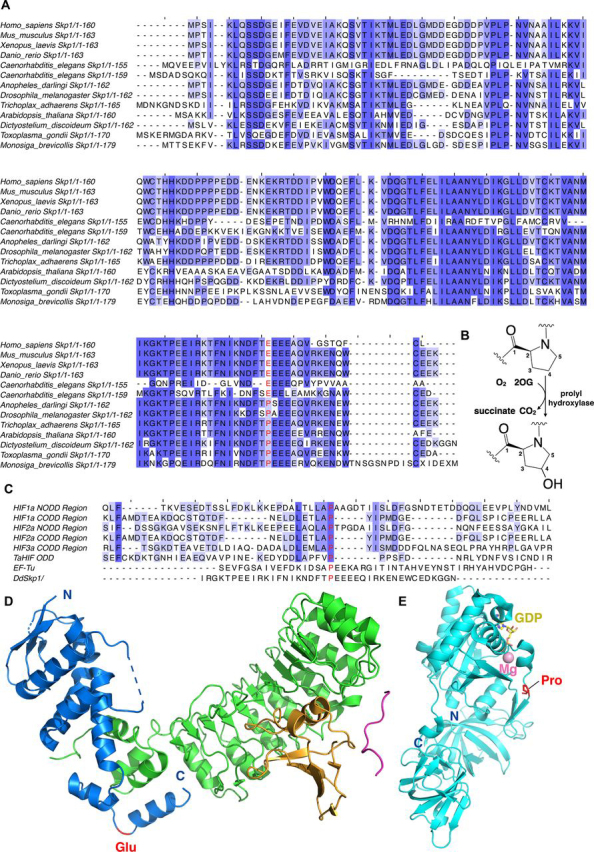
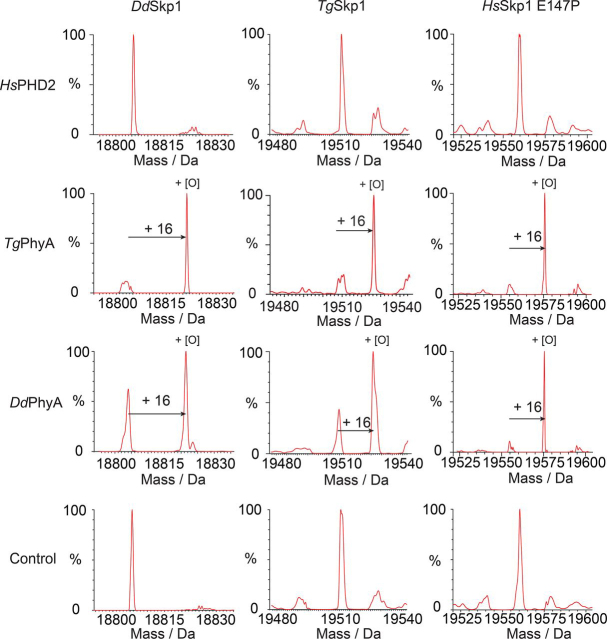
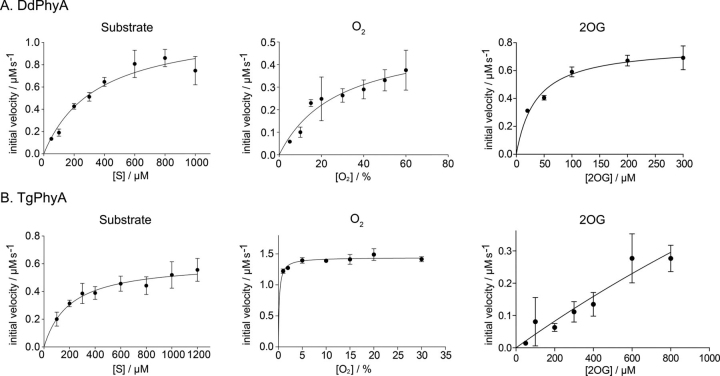
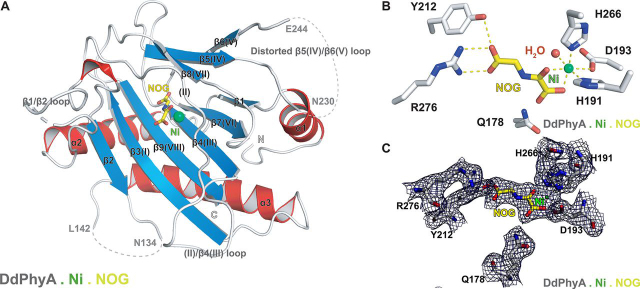
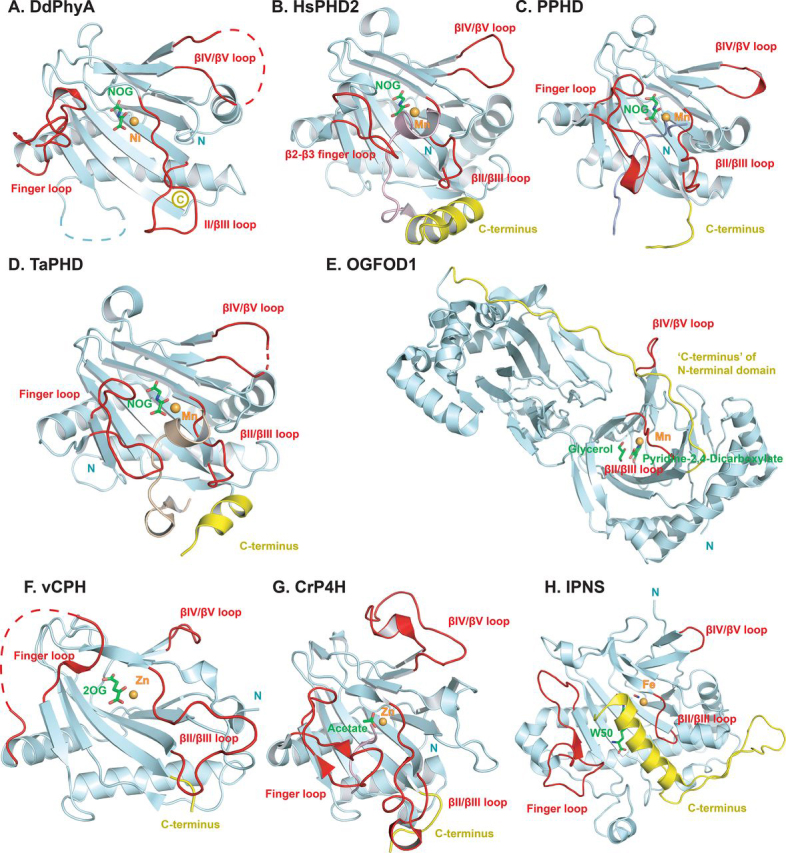
In animals, the response to chronic hypoxia is mediated by prolyl hydroxylases (PHDs) that regulate the levels of hypoxia-inducible transcription factor α (HIFα). PHD homologues exist in other types of eukaryotes and prokaryotes where they act on non HIF substrates. To gain insight into the factors underlying different PHD substrates and properties, we carried out biochemical and biophysical studies on PHD homologues from the cellular slime mold, and the protozoan parasite, , both lacking HIF. The respective prolyl-hydroxylases (DdPhyA and TgPhyA) catalyze prolyl-hydroxylation of S-phase kinase-associated protein 1 (Skp1), a reaction enabling adaptation to different dioxygen availability. Assays with full-length Skp1 substrates reveal substantial differences in the kinetic properties of DdPhyA and TgPhyA, both with respect to each other and compared with human PHD2; consistent with cellular studies, TgPhyA is more active at low dioxygen concentrations than DdPhyA. TgSkp1 is a DdPhyA substrate and DdSkp1 is a TgPhyA substrate. No cross-reactivity was detected between DdPhyA/TgPhyA substrates and human PHD2. The human Skp1 E147P variant is a DdPhyA and TgPhyA substrate, suggesting some retention of ancestral interactions. Crystallographic analysis of DdPhyA enables comparisons with homologues from humans, , and prokaryotes, informing on differences in mobile elements involved in substrate binding and catalysis. In DdPhyA, two mobile loops that enclose substrates in the PHDs are conserved, but the C-terminal helix of the PHDs is strikingly absent. The combined results support the proposal that PHD homologues have evolved kinetic and structural features suited to their specific sensing roles.
在动物中,对慢性缺氧的反应是由脯氨酰羟化酶(PHD)介导的,它们调节缺氧诱导转录因子α(HIFα)的水平。PHD 同源物存在于其他类型的真核生物和原核生物中,在这些生物中,它们作用于非 HIF 底物。为了深入了解不同 PHD 底物和特性的基础因素,我们对细胞黏菌和原生动物寄生虫的 PHD 同源物进行了生化和生物物理研究,这两种生物都缺乏 HIF。相应的脯氨酰羟化酶(DdPhyA 和 TgPhyA)催化 S 期激酶相关蛋白 1(Skp1)的脯氨酰羟化,该反应使细胞适应不同的氧可用性。使用全长 Skp1 底物的测定揭示了 DdPhyA 和 TgPhyA 在动力学特性方面的显著差异,无论是彼此之间还是与人类 PHD2 相比;与细胞研究一致,TgPhyA 在低氧浓度下比 DdPhyA 更活跃。TgSkp1 是 DdPhyA 的底物,DdSkp1 是 TgPhyA 的底物。未检测到 DdPhyA/TgPhyA 底物与人类 PHD2 之间的交叉反应性。人类 Skp1 E147P 变体是 DdPhyA 和 TgPhyA 的底物,表明保留了一些祖先相互作用。DdPhyA 的晶体结构分析使我们能够与来自人类、和原核生物的同源物进行比较,从而了解参与底物结合和催化的移动元件的差异。在 DdPhyA 中,两个封闭 PHD 中底物的移动环是保守的,但 PHD 的 C 末端螺旋明显缺失。综合结果支持了这样的假设,即 PHD 同源物已经进化出适合其特定感应作用的动力学和结构特征。