Qu Juan, Lu Wei, Chen Ming, Gao Wei, Zhang Cong, Guo Bin, Yang Jizhi
Department of Gastroenterology, Tianjin Nankai Hospital, Tianjin 300100, P.R. China.
Department of Gastroenterology, Tianjin Cancer Hospital, Tianjin 300060, P.R. China.
Exp Ther Med. 2020 Nov;20(5):18. doi: 10.3892/etm.2020.9145. Epub 2020 Aug 26.
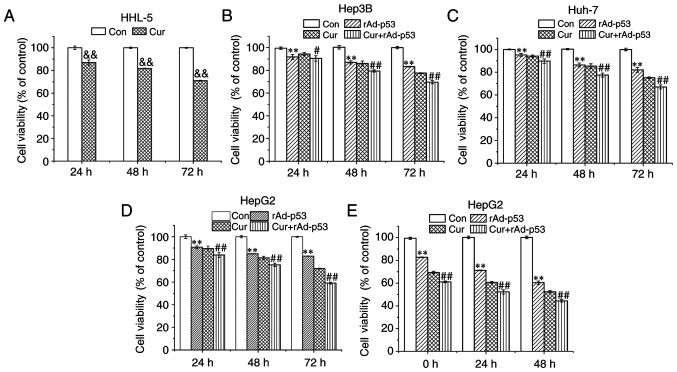
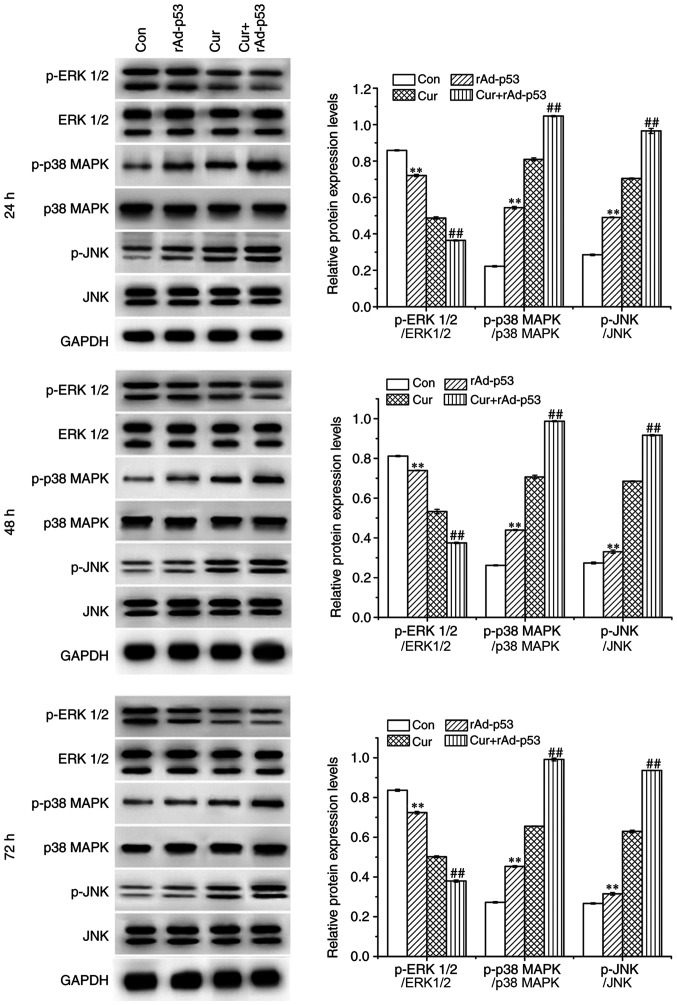
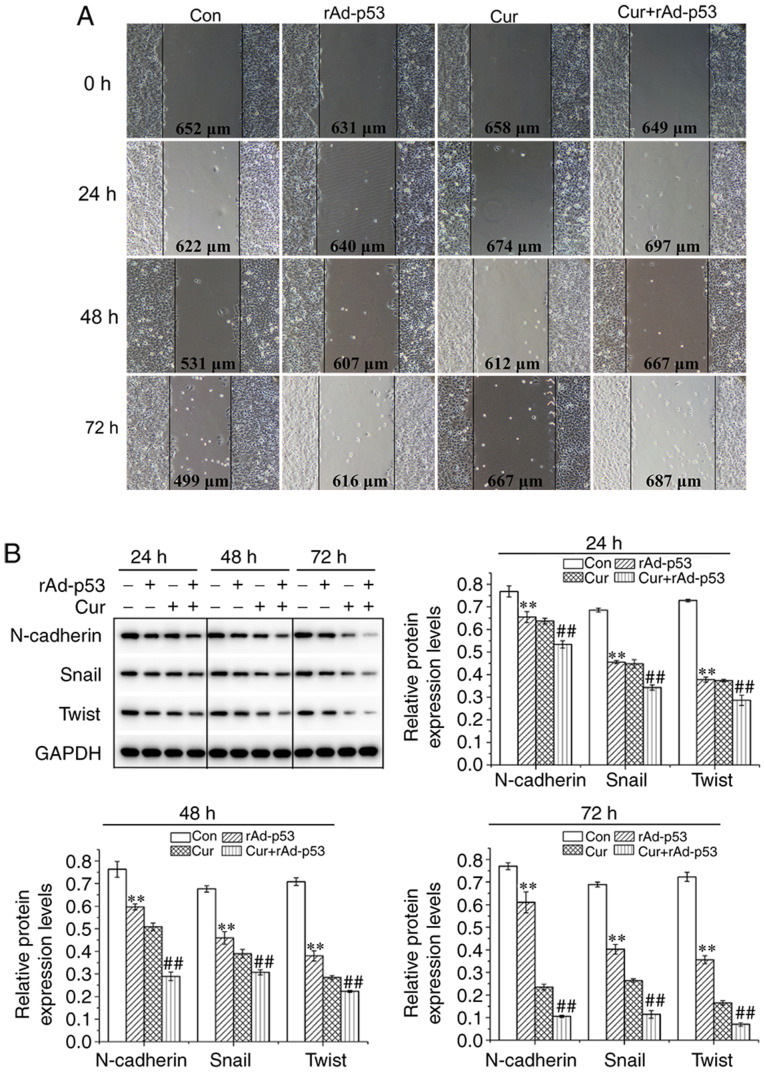
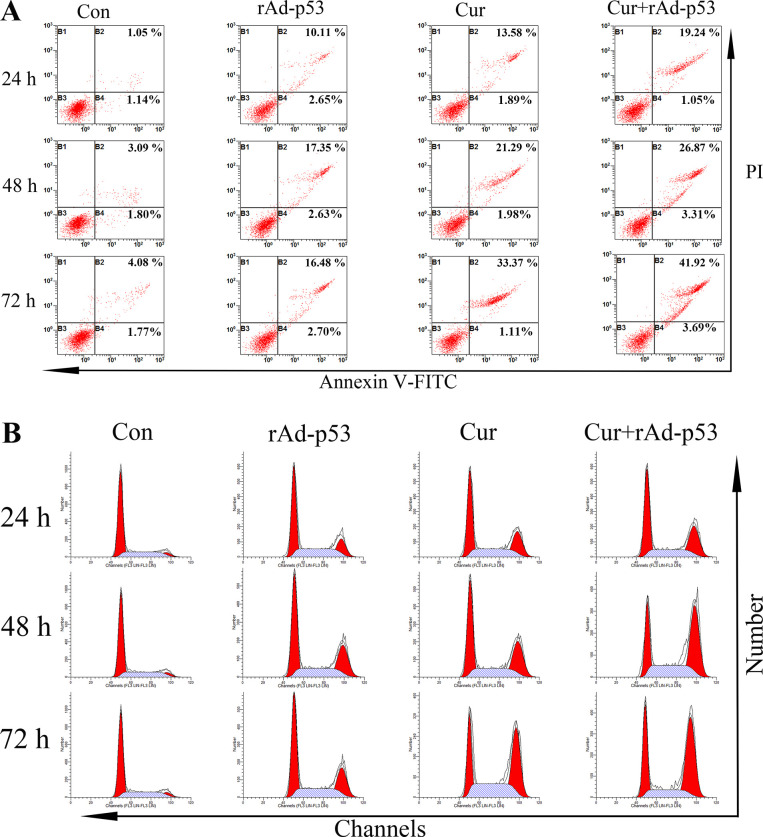
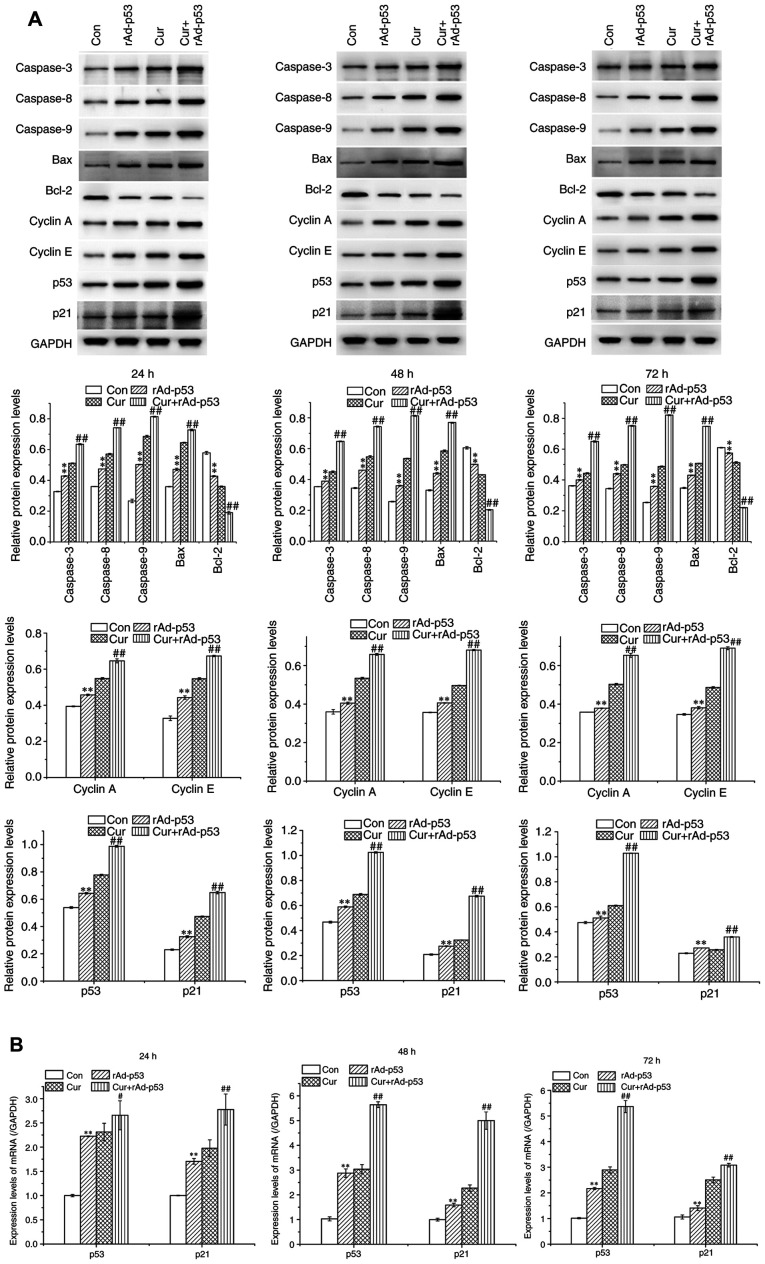
The development of an effective therapeutic intervention for liver cancer is a worldwide challenge that remains to be adequately addressed. Of note, , which encodes the p53 protein, is an important tumor suppressor gene, 61% of is functionally inactivated in liver cancer. Recombinant human adenovirus p53 (rAd-p53) is the first commercial product that has been used for gene therapy. In the present study, the combined mechanistic effects of rAd-p53 and curcumin, a naturally occurring compound with previously reported anti-inflammatory, antioxidant and anti-cancer properties, were assessed in liver cancer cells, using HepG2 cells as the model cell line. The administration of either curcumin or rAd-p53 promoted apoptosis, suppressed epithelial-mesenchymal transition (EMT) and blocked G2/M phase progression in HepG2 cells, which were potentiated further when both agents were applied together. Combined rAd-p53 and curcumin treatment resulted in higher p53 (P<0.01) and p21 (P<0.01) expression compared with rAd-p53 or curcumin were added alone, suggesting an additive effect on expression. Additionally, curcumin and rAd-p53 were demonstrated to regulate the activation of mitogen-activated protein kinases (MAPKs) ERK1/2, p38 MAPK and JNK. These results indicated that the combination of rAd-p53 with curcumin synergistically potentiates apoptosis and inhibit EMT compared with either rAd-p53 or curcumin treatment alone via the regulation of regulation. Mechanistically, this effect on expression may involve the ERK1/2, p38 MAPK and JNK signaling pathways. The current study provides new insights that can potentially advance the development of therapeutic strategies for liver cancer treatment.
开发一种有效的肝癌治疗干预措施是一项全球性挑战,仍有待充分解决。值得注意的是, 编码p53蛋白,是一种重要的肿瘤抑制基因,在肝癌中61%的 功能失活。重组人腺病毒p53(rAd-p53)是首个用于基因治疗的商业产品。在本研究中,以HepG2细胞为模型细胞系,评估了rAd-p53与姜黄素(一种具有先前报道的抗炎、抗氧化和抗癌特性的天然化合物)在肝癌细胞中的联合作用机制。单独使用姜黄素或rAd-p53均可促进HepG2细胞凋亡、抑制上皮-间质转化(EMT)并阻断G2/M期进程,当两种药物联合使用时,这些作用会进一步增强。与单独添加rAd-p53或姜黄素相比,rAd-p53与姜黄素联合处理导致p53(P<0.01)和p21(P<0.01)表达更高,表明对 表达有相加作用。此外,姜黄素和rAd-p53被证明可调节丝裂原活化蛋白激酶(MAPK)ERK1/2、p38 MAPK和JNK的激活。这些结果表明,与单独使用rAd-p53或姜黄素治疗相比,rAd-p53与姜黄素联合可通过调节 协同增强细胞凋亡并抑制EMT。从机制上讲,这种对 表达的影响可能涉及ERK1/2、p38 MAPK和JNK信号通路。本研究提供了新的见解,有可能推动肝癌治疗策略的发展。