Department of Surgery and Transplantation, Faculty of Medicine, University Hospital RWTH Aachen, 52074 Aachen, Germany.
Institute for Laboratory Animal Science and Experimental Surgery, Faculty of Medicine, RWTH-Aachen University, 52074 Aachen, Germany.
Int J Mol Sci. 2020 Sep 14;21(18):6747. doi: 10.3390/ijms21186747.
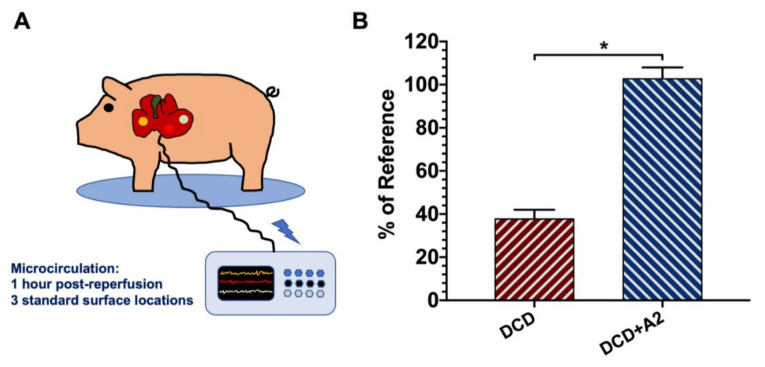
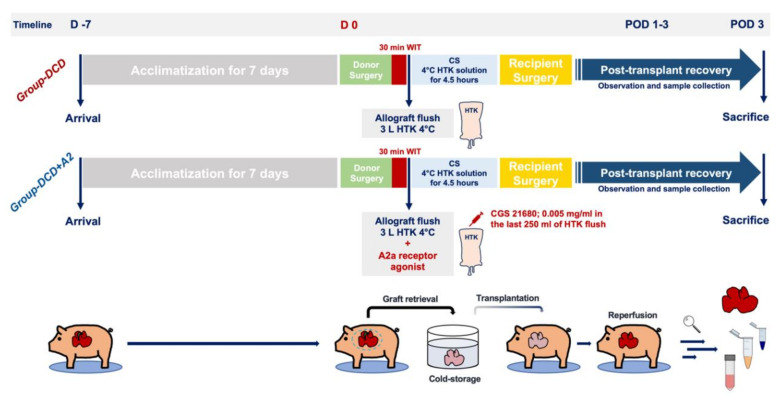
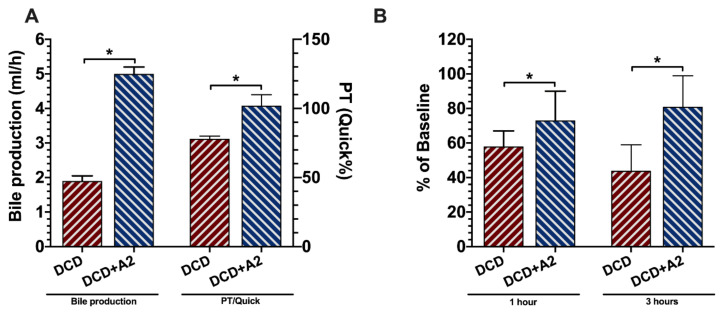
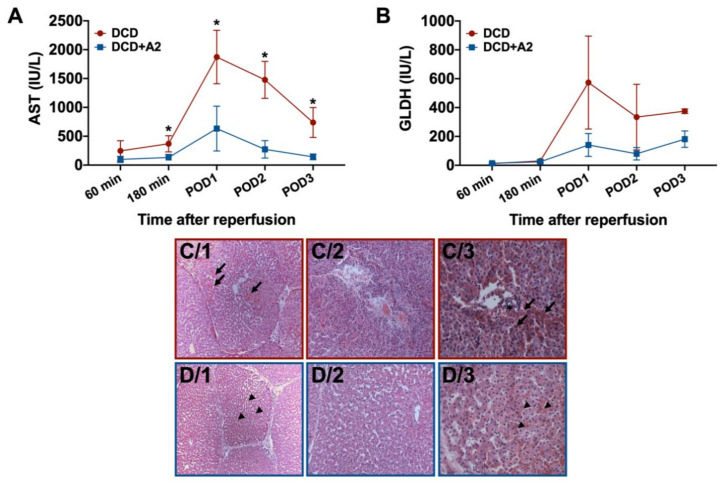
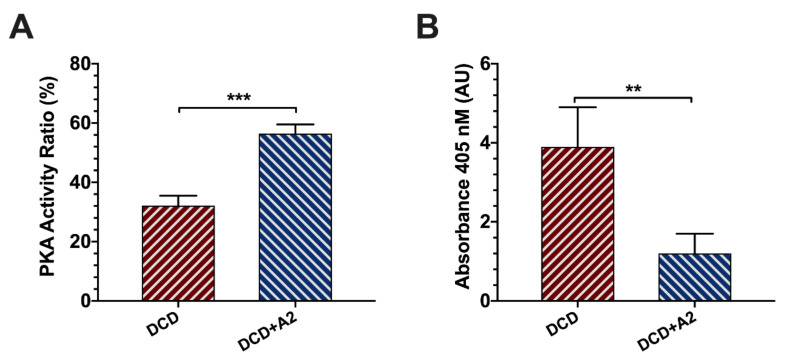
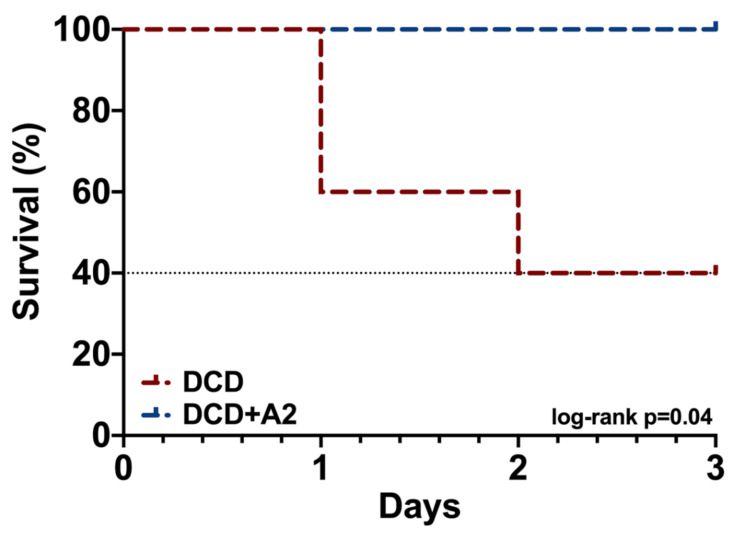
Orthotopic liver transplantation (OLT) using allografts from donation after circulatory death (DCD) is potentially associated with compromised clinical outcomes due to ischemia-reperfusion injury (IRI)-induced organ damage and graft-related complications. The aim of this study was to provide in vivo data on the effects of adenosine A receptor stimulation in a clinically relevant large animal model of DCD liver transplantation. Cardiac arrest was induced in German Landrace pigs ( = 10; 20-25 kg). After 30 min of warm ischemia, the donor liver was retrieved following a cold flush with 3 L of histidine-tryptophan-ketoglutarate-HTK solution. Animals of the treatment group ( = 5/group) received a standard dose of the selective adenosine receptor agonist CGS 21680 added to the cold flush. All grafts were stored for 4.5 h at 4 °C in HTK-solution before OLT. Hepatocellular injury, apoptosis, protein kinase A-PKA activity, graft microcirculation, liver function, and animal survival were assessed. Compared to untreated livers, adenosine A receptor stimulation resulted in improved tissue microcirculation (103% ± 5% vs. 38% ± 4% compared to baseline; < 0.05), accelerated functional recovery of the graft (indocyanine green-plasma disappearance rate (ICG-PDR) of 75% ± 18% vs. 40% ± 30% after 3 h), increased PKA activity ratio (56% ± 3% vs. 32% ± 3%; < 0.001 after 1 h), and consequently reduced tissue necrosis and apoptosis. The potent protective effects were clinically manifested in significantly improved survival in the treatment group after 72 h (100% vs. 40%; 0.04). The ex vivo administration of adenosine A receptor agonist during the back-table flush mitigates IRI-mediated tissue damage and improves functional graft recovery and survival in a large animal model of DCD liver transplantation.
原位肝移植(OLT)使用来自心脏死亡后供体(DCD)的同种异体移植物,由于缺血再灌注损伤(IRI)引起的器官损伤和移植物相关并发症,可能与临床结果受损相关。本研究的目的是在临床相关的 DCD 肝移植大动物模型中提供腺苷 A 受体刺激的体内数据。在德国兰德瑞斯猪(n = 10;20-25 kg)中诱导心脏骤停。在 30 分钟的热缺血后,用 3 L 组氨酸-色氨酸-酮戊二酸-HTK 溶液进行冷冲洗后取回供体肝脏。治疗组(n = 5/组)的动物接受添加到冷冲洗液中的选择性腺苷受体激动剂 CGS 21680 的标准剂量。所有移植物在 HTK 溶液中在 4°C 下储存 4.5 小时,然后进行 OLT。评估肝细胞损伤、细胞凋亡、蛋白激酶 A-PKA 活性、移植物微循环、肝功能和动物存活率。与未治疗的肝脏相比,腺苷 A 受体刺激导致组织微循环改善(103%±5%比 38%±4%与基线相比;<0.05),移植物功能恢复加速(吲哚菁绿-血浆清除率(ICG-PDR)为 75%±18%比 40%±30%在 3 小时后),PKA 活性比增加(56%±3%比 32%±3%;在 1 小时后<0.001),因此减少了组织坏死和凋亡。在治疗组中,在 72 小时后观察到明显改善的生存,这一强大的保护作用在临床上得到了体现(100%比 40%;0.04)。在离体灌洗过程中给予腺苷 A 受体激动剂可减轻 IRI 介导的组织损伤,并改善 DCD 肝移植大动物模型中功能移植物的恢复和存活。