Department of Neuroscience, Yale University School of Medicine, New Haven, CT, 06510, USA.
Psychopharmacology (Berl). 2021 Jan;238(1):97-106. doi: 10.1007/s00213-020-05661-2. Epub 2020 Sep 16.
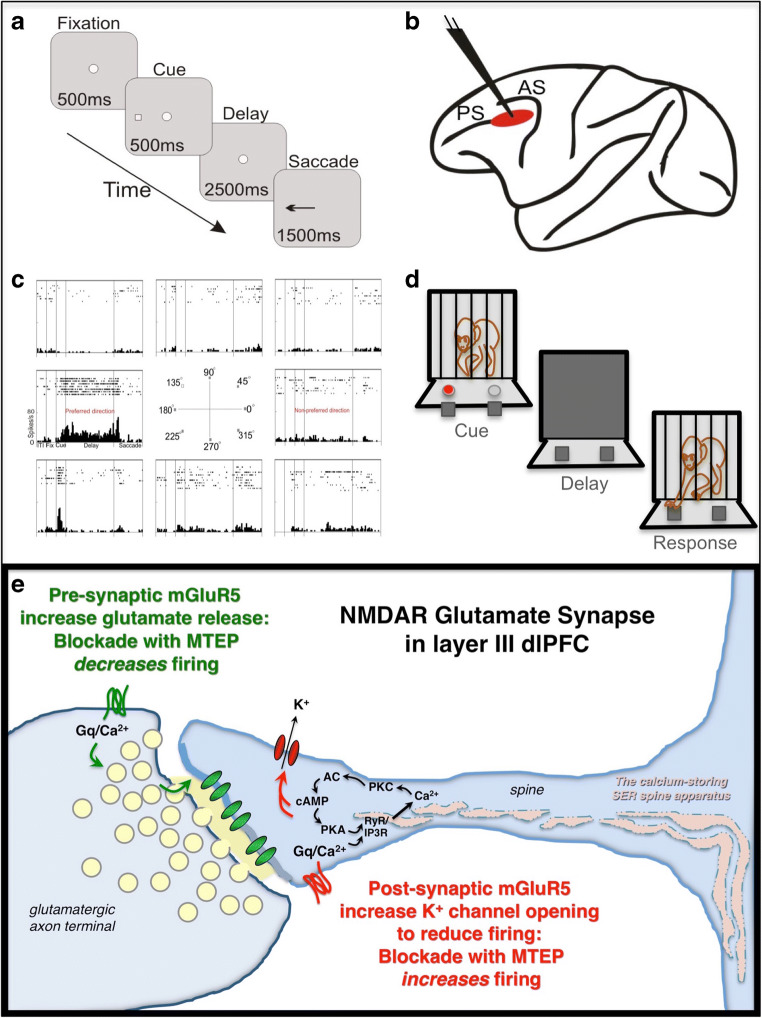
Metabotropic glutamate type 5 receptor (mGluR5) antagonists are under development for treating cognitive disorders such as Fragile X syndrome and Alzheimer's disease, largely based on success in mouse models, where post-synaptic mGluR5 stimulation weakens synaptic functions in hippocampus. However, human trials of mGluR5 antagonists have yet to be successful. This may be due in part to the differing effects of mGluR5 in hippocampus vs. prefrontal cortex, as mGluR5 are primarily post-synaptic in rodent hippocampus, but are both pre- and post-synaptic in the dorsolateral prefrontal cortical (dlPFC) circuits known to subserve working memory.
The current study examined the effects of the selective mGluR5 negative allosteric modulator, MTEP (3-((2-Methyl-1,3-thiazol-4-yl)ethynyl)pyridine hydrochloride), on neuronal firing and working memory performance in aging rhesus monkeys with naturally occurring impairments in neuronal firing and cognitive performance.
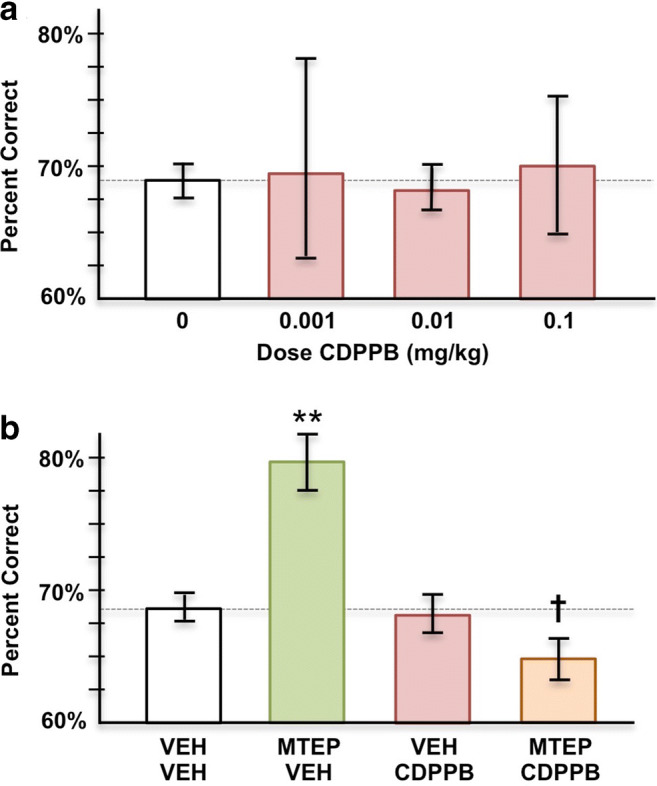
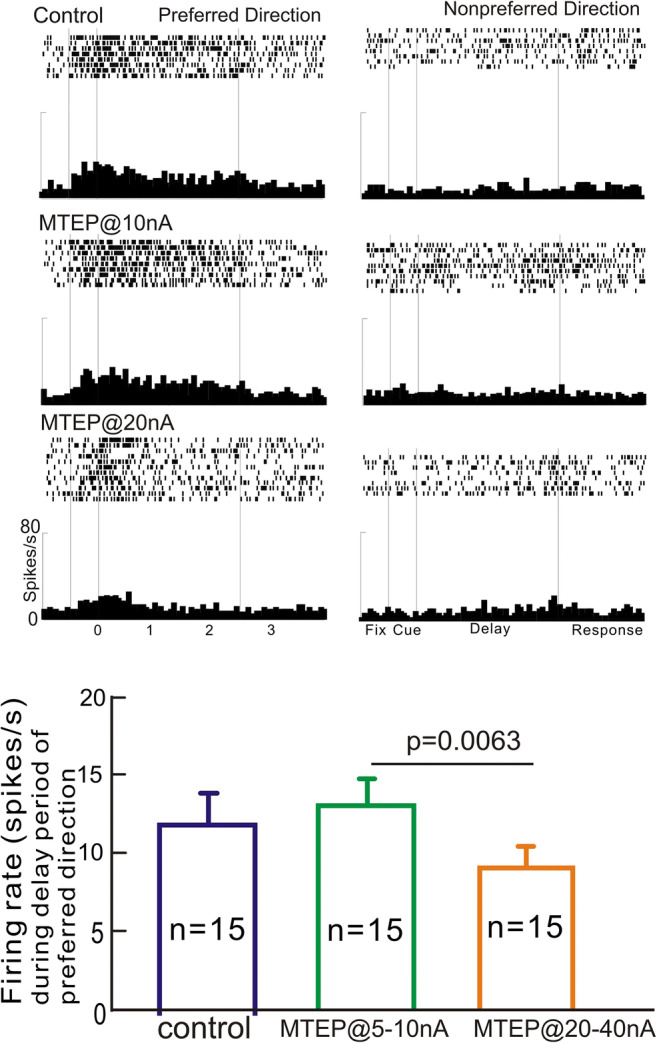
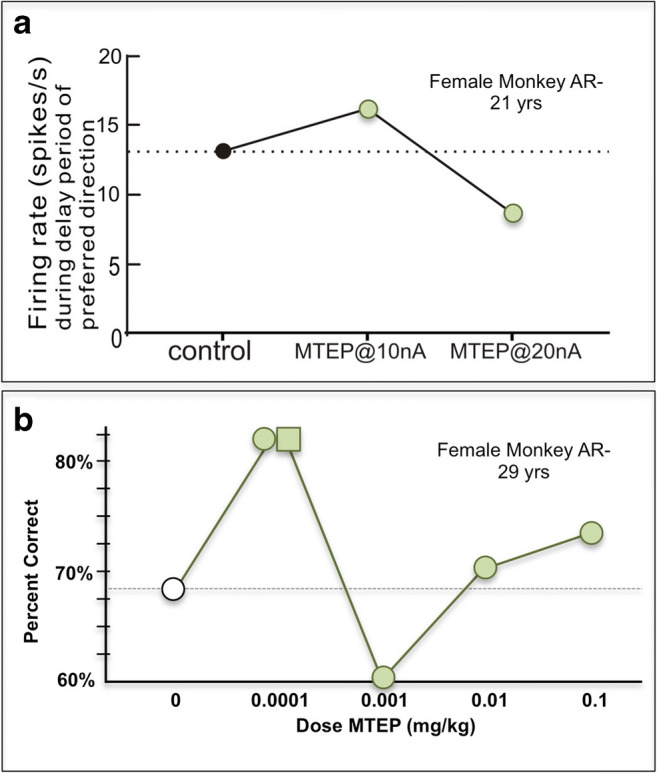
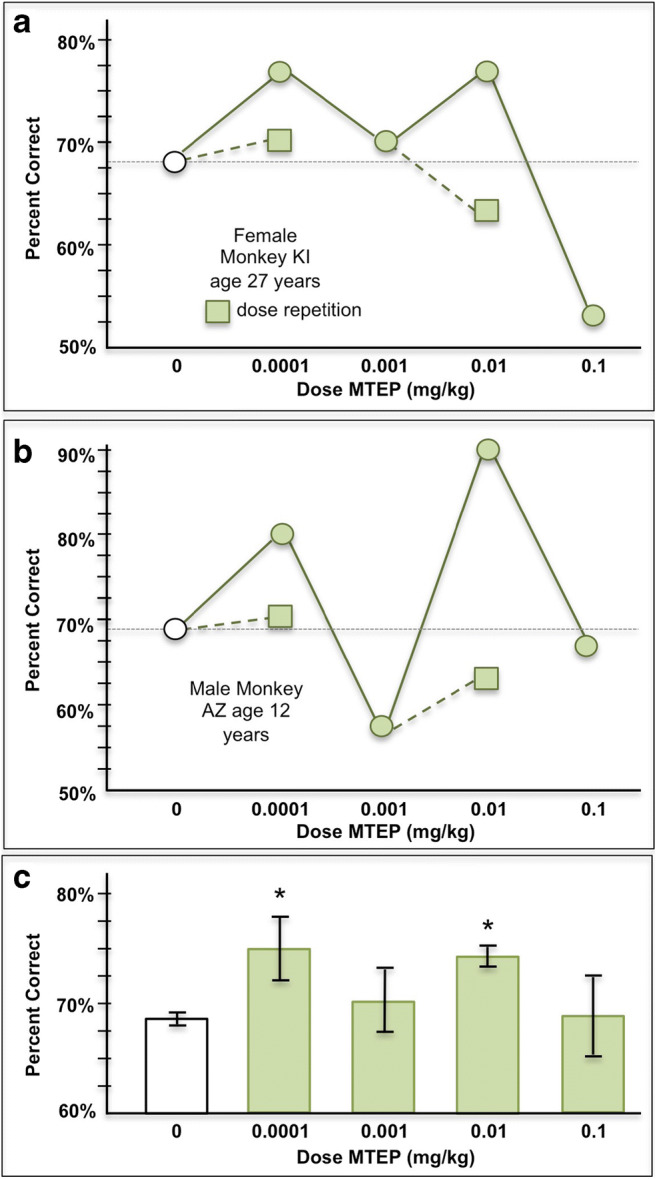
We found that iontophoresis of MTEP directly onto dlPFC "Delay cells" had an inverted U dose-response, where low doses tended to enhance task-related firing, but higher doses suppressed neuronal firing. Similar effects were seen on cognitive performance following systemic MTEP administration (0.0001-0.1 mg/kg), with MTEP producing erratic dose-response curves. In the subset of monkeys (50%) that showed replicable improvement with MTEP, co-administration with the mGluR5 PAM, CDPPB (3-Cyano-N-(1,3-diphenyl-1H-pyrazol-5-yl)benzamide), blocked MTEP beneficial effects, consistent with mGluR5 actions.
The mixed effects of MTEP on cognitive performance may arise from opposing actions at pre- vs. post-synaptic mGluR5 in dlPFC. These data from monkeys suggest that future clinical trials should include low doses, and identification of potential subgroup responders.
代谢型谷氨酸受体 5 型(mGluR5)拮抗剂正在开发用于治疗认知障碍,如脆性 X 综合征和阿尔茨海默病,主要基于在小鼠模型中的成功,其中突触后 mGluR5 刺激减弱了海马体中的突触功能。然而,mGluR5 拮抗剂的人体试验尚未成功。这可能部分归因于 mGluR5 在海马体和前额叶皮质中的不同作用,因为 mGluR5 在啮齿动物的海马体中主要是突触后,而在已知与工作记忆有关的背外侧前额叶皮质(dlPFC)回路中既是突触前又是突触后。
本研究检查了选择性 mGluR5 负变构调节剂 MTEP(3-((2-甲基-1,3-噻唑-4-基)乙炔基)吡啶盐酸盐)对自然发生神经元放电和认知表现受损的衰老恒河猴的 dlPFC“延迟细胞”的神经元放电和工作记忆性能的影响。
我们发现,MTEP 直接电注入 dlPFC“延迟细胞”具有倒 U 剂量反应,其中低剂量倾向于增强与任务相关的放电,但较高剂量抑制神经元放电。在系统给予 MTEP 后(0.0001-0.1 mg/kg)也观察到类似的认知表现,MTEP 产生了不稳定的剂量反应曲线。在接受 MTEP 治疗具有可复制改善的猴子亚组(50%)中,与 mGluR5 PAM(3-氰基-N-(1,3-二苯基-1H-吡唑-5-基)苯甲酰胺)CDPPB 联合给药阻断了 MTEP 的有益作用,这与 mGluR5 的作用一致。
MTEP 对认知表现的混合影响可能源于 dlPFC 中突触前和突触后 mGluR5 的相反作用。来自猴子的数据表明,未来的临床试验应包括低剂量,并确定潜在的亚组应答者。