Radiology Department, Clinical Hospital Centre Zemun, Belgrade, Serbia.
Department of Diagnostic and Interventional Radiology, University Hospital Dubrava, Zagreb, Croatia.
Eur Radiol. 2021 Mar;31(3):1185-1193. doi: 10.1007/s00330-020-07252-3. Epub 2020 Sep 17.
This survey conducted by the International Society of Radiology and supported by the European Society of Radiology aimed to collect information regarding radiology departments' current practices in the management of patients with COVID-19.
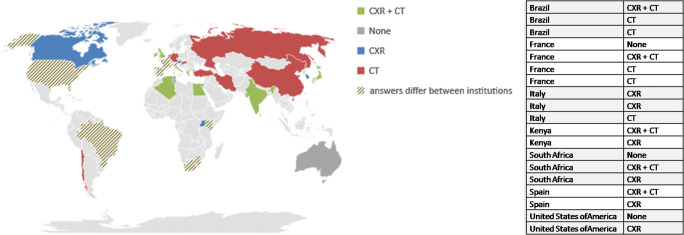
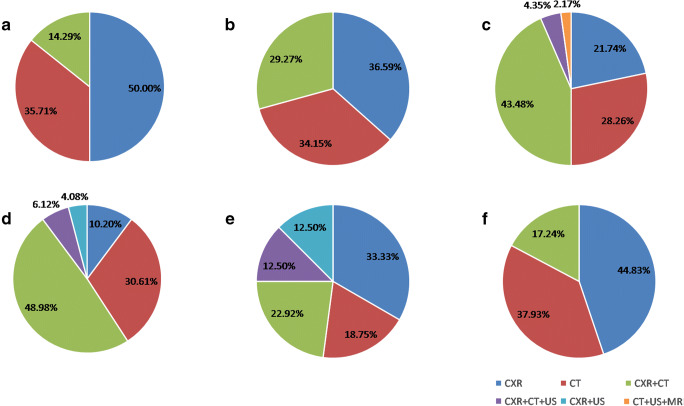
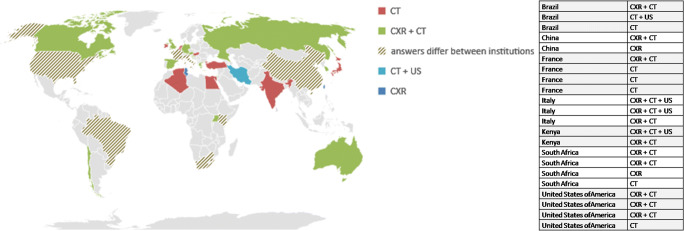
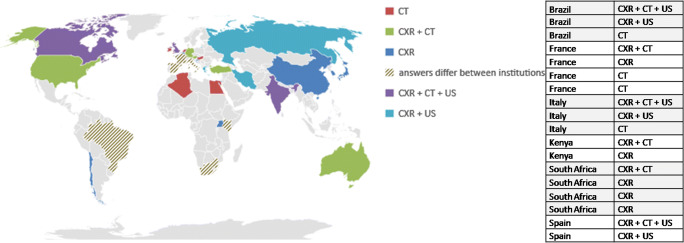
Responses from 50 radiology departments involved in the management of COVID-19 patients representing 33 countries across all continents were analyzed. The analysis revealed important variations in imaging practices related to COVID-19 across the world for different disease severity and various clinical scenarios.
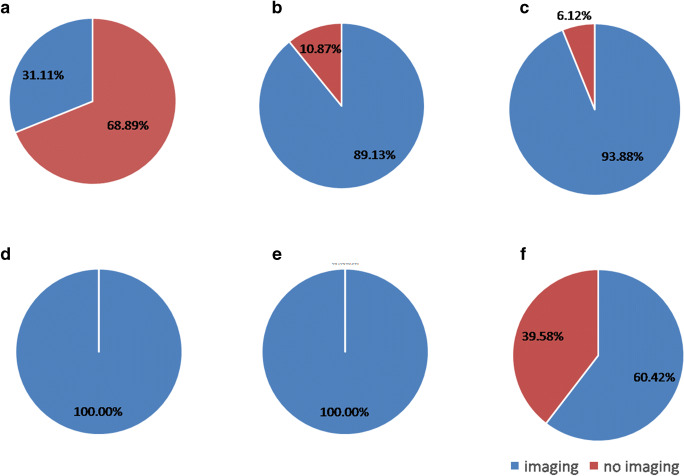
Imaging is usually not performed in asymptomatic patients (69% of institutions do not image) but is used at the end of confinement (in 60% of institutions). In the majority of institutions, chest imaging is used in suspected or confirmed patients with COVID-19 (89% and 94%). All imaging departments involved in this survey reported the use of imaging in COVID-19 patients showing severe symptoms or who were critically ill. However, there is a wide variation in imaging modality type used for each clinical scenario. The use of imaging is applied in line with existing guidelines and recommendations in 98% of institutions with structured reporting recorded in 58% of institutions. The vast majority of institutions reported a significant impact of the COVID-19 pandemic on the imaging department's routine activity (83%).
We believe that the results of this survey will help to understand current heterogeneities in radiology practice and to identify needs and gaps in the organization and function of radiology departments worldwide in relation to the COVID-19 pandemic. The results of this survey may inform the development of an overall strategy for radiology department organization and imaging protocols in pandemic conditions.
• The results of this survey, which included responses from 50 radiology departments representing 33 countries, showed important variations in imaging practices related to COVID-19 across the world. • While imaging is usually not performed in asymptomatic patients (69% of institutions), it is used in suspected or confirmed patients with COVID-19, in COVID-19 patients showing severe symptoms or who were critically ill, and at the end of confinement (89%, 94%, 100%, 100%, 60% of institutions, respectively). However, there is a wide variation in imaging modality type used for each clinical scenario. • In 98% of institutions, the use of imaging is applied in line with existing guidelines and recommendations, with structured reporting recorded in 58% of institutions. COVID-19 pandemic made a significant impact on the imaging department's routine activity in 83% of institutions.
这项由国际放射学会发起并得到欧洲放射学会支持的调查旨在收集有关放射科部门目前管理 COVID-19 患者的实践信息。
对来自代表各大洲所有国家的 33 个国家的 50 个参与 COVID-19 患者管理的放射科部门的回复进行了分析。分析揭示了全球范围内与 COVID-19 相关的影像学实践存在重要差异,具体表现在不同疾病严重程度和各种临床情况下。
影像学检查通常不适用于无症状患者(69%的机构不进行影像学检查),而是在隔离结束时进行(60%的机构)。在大多数机构中,对疑似或确诊的 COVID-19 患者进行胸部影像学检查(89%和 94%)。参与这项调查的所有放射科部门都报告了在出现严重症状或病危的 COVID-19 患者中使用影像学检查。然而,每种临床情况下使用的影像学检查方式存在广泛差异。在 98%的机构中,影像学检查的使用符合现有指南和建议,在 58%的机构中记录了结构化报告。绝大多数机构报告 COVID-19 大流行对影像部门的日常活动产生了重大影响(83%)。
我们相信,这项调查的结果将有助于了解放射科实践中当前存在的差异,并确定全球放射科部门在组织和功能方面与 COVID-19 大流行相关的需求和差距。这项调查的结果可能为制定大流行条件下放射科部门组织和影像学方案的总体战略提供信息。
这项调查包括来自代表 33 个国家的 50 个放射科部门的回复,结果显示全球范围内与 COVID-19 相关的影像学实践存在重要差异。
虽然影像学检查通常不适用于无症状患者(69%的机构),但在疑似或确诊的 COVID-19 患者、出现严重症状或病危的 COVID-19 患者以及隔离结束时(89%、94%、100%、100%、60%的机构)使用。然而,每种临床情况下使用的影像学检查方式存在广泛差异。
在 98%的机构中,影像学检查的使用符合现有指南和建议,58%的机构记录了结构化报告。83%的机构表示 COVID-19 大流行对影像部门的日常活动产生了重大影响。