Peripheral Neuropathy Research Center, Dong-A University, Busan, Republic of Korea.
Department of Biochemistry, College of Medicine, Dong-A University, Busan, Republic of Korea.
PLoS One. 2020 Sep 17;15(9):e0239126. doi: 10.1371/journal.pone.0239126. eCollection 2020.
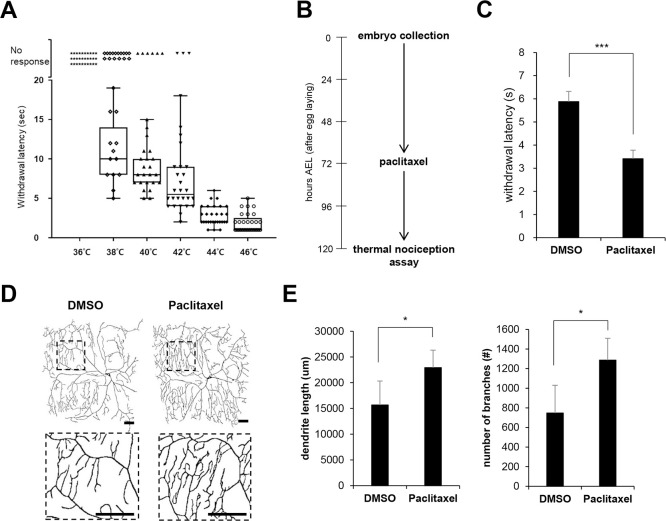
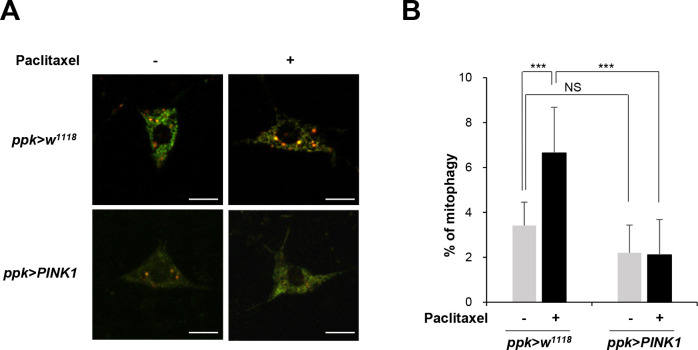
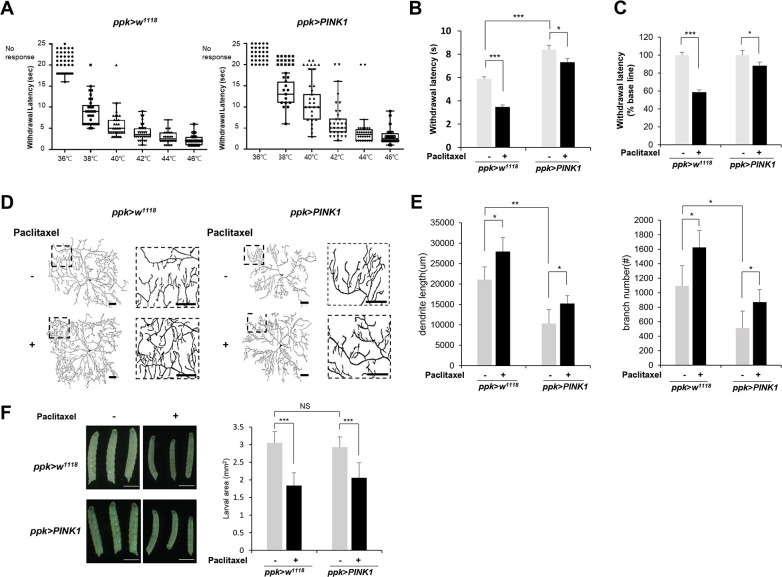
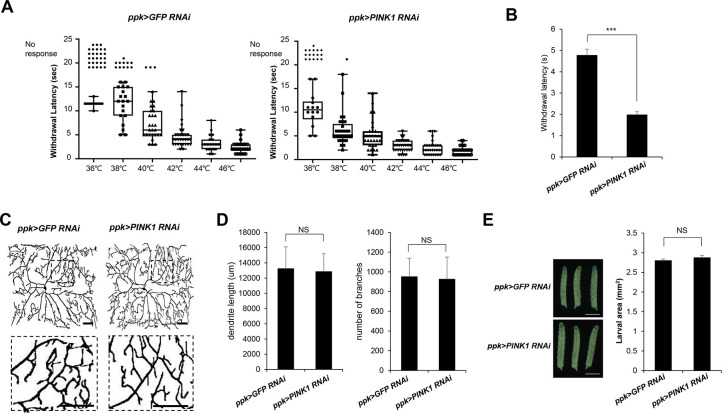
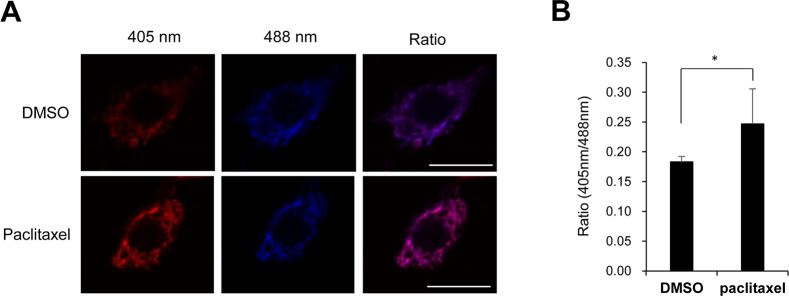
Paclitaxel is a representative anticancer drug that induces chemotherapy-induced peripheral neuropathy (CIPN), a common side effect that limits many anticancer chemotherapies. Although PINK1, a key mediator of mitochondrial quality control, has been shown to protect neuronal cells from various toxic treatments, the role of PINK1 in CIPN has not been investigated. Here, we examined the effect of PINK1 expression on CIPN using a recently established paclitaxel-induced peripheral neuropathy model in Drosophila larvae. We found that the class IV dendritic arborization (C4da) sensory neuron-specific expression of PINK1 significantly ameliorated the paclitaxel-induced thermal hyperalgesia phenotype. In contrast, knockdown of PINK1 resulted in an increase in thermal hypersensitivity, suggesting a critical role for PINK1 in sensory neuron-mediated thermal nociceptive sensitivity. Interestingly, analysis of the C4da neuron morphology suggests that PINK1 expression alleviates paclitaxel-induced thermal hypersensitivity by means other than preventing alterations in sensory dendrites in C4da neurons. We found that paclitaxel induces mitochondrial dysfunction in C4da neurons and that PINK1 expression suppressed the paclitaxel-induced increase in mitophagy in C4da neurons. These results suggest that PINK1 mitigates paclitaxel-induced sensory dendrite alterations and restores mitochondrial homeostasis in C4da neurons and that improvement in mitochondrial quality control could be a promising strategy for the treatment of CIPN.
紫杉醇是一种代表性的抗癌药物,它会引起化疗引起的周围神经病(CIPN),这是一种常见的副作用,限制了许多抗癌化疗药物的使用。虽然 PINK1 是线粒体质量控制的关键介质,已经被证明可以保护神经元细胞免受各种毒性处理,但 PINK1 在 CIPN 中的作用尚未被研究。在这里,我们使用最近建立的紫杉醇诱导的果蝇幼虫周围神经病模型,研究了 PINK1 表达对 CIPN 的影响。我们发现,PINK1 在四级树突状分支(C4da)感觉神经元中的特异性表达显著改善了紫杉醇诱导的热痛觉过敏表型。相反,PINK1 的敲低导致热敏感性增加,表明 PINK1 在感觉神经元介导的热伤害感受敏感性中起关键作用。有趣的是,对 C4da 神经元形态的分析表明,PINK1 表达通过防止 C4da 神经元感觉树突的改变以外的其他方式缓解紫杉醇诱导的热敏感性。我们发现紫杉醇诱导 C4da 神经元线粒体功能障碍,而 PINK1 表达抑制紫杉醇诱导的 C4da 神经元自噬增加。这些结果表明,PINK1 减轻了紫杉醇诱导的感觉树突改变,并恢复了 C4da 神经元中线粒体的内稳态,改善线粒体质量控制可能是治疗 CIPN 的一种有前途的策略。