John von Neumann Institute for, Computing and Jülich Supercomputing Centre, Institute for Advanced Simulation, Forschungszentrum Jülich, Jülich, Germany.
John von Neumann Institute for, Computing and Jülich Supercomputing Centre, Institute for Advanced Simulation, Forschungszentrum Jülich, Jülich, Germany; Faculty of Biology, University of Duisburg-Essen, Essen, Germany.
Biophys J. 2021 Mar 16;120(6):1001-1010. doi: 10.1016/j.bpj.2020.08.022. Epub 2020 Aug 27.
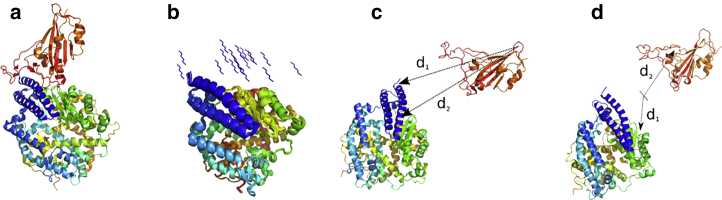
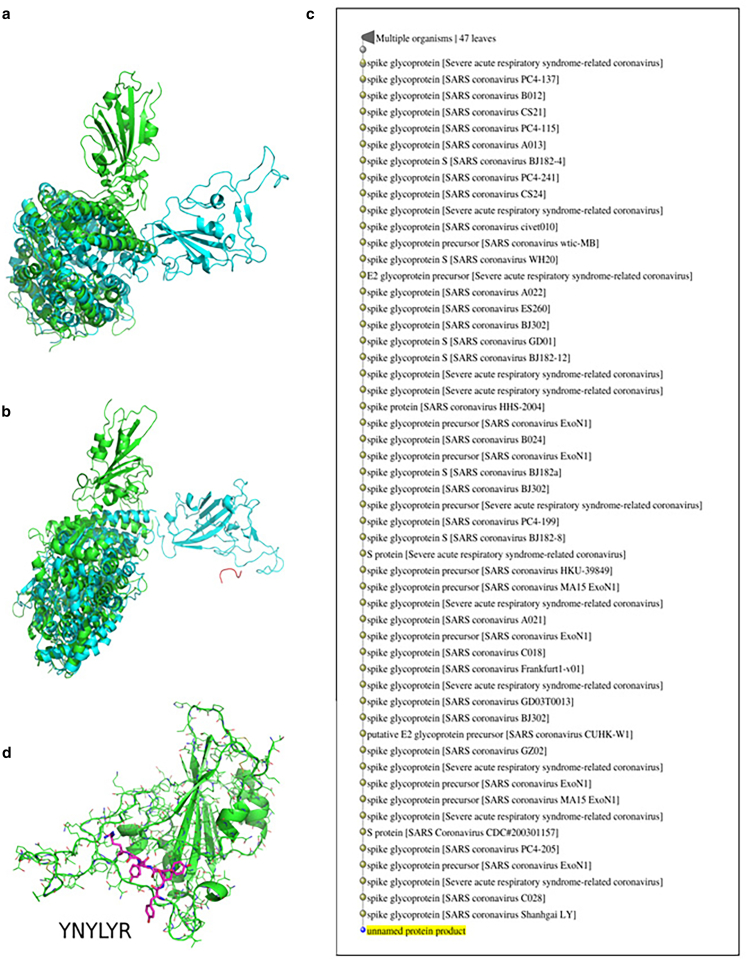
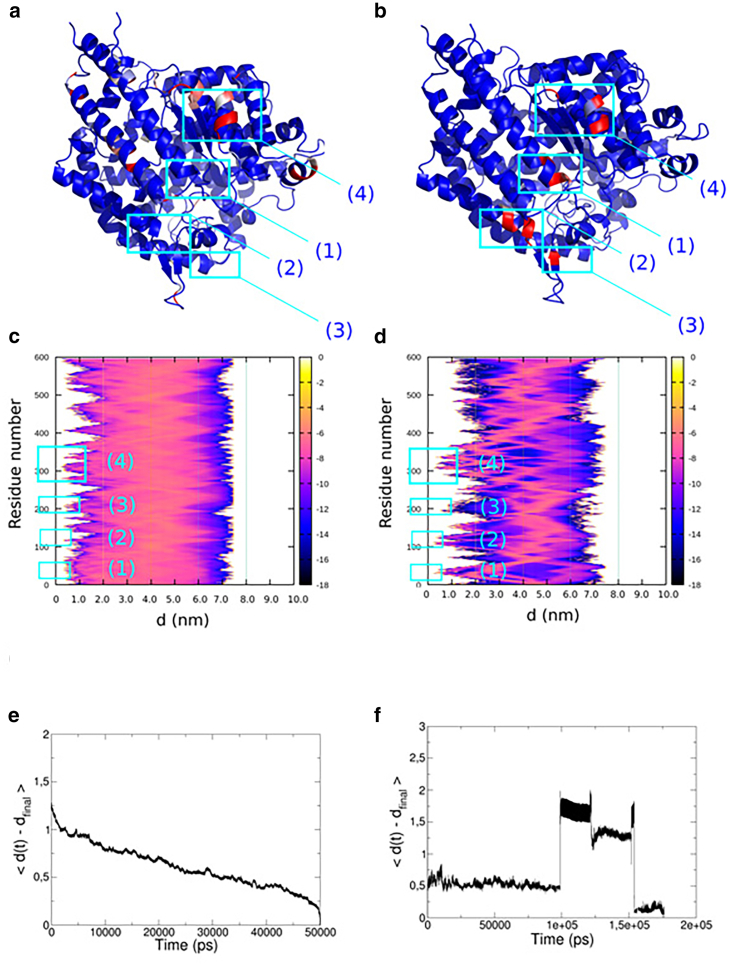
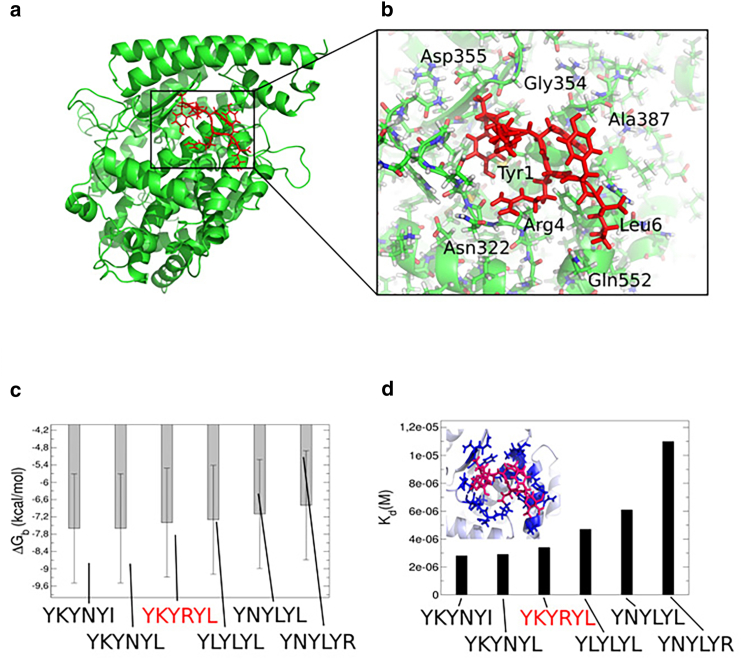
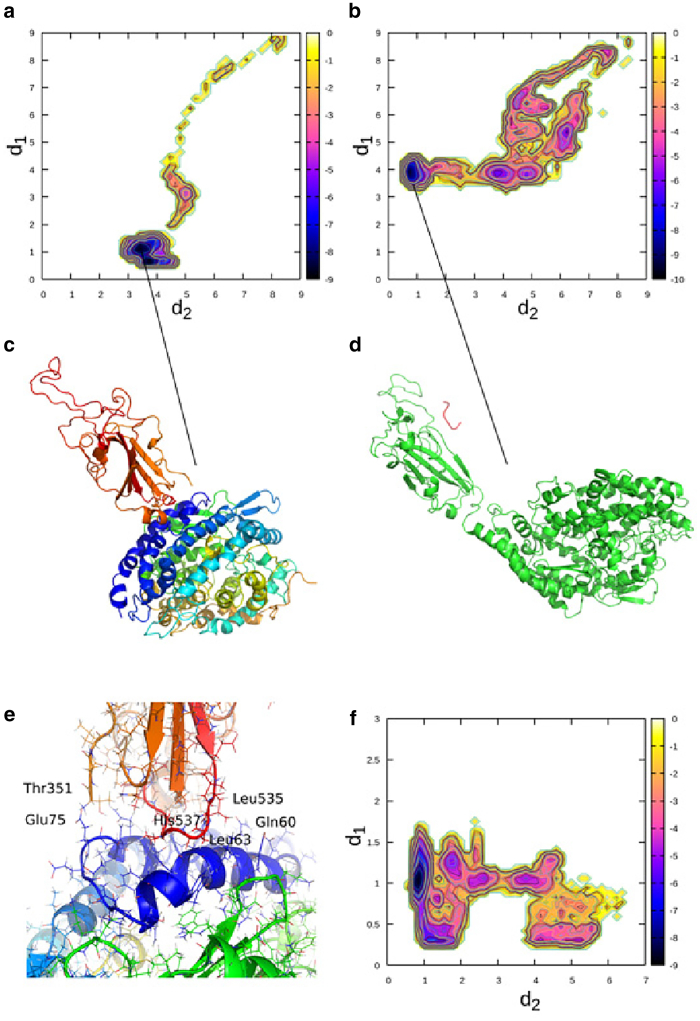
In this article, we investigate the binding processes of a fragment of the coronavirus spike protein receptor binding domain (RBD), the hexapeptide YKYRYL on the angiotensin-converting enzyme 2 (ACE2) receptor, and its inhibitory effect on the binding and activation of the coronavirus-2 spike protein CoV-2 RBD at ACE2. In agreement with an experimental study, we find a high affinity of the hexapeptide to the binding interface between CoV-2 RBD and ACE2, which we investigate using 20 independent equilibrium molecular dynamics (MD) simulations over a total of 1 μs and a 200-ns enhanced correlation guided MD simulation. We then evaluate the effect of the hexapeptide on the assembly process of the CoV-2 RBD to ACE2 in long-time enhanced correlation guided MD simulations. In that set of simulations, we find that CoV-2 RBD does not bind to ACE2 with the binding motif shown in experiments, but it rotates because of an electrostatic repulsion and forms a hydrophobic interface with ACE2. Surprisingly, we observe that the hexapeptide binds to CoV-2 RBD, which has the effect that this protein only weakly attaches to ACE2 so that the activation of CoV-2 RBD might be inhibited in this case. Our results indicate that the hexapeptide might be a possible treatment option that prevents the viral activation through the inhibition of the interaction between ACE2 and CoV-2 RBD.
在本文中,我们研究了冠状病毒刺突蛋白受体结合域(RBD)片段、六肽 YKYRYL 与血管紧张素转化酶 2(ACE2)受体的结合过程,以及其对冠状病毒-2 刺突蛋白 CoV-2 RBD 与 ACE2 结合和激活的抑制作用。与实验研究一致,我们发现六肽与 CoV-2 RBD 和 ACE2 之间的结合界面具有很高的亲和力,我们使用总共 1 μs 和 200-ns 的增强相关引导 MD 模拟的 20 个独立平衡分子动力学(MD)模拟来研究该结合界面。然后,我们在长时间增强相关引导 MD 模拟中评估了六肽对 CoV-2 RBD 与 ACE2 组装过程的影响。在那组模拟中,我们发现 CoV-2 RBD 不会像实验中那样以显示的结合基序与 ACE2 结合,而是由于静电排斥而旋转,并与 ACE2 形成疏水性界面。令人惊讶的是,我们观察到六肽与 CoV-2 RBD 结合,这使得该蛋白仅弱附着于 ACE2,因此在这种情况下,CoV-2 RBD 的激活可能被抑制。我们的结果表明,六肽可能是一种潜在的治疗选择,可以通过抑制 ACE2 和 CoV-2 RBD 之间的相互作用来防止病毒激活。