Department of Human Geography and Logistics, Faculty of Earth Science, Shahid Beheshti University, Tehran, Iran.
Department of Geography and Urban Planning, Faculty of Social Sciences, University of Mohaghegh Ardabili, Ardabil, Iran.
BMC Public Health. 2020 Sep 17;20(1):1414. doi: 10.1186/s12889-020-09495-7.
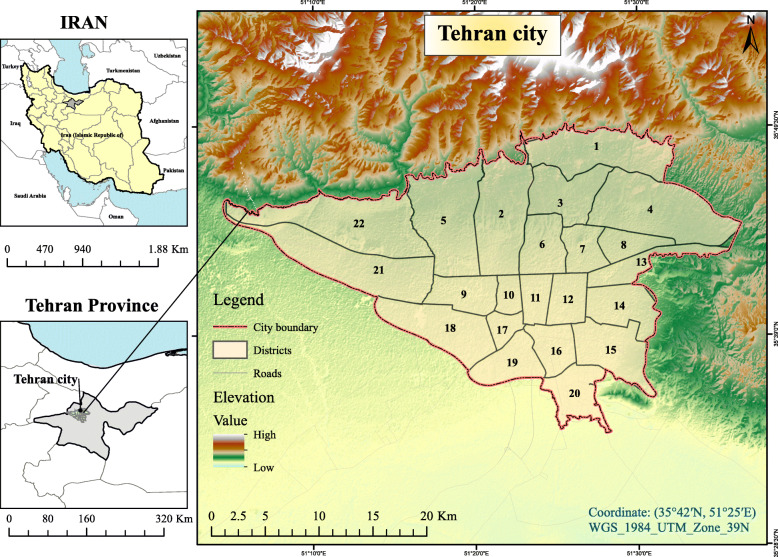
Tehran, the 22nd most populous city in the world, has the highest mortality rate due to respiratory system diseases (RSDs) in Iran. This study aimed to investigate spatiotemporal patterns of mortality due to these diseases in Tehran between 2008 and 2018.
We used a dataset available from Tehran Municipality including all cases deceased due RSDs in this city between 2008 and 2018. Global Moran's I was performed to test whether the age-adjusted mortality rates were randomly distributed or had a spatial pattern. Furthermore, Anselin Local Moran's I was conducted to identify potential clusters and outliers.
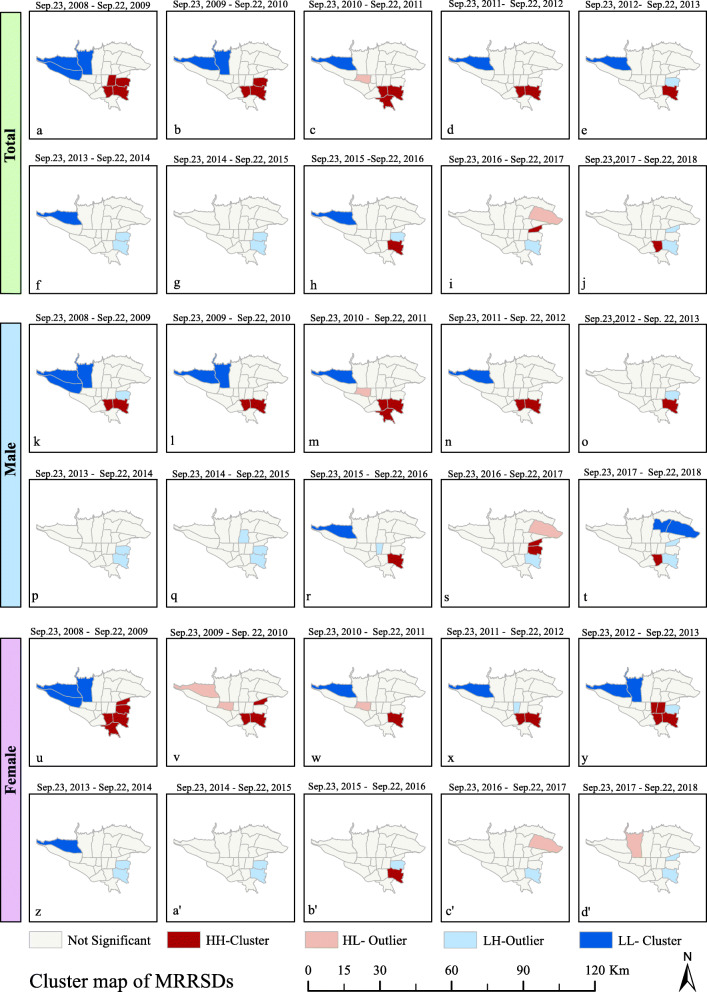
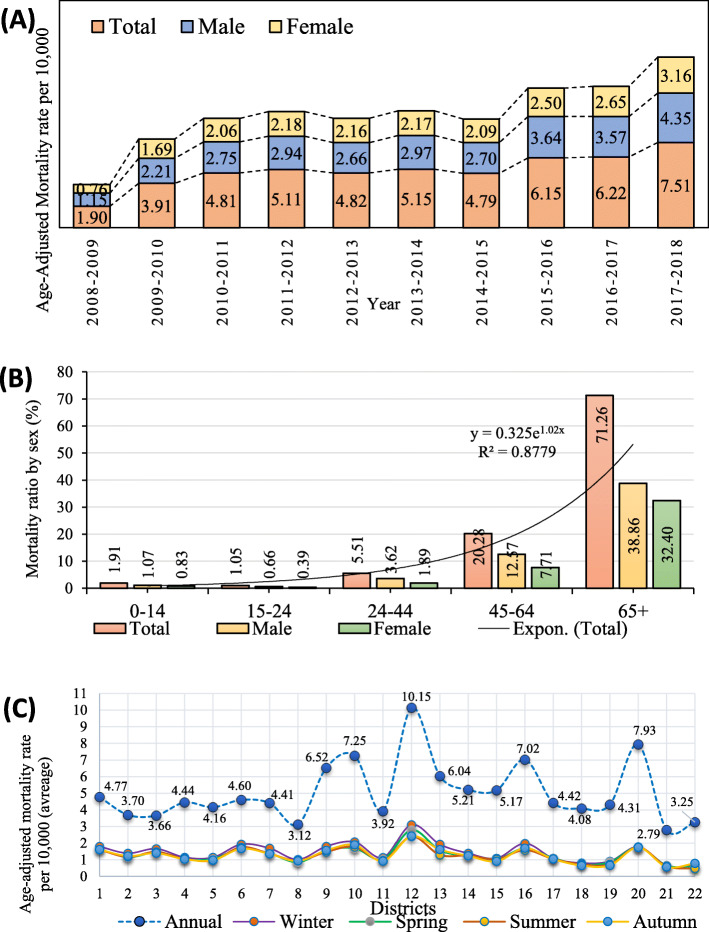
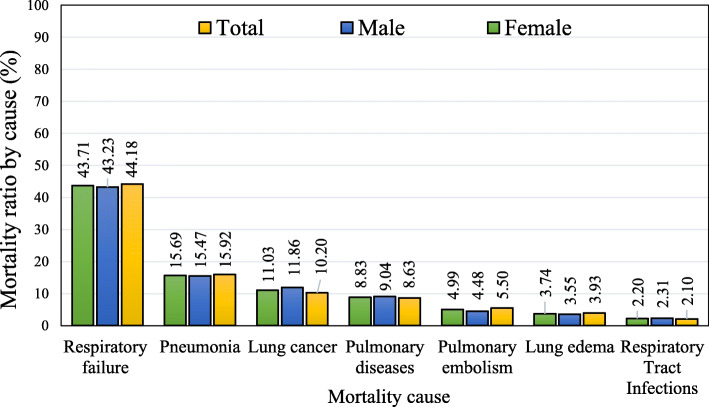
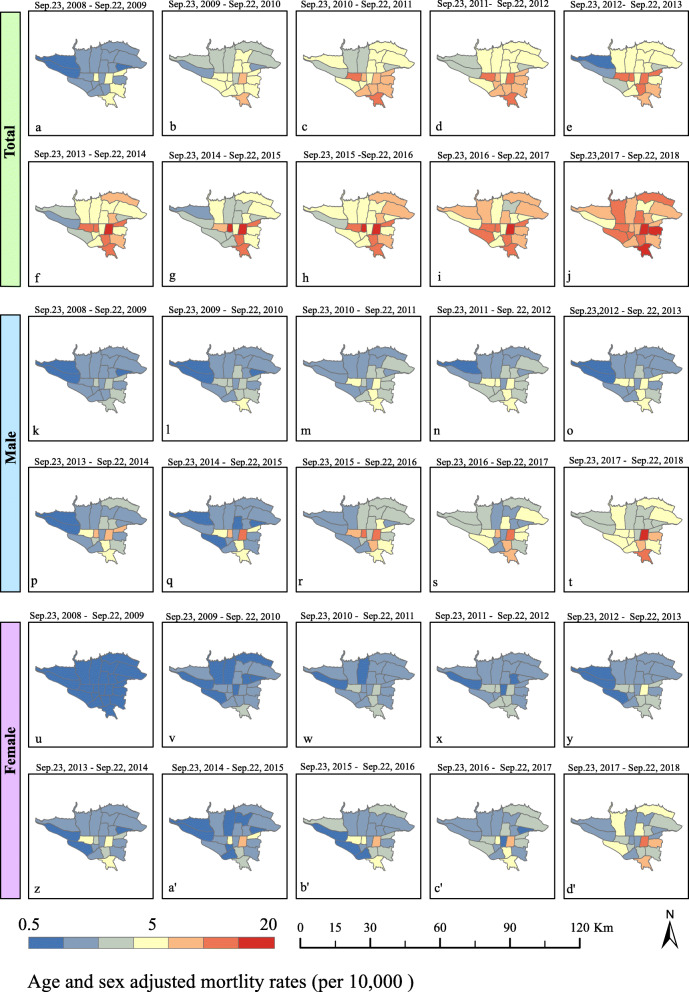
During the 10-year study, 519,312 people died in Tehran, 43,177 because of RSDs, which corresponds to 831.1 per 10,000 deaths and 5.0 per 10,000 population. The death rate was much higher in men (56.8%) than in women (43.2%) and the highest occurred in the > 65 age group (71.2%). Overall, three diseases dominated the mortality data: respiratory failure (44.2%), pneumonia (15.9%) and lung cancer (10.2%). The rates were significantly higher in the central and southeastern parts of the city and lower in the western areas. It increased during the period 2008-2018 and showed a clustered spatial pattern between 2008 and 2013 but presented a random geographical pattern afterwards.
This study provides a first report of the spatial distribution of mortality due to RSDs in Tehran and shows a significant increase in respiratory disease mortality in the last ten years. Effective control of the excess fatality rates would warrant a combination of urban prevention and treatment strategies including environmental health plans.
世界上人口排名第 22 位的城市德黑兰,其呼吸系统疾病(RSD)死亡率在伊朗最高。本研究旨在调查 2008 年至 2018 年期间德黑兰因这些疾病导致的死亡率的时空模式。
我们使用了德黑兰市政府提供的一个数据集,其中包括 2008 年至 2018 年期间该市所有因 RSD 死亡的病例。进行了全局 Moran's I 检验,以检验年龄调整死亡率是否随机分布或具有空间模式。此外,还进行了 Anselin 局部 Moran's I 检验,以识别潜在的聚类和异常值。
在 10 年的研究期间,德黑兰有 519312 人死亡,其中 43177 人死于 RSD,这相当于每 10000 人死亡 831.1 人,每 10000 人死亡 5.0 人。男性死亡率(56.8%)明显高于女性(43.2%),最高的是>65 岁年龄组(71.2%)。总体而言,三种疾病主导了死亡率数据:呼吸衰竭(44.2%)、肺炎(15.9%)和肺癌(10.2%)。市中心和东南部地区的死亡率明显较高,西部地区的死亡率较低。该比率在 2008-2018 年期间有所增加,并且在 2008 年至 2013 年期间表现出聚类的空间模式,但此后呈现出随机的地理模式。
本研究首次报告了德黑兰因 RSD 导致的死亡率的空间分布,并显示了过去十年中呼吸系统疾病死亡率的显著增加。要有效控制过高的死亡率,需要结合城市预防和治疗策略,包括环境卫生计划。