Professor of pulmonary medicine, Tobacco Control Research Center (TCRC), Iranian Anti-tobacco Association, Tehran, Iran.
Department of Environmental Health Engineering, School of Public Health, Iran University of Medical Sciences, Tehran, Iran.
Sci Rep. 2019 Feb 28;9(1):3110. doi: 10.1038/s41598-019-39684-3.
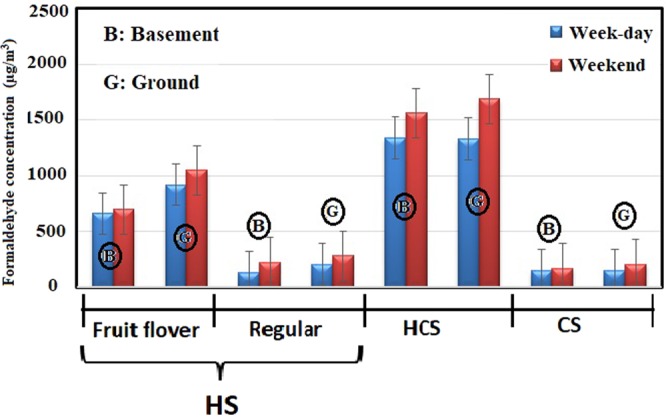
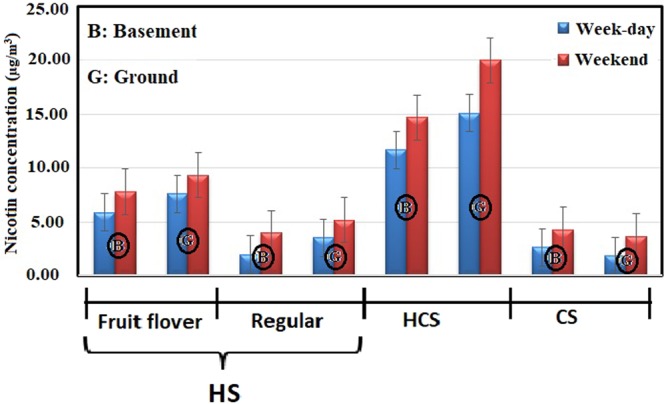
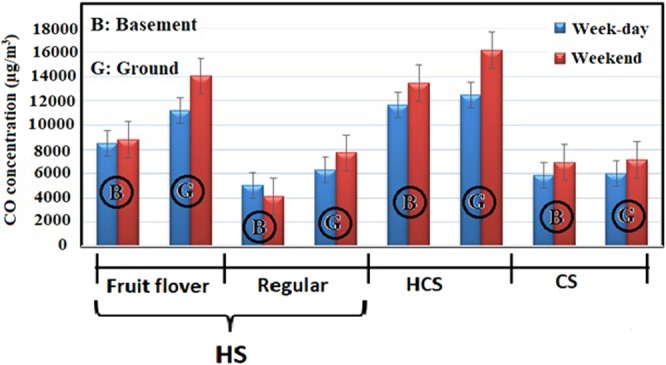
Despite increasingly growth in waterpipe smoking in Tehran, so far no study has been conducted on the air quality of the waterpipe and cigarette cafés. Thirty-six cafés were selected and the concentration of three pollutants including formaldehyde, carbon monoxide and nicotine were measured in both indoor and outdoor air of cafés two times (week-day and weekend's session). Air sampling was performed for 180 min for each pollutant. It was observed that the concentration of pollutants inside the cafés was higher during weekend session (with a higher number of "active waterpipe heads") compared with findings during the week-day sessions. Furthermore, the concentration of pollutants in the indoor air of the cafés was significantly higher than that of the outdoors (p < 0.05). According to path analysis, the number of "active waterpipe heads" had the maximum impact on generation of pollutants inside the cafés, followed by the type of tobacco as the second influential factor. The average of lifetime cancer risk (LTCR) resulted by formaldehyde exposure through inhalation in waterpipe (WS), cigarette (CS), waterpipe and cigarette (WCS) and none-smoking (NS) cafés in week-day and weekend sessions were estimated to be 111 × 10 and 61.2 × 10, 33.7 × 10 and 39.4 × 10, 271 × 10 and 322 × 10, and 4.80 × 10 and 5.90 × 10, respectively, which exceed the limit value by the U.S.EPA and WHO. The concentration of pollutants in the indoor air of smoking cafés in Tehran is significantly high, such that it can pose serious risks for the health of both personnel and customers. Therefore, decision makers are expected to enact applicable and strict policies so as to abate this public health risk.
尽管德黑兰的水烟吸烟人数不断增加,但迄今为止,尚无关于水烟和香烟咖啡馆空气质量的研究。我们选择了 36 家咖啡馆,并在咖啡馆的室内和室外空气两次(工作日和周末时段)测量了三种污染物(包括甲醛,一氧化碳和尼古丁)的浓度。每种污染物的空气采样时间为 180 分钟。结果发现,与工作日时段相比,周末时段咖啡馆内的污染物浓度更高(有更多的“活跃水烟头”)。此外,咖啡馆内空气的污染物浓度明显高于室外(p<0.05)。通过路径分析发现,“活跃水烟头”的数量对咖啡馆内污染物的产生有最大的影响,其次是烟草的类型,为第二大影响因素。通过吸入水烟(WS)、香烟(CS)、水烟和香烟(WCS)和不吸烟(NS)咖啡馆中的甲醛暴露,在工作日和周末时段,个体的终生癌症风险(LTCR)的平均值估计分别为 111×10 和 61.2×10、33.7×10 和 39.4×10、271×10 和 322×10,以及 4.80×10 和 5.90×10,均超过了美国环保署和世界卫生组织的限值。德黑兰吸烟咖啡馆室内空气中污染物的浓度非常高,这可能会对员工和顾客的健康造成严重威胁。因此,决策者应制定适用和严格的政策,以减轻这一公共健康风险。