Laboratory of Cancer Biology and Genetics, Center for Cancer Research, National Cancer Institute, Bethesda, Maryland.
Leidos Biomedical Research, Inc., Frederick, Maryland.
Mol Cancer Ther. 2020 Nov;19(11):2308-2318. doi: 10.1158/1535-7163.MCT-19-0858. Epub 2020 Sep 17.
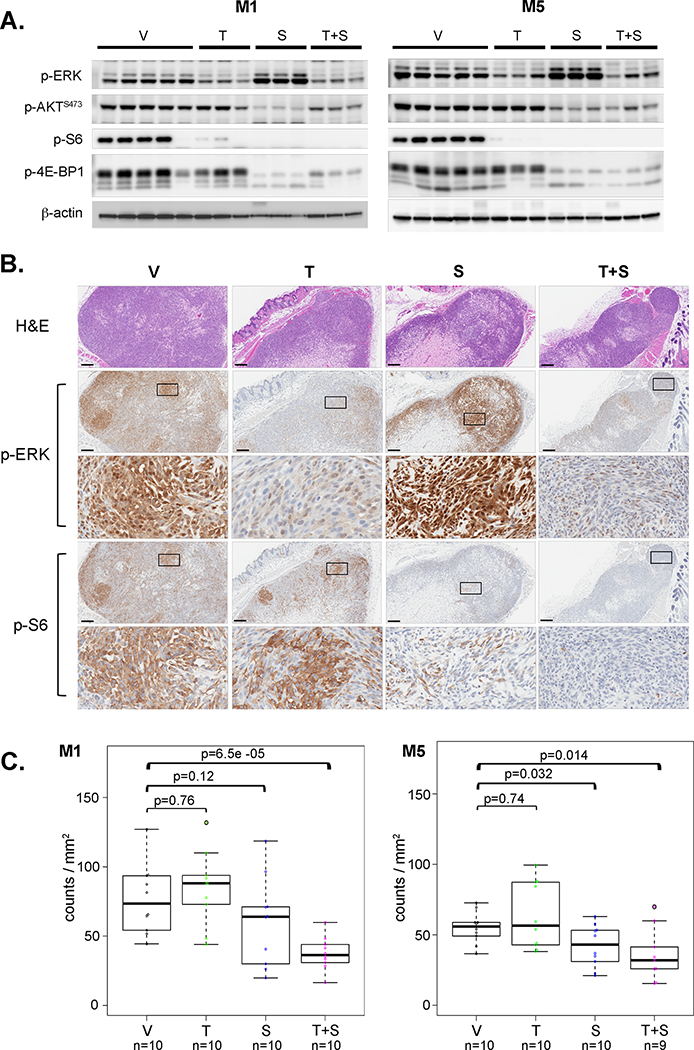
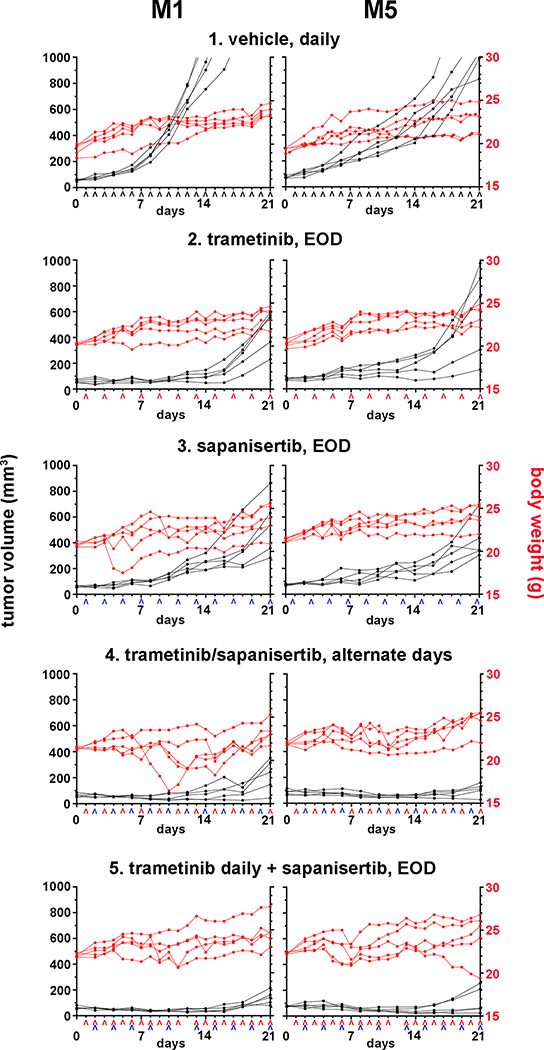
Melanomas arising in the mucous membranes are a rare and aggressive subtype. New treatment approaches are needed, yet accumulating sufficient evidence to improve patient outcomes is difficult. Clinical and pathological correlates between human and canine mucosal melanomas are substantial, and the relatively greater incidence of spontaneous naturally occurring mucosal melanoma in dogs represents a promising opportunity for predictive modeling. The genomic landscapes of human and canine mucosal melanoma appear highly diverse and generally lack recurring hotspot mutations associated with cutaneous melanomas. Although much remains to be determined, evidence indicates that Ras/MAPK and/or PI3K/AKT/mTOR signaling pathway activations are common in both species and may represent targets for therapeutic intervention. Sapanisertib, an mTORC1/2 inhibitor, was selected from a PI3K/mTOR inhibitor library to collaborate with MEK inhibition; the latter preclinical efficacy was demonstrated previously for canine mucosal melanoma. Combined inhibition of MEK and mTORC1/2, using trametinib and sapanisertib, produced apoptosis and cell-cycle alteration, synergistically reducing cell survival in canine mucosal melanoma cell lines with varying basal signaling activation levels. Compared with individual inhibitors, a staggered sapanisertib dose, coupled with daily trametinib, was optimal for limiting primary mucosal melanoma xenograft growth in mice, and tumor dissemination in a metastasis model, while minimizing hematologic and renal side effects. Inhibitors downmodulated respective signaling targets and the combination additionally suppressed pathway reciprocal crosstalk. The combination did not significantly change plasma sapanisertib pharmacokinetics; however, trametinib area under the curve was increased in the presence of sapanisertib. Targeting Ras/MAPK and PI3K/AKT/mTOR signal transduction pathways appear rational therapies for canine and human mucosal melanoma.
黏膜黑色素瘤是一种罕见且侵袭性很强的亚型。需要新的治疗方法,但积累足够的证据来改善患者的预后是困难的。人类和犬类黏膜黑色素瘤之间存在着显著的临床和病理相关性,并且犬类中自发性、自然发生的黏膜黑色素瘤的相对较高发病率为预测模型提供了一个很有前途的机会。人类和犬类黏膜黑色素瘤的基因组图谱显示出高度的多样性,并且通常缺乏与皮肤黑色素瘤相关的反复热点突变。尽管还有很多需要确定,但有证据表明,Ras/MAPK 和/或 PI3K/AKT/mTOR 信号通路的激活在这两个物种中都很常见,并且可能是治疗干预的靶点。Sapanisertib 是一种 mTORC1/2 抑制剂,从 PI3K/mTOR 抑制剂库中被选中与 MEK 抑制协同作用;先前已经证明了后者对犬类黏膜黑色素瘤的临床前疗效。使用 trametinib 和 sapanisertib 联合抑制 MEK 和 mTORC1/2,可产生细胞凋亡和细胞周期改变,协同降低具有不同基础信号激活水平的犬类黏膜黑色素瘤细胞系中的细胞存活率。与单独使用抑制剂相比,错开使用 sapanisertib 剂量,并与每日 trametinib 联合使用,可优化限制小鼠原发性黏膜黑色素瘤异种移植物生长和转移模型中肿瘤扩散的效果,同时最小化血液学和肾脏副作用。抑制剂下调了各自的信号靶点,联合用药还抑制了通路的相互串扰。该组合并未显著改变血浆中 sapanisertib 的药代动力学;然而,在存在 sapanisertib 的情况下,trametini 的曲线下面积增加了。靶向 Ras/MAPK 和 PI3K/AKT/mTOR 信号转导通路似乎是犬类和人类黏膜黑色素瘤的合理治疗方法。