Pradoo Aimon, Sriapha Charuwan, Trakulsrichai Satariya, Tongpoo Achara, Kheiawsawang Metta, Wananukul Winai
Ramathibodi Poison Center, Faculty of Medicine Ramathibodi Hospital, Mahidol University, Bangkok 10400, Thailand.
Department of Emergency Medicine, Faculty of Medicine Ramathibodi Hospital, Mahidol University, Bangkok 10400, Thailand.
Int J Gen Med. 2020 Aug 25;13:539-545. doi: 10.2147/IJGM.S263199. eCollection 2020.
is a tropical plant used as a herbal medicine in various parts of the world, including Thailand. In glucose-6-phosphate dehydrogenase (G6PD)-deficient patients, acute hemolysis has been reported following the ingestion of this plant. Methemoglobinemia was reported in the present study.
Descriptive data of patients who suffered from toxicity reported from different hospitals to the Ramathibodi Poison Center were retrieved from 2011 to 2019.
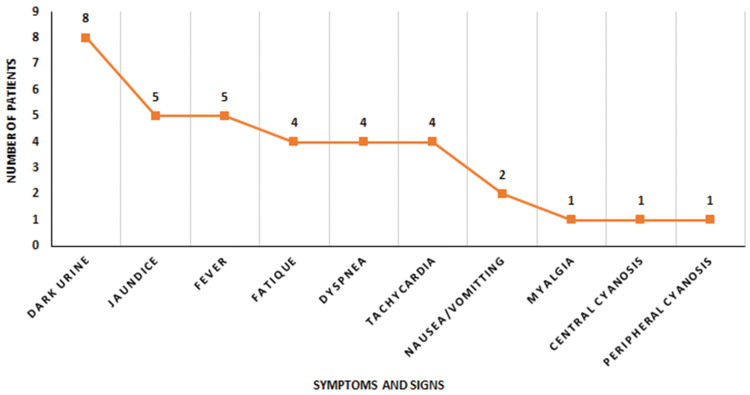
Eight patients were included, mostly male with a median age of 61.5 years. The plant was ground for fresh juice or boiled before consuming as herbal medicine. All patients presented with dark urine. Most had jaundice and fever, and all reported hemolysis. Seven out of eight patients were diagnosed as methemoglobinemia. Methemoglobin level was confirmed in five patients with the highest level of 23.9%. Early symptoms occurred within 24 hours of the last ingested dose.
In previous case reports of ingestion, acute hemolysis was mostly observed in G6PD-deficient patients, consistent with the current findings. However, our patients also demonstrated methemoglobinemia, with some constituents in this plant (quinine, 2-methyl anthraquinone and tectoquinone) implicated as the cause in previous studies. Further studies are crucial to validate these findings.
We report a case series in which acute hemolysis and methemoglobinemia after ingestion were observed. This study presents methemoglobinemia as the other toxicity caused by this plant.
[植物名称]是一种热带植物,在世界各国包括泰国被用作草药。据报道,葡萄糖-6-磷酸脱氢酶(G6PD)缺乏的患者在摄入这种植物后会发生急性溶血。本研究报告了高铁血红蛋白血症。
检索2011年至2019年不同医院向拉玛蒂博迪中毒中心报告的[植物名称]中毒患者的描述性数据。
纳入8例患者,多数为男性,中位年龄61.5岁。该植物被研磨成新鲜汁液或煮沸后作为草药食用。所有患者均出现深色尿液。多数患者有黄疸和发热,均报告有溶血。8例患者中有7例被诊断为高铁血红蛋白血症。5例患者确诊为高铁血红蛋白血症,最高水平为23.9%。早期症状出现在最后一次摄入剂量后的24小时内。
在之前关于[植物名称]摄入的病例报告中,急性溶血多见于G6PD缺乏的患者,与当前研究结果一致。然而,我们的患者也表现出高铁血红蛋白血症,该植物中的一些成分(奎宁、2-甲基蒽醌和 tectoquinone)在之前的研究中被认为是病因。进一步的研究对于验证这些发现至关重要。
我们报告了一组病例,观察到摄入[植物名称]后出现急性溶血和高铁血红蛋白血症。本研究表明高铁血红蛋白血症是这种植物引起的另一种毒性反应。