Wang Yu, Dou Lei, Qin Yun, Yang Huiyuan, Yan Peng
Hepatic Surgery Center, Tongji Hospital, Tongji Medical College, Huazhong University of Science and Technology, Wuhan, 430030 Hubei China.
Hubei Province for the Clinical Medicine Research Center of Hepatic Surgery, Wuhan, 430030 Hubei China.
Cancer Cell Int. 2020 Sep 9;20:440. doi: 10.1186/s12935-020-01467-6. eCollection 2020.
It has reported that long non-coding RNAs (lncRNAs) exerted regulatory functions by targeting specific genes through a competing endogenous RNA (ceRNA) pathway. LncRNA OIP5-AS1 has been identified as a tumor-enhancer in several tumor types. Nonetheless, its molecular mechanism in HCC remains to be masked.
This study was aimed at exploring whether and how OIP5-AS1 exert functions in HCC.
qRT-PCR and western blot were employed for detecting gene expression. CCK-8, colony formation and EdU assays were implemented to evaluate the proliferative ability of HCC cells. Caspase-3 activity and flow cytometry analyses were implemented to determine cell apoptosis and cell cycle distribution. RNA pull down, ChIP, RIP and luciferase reporter assays explored the interplays between molecules.
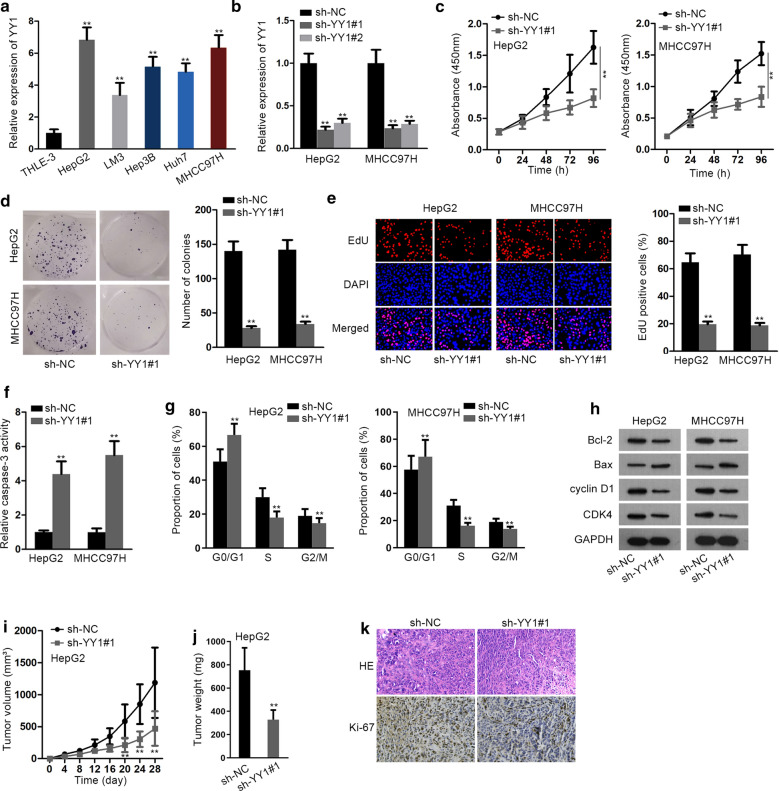
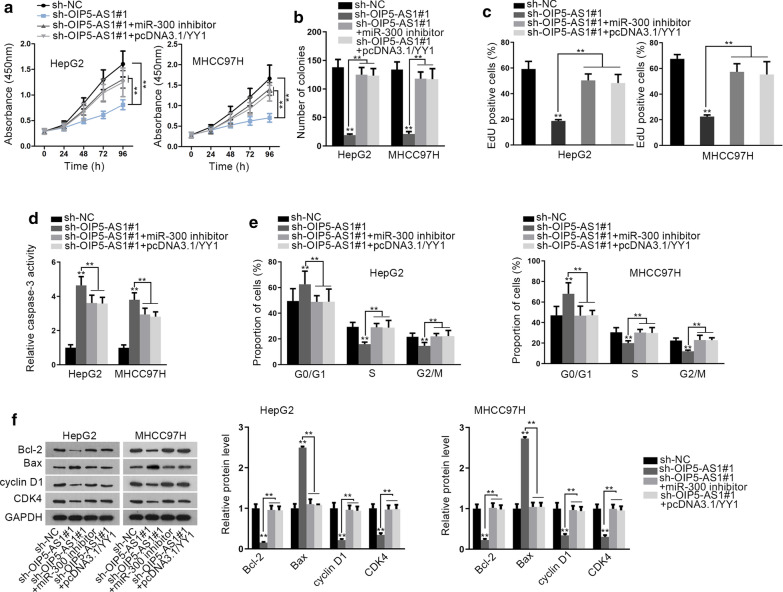
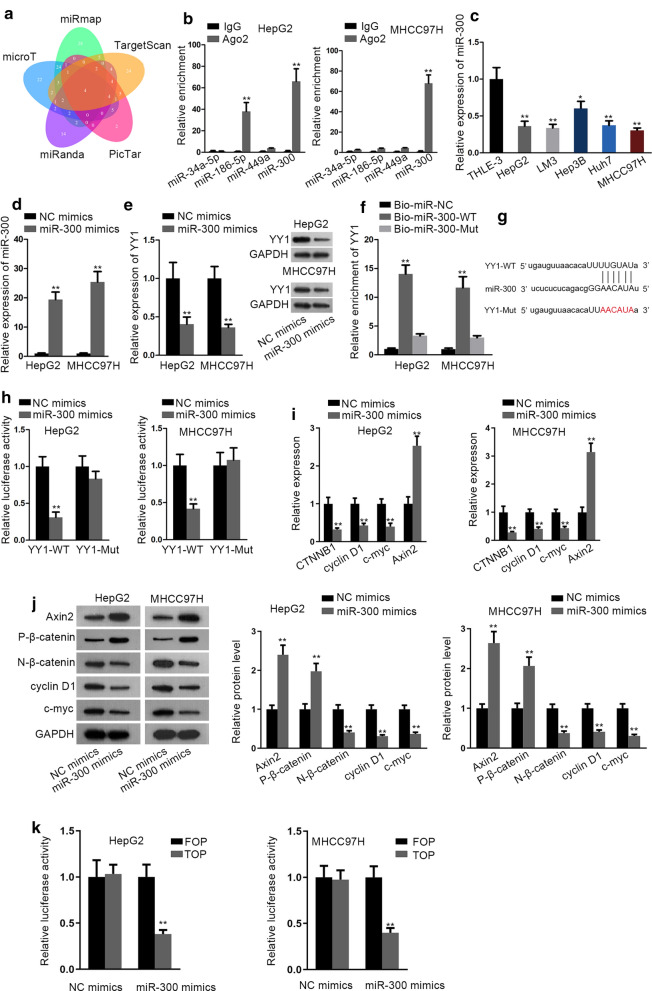
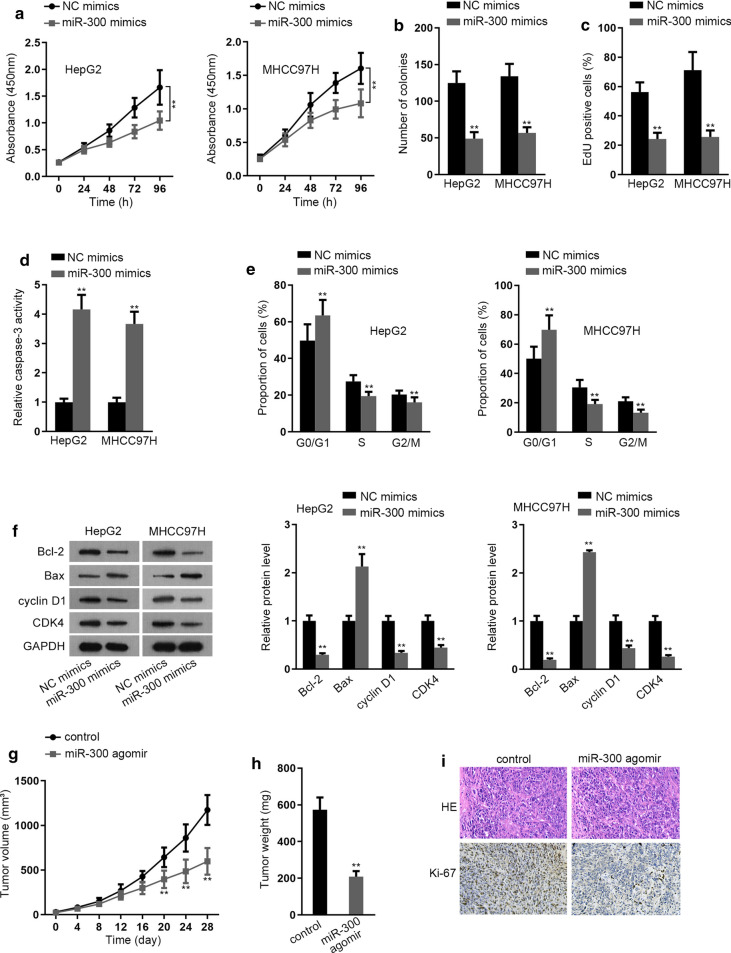
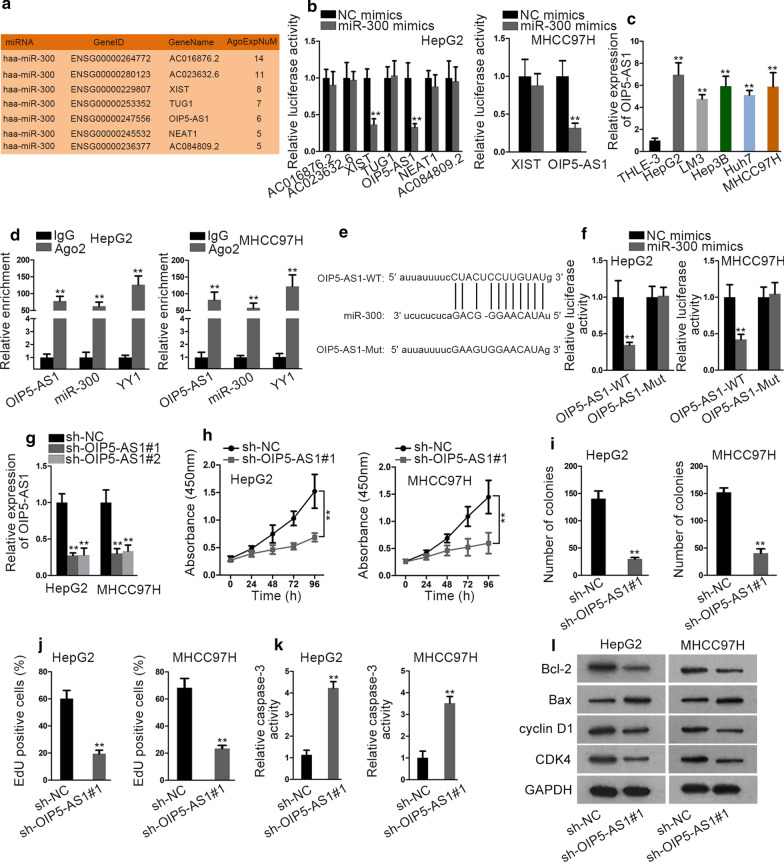
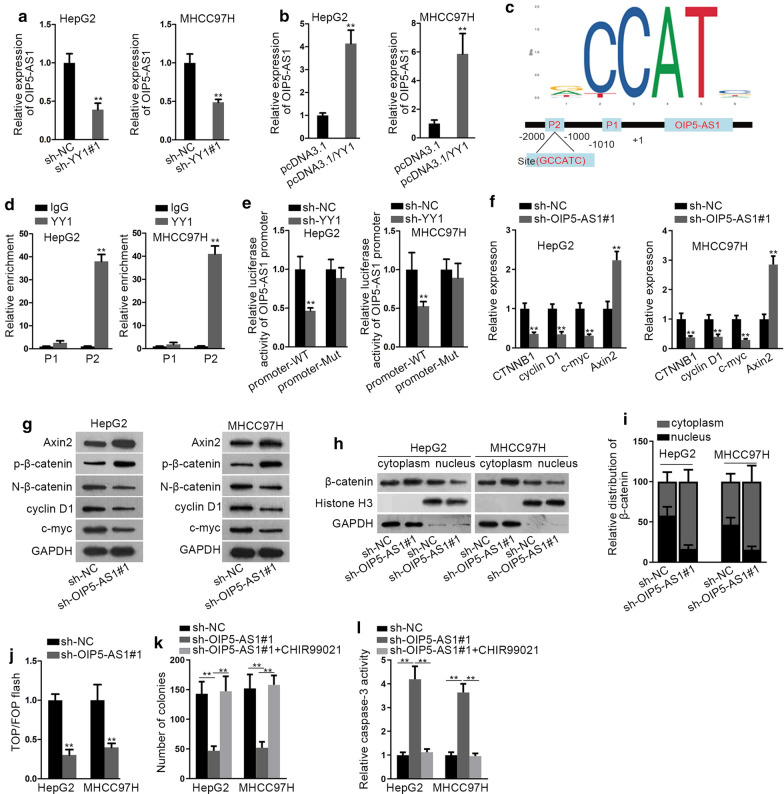
YY1 was upregulated in HCC cells, and silenced YY1 restrained HCC cell proliferation in vitro and hampered tumor growth in vivo. Later, we discovered that miR-300 could regulate WNT pathway via targeting YY1. Furthermore, OIP5-AS1 was identified as the sponge of miR-300 and promoted cell growth in HCC. Importantly, YY1 transcriptionally activate OIP5-AS1 in turn. Rescue experiments indicated that miR-300 inhibition or YY1 overexpression abrogated the inhibitive effect of OIP5-AS1 silencing on the malignant growth of HCC cells.
OIP5-AS1/miR-300/YY1 feedback loop facilitates cell growth in HCC by activating WNT pathway.
据报道,长链非编码RNA(lncRNAs)通过竞争性内源RNA(ceRNA)途径靶向特定基因发挥调控功能。LncRNA OIP5-AS1在多种肿瘤类型中被鉴定为肿瘤增强子。然而,其在肝癌中的分子机制仍有待揭示。
本研究旨在探讨OIP5-AS1在肝癌中是否发挥作用以及如何发挥作用。
采用qRT-PCR和蛋白质免疫印迹法检测基因表达。采用CCK-8、集落形成和EdU实验评估肝癌细胞的增殖能力。采用Caspase-3活性检测和流式细胞术分析确定细胞凋亡和细胞周期分布。通过RNA下拉、染色质免疫沉淀、RNA免疫沉淀和荧光素酶报告基因实验探究分子间的相互作用。
YY1在肝癌细胞中上调,沉默YY1可抑制肝癌细胞的体外增殖并阻碍体内肿瘤生长。随后,我们发现miR-300可通过靶向YY1调节WNT通路。此外,OIP5-AS1被鉴定为miR-300的海绵,并促进肝癌细胞生长。重要的是,YY1反过来转录激活OIP5-AS1。挽救实验表明,抑制miR-300或过表达YY1可消除OIP5-AS1沉默对肝癌细胞恶性生长的抑制作用。
OIP5-AS1/miR-300/YY1反馈环通过激活WNT通路促进肝癌细胞生长。