Department of Physiology and Pathophysiology, Tianjin Medical University, Tianjin 300070, China.
Cancer Biol Med. 2020 Aug 15;17(3):612-625. doi: 10.20892/j.issn.2095-3941.2020.0106.
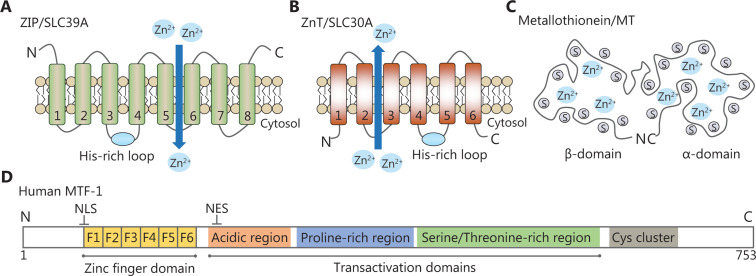
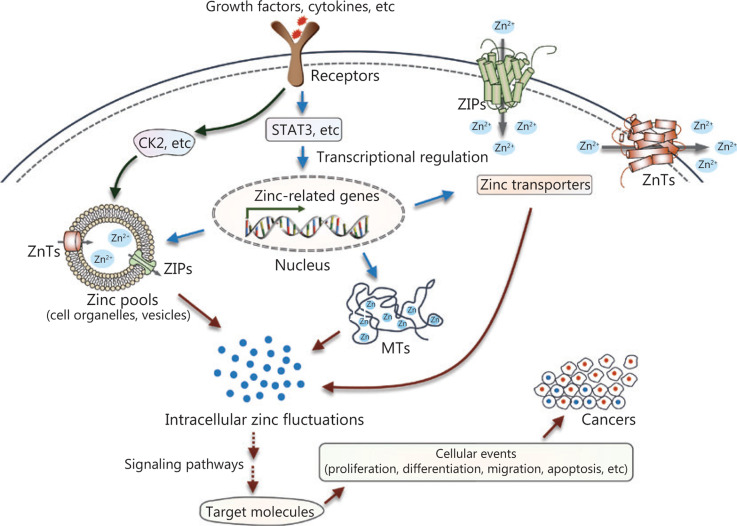
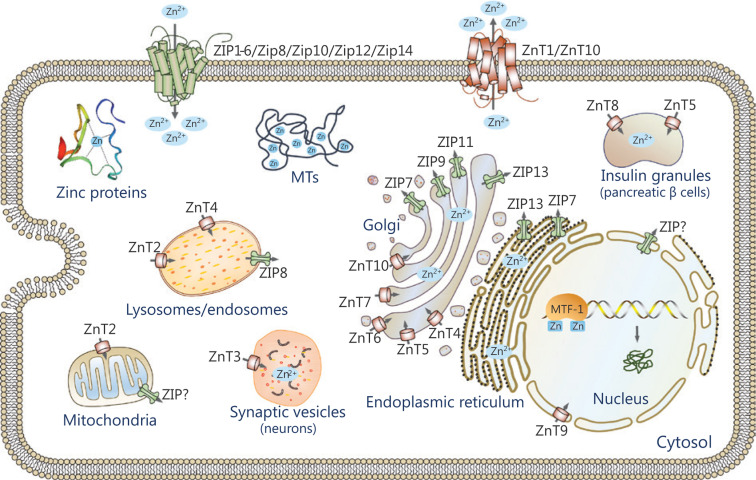
Zinc is an essential element and serves as a structural or catalytic component in many proteins. Two families of transporters are involved in maintaining cellular zinc homeostasis: the ZIP (SLC39A) family that facilitates zinc influx into the cytoplasm, and the ZnT (SLC30A) family that facilitates zinc efflux from the cytoplasm. Zinc dyshomeostasis caused by the dysfunction of zinc transporters can contribute to the initiation or progression of various cancers, including prostate cancer, breast cancer, and pancreatic cancer. In addition, intracellular zinc fluctuations lead to the disturbance of certain signaling pathways involved in the malignant properties of cancer cells. This review briefly summarizes our current understanding of zinc dyshomeostasis in cancer, and discusses the potential roles of zinc or zinc transporters in cancer therapy.
锌是一种必需元素,作为许多蛋白质的结构或催化成分。两种转运体家族参与维持细胞内锌稳态:促进锌流入细胞质的 ZIP(SLC39A)家族,以及促进锌从细胞质流出的 ZnT(SLC30A)家族。锌转运体功能障碍导致的锌稳态失衡可导致各种癌症的发生或进展,包括前列腺癌、乳腺癌和胰腺癌。此外,细胞内锌波动导致涉及癌细胞恶性特性的某些信号通路紊乱。本文简要总结了我们目前对癌症中锌稳态失衡的认识,并讨论了锌或锌转运体在癌症治疗中的潜在作用。