Department of Neurobiology, University of California, Los Angeles, Los Angeles, CA 90095, USA.
Department of Neurobiology, University of California, Los Angeles, Los Angeles, CA 90095, USA; California Nanosystems Institute, University of California, Los Angeles, Los Angeles, CA 90095, USA.
Neuron. 2020 Nov 25;108(4):651-658.e5. doi: 10.1016/j.neuron.2020.08.020. Epub 2020 Sep 17.
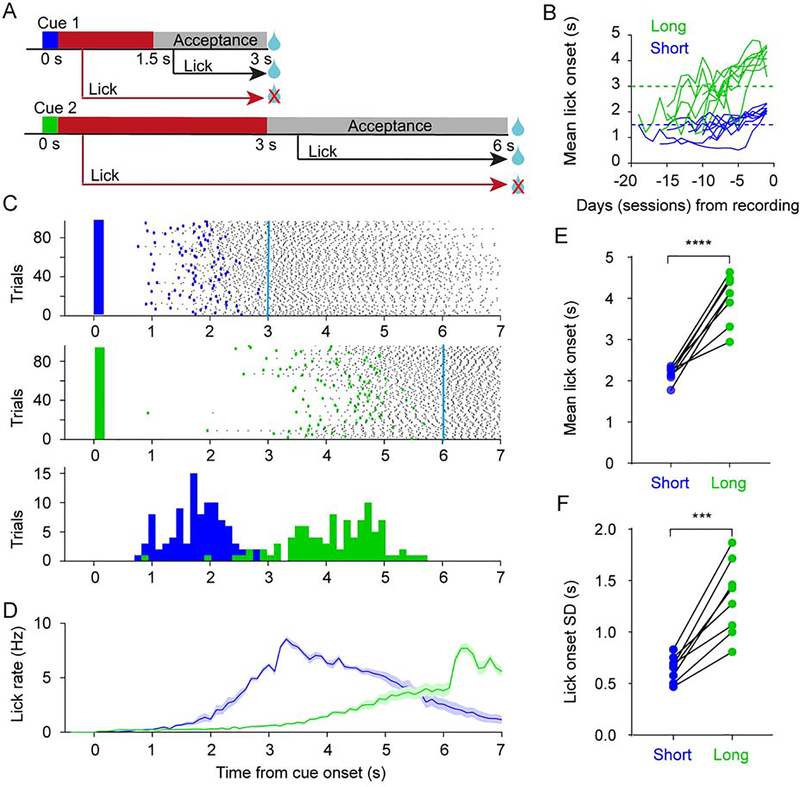
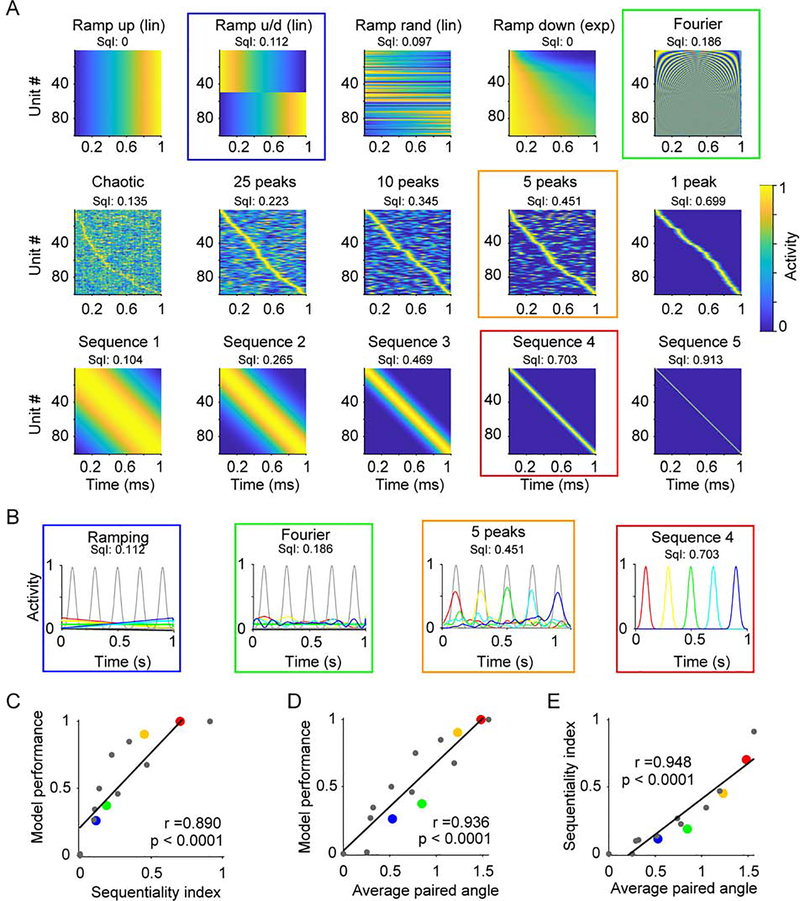
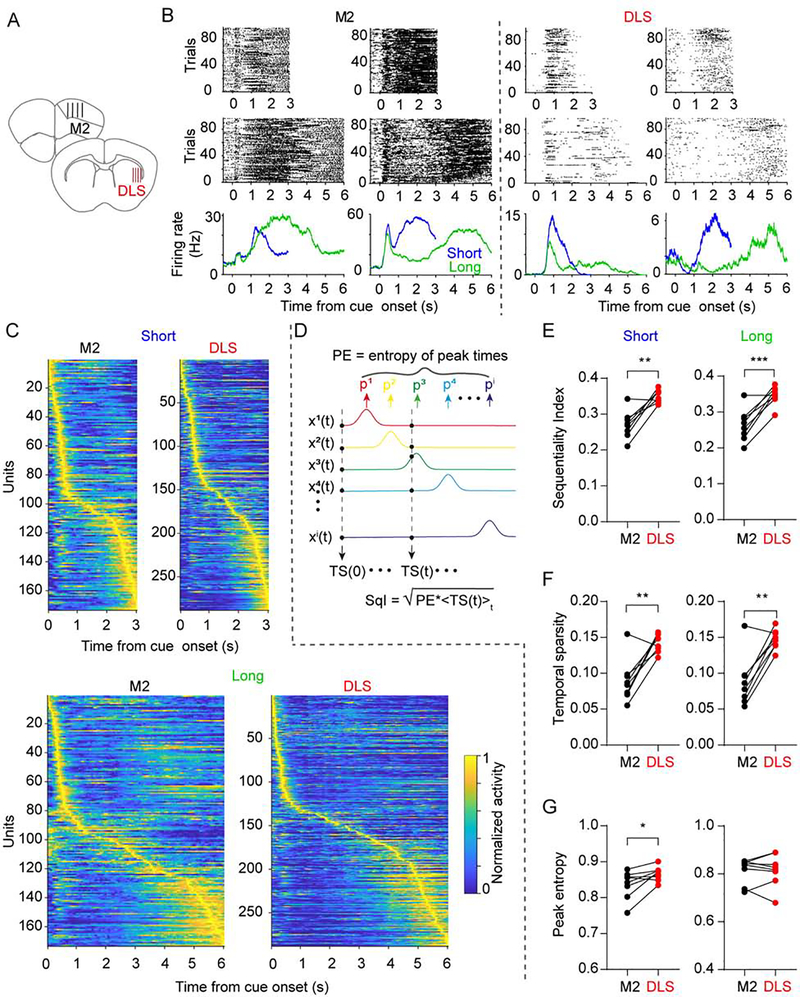
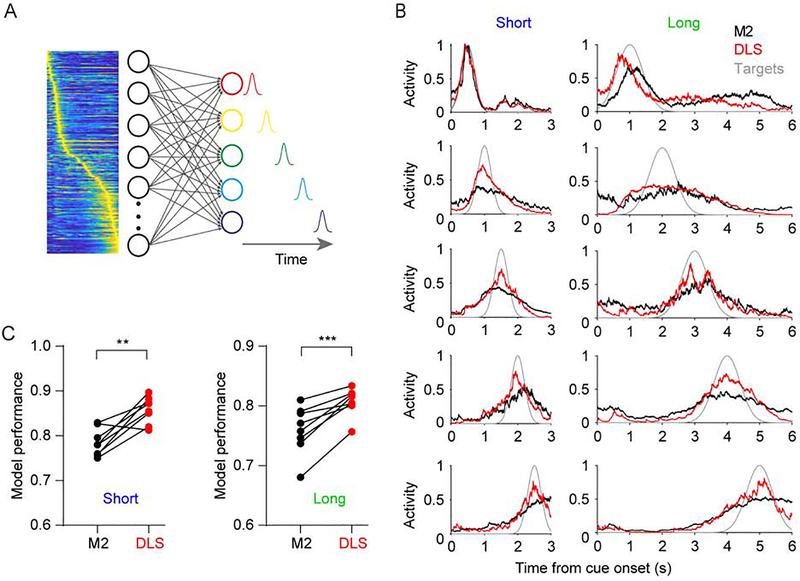
Converging evidence suggests that the brain encodes time through dynamically changing patterns of neural activity, including neural sequences, ramping activity, and complex spatiotemporal dynamics. However, the potential computational significance and advantage of these different regimes have remained unaddressed. We combined large-scale recordings and modeling to compare population dynamics between premotor cortex and striatum in mice performing a two-interval timing task. Conventional decoders revealed that the dynamics within each area encoded time equally well; however, the dynamics in striatum exhibited a higher degree of sequentiality. Analysis of premotor and striatal dynamics, together with a large set of simulated prototypical dynamical regimes, revealed that regimes with higher sequentiality allowed a biologically constrained artificial downstream network to better read out time. These results suggest that, although different strategies exist for encoding time in the brain, neural sequences represent an ideal and flexible dynamical regime for enabling downstream areas to read out this information.
越来越多的证据表明,大脑通过动态变化的神经活动模式来编码时间,包括神经序列、斜率活动和复杂的时空动力学。然而,这些不同状态的潜在计算意义和优势仍未得到解决。我们结合了大规模的记录和建模,比较了在执行双时距任务的小鼠的运动前皮层和纹状体之间的群体动力学。传统解码器显示,每个区域内的动力学对时间的编码同样好;然而,纹状体的动力学表现出更高的序列性。对运动前皮层和纹状体动力学的分析,以及一大组模拟的典型动力学状态,表明具有更高序列性的状态允许具有生物约束的人工下游网络更好地读取时间。这些结果表明,尽管大脑中存在不同的编码时间策略,但神经序列代表了一种理想和灵活的动力学状态,使下游区域能够读取此信息。