Department of Pharmacological and Biomolecular Sciences, Università degli Studi di Milano, via Balzaretti 9, 20133 Milan, Italy.
Department of Biomedical Sciences for Health, Università degli Studi di Milano, via Mangiagalli 31, 20133 Milan, Italy.
Int J Mol Sci. 2020 Sep 16;21(18):6806. doi: 10.3390/ijms21186806.
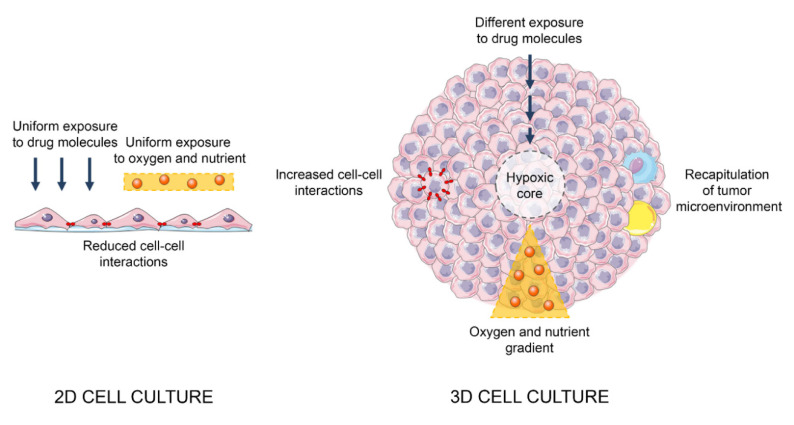
In the last decade, three-dimensional (3D) cell culture technology has gained a lot of interest due to its ability to better recapitulate the in vivo organization and microenvironment of in vitro cultured cancer cells. In particular, 3D tumor models have demonstrated several different characteristics compared with traditional two-dimensional (2D) cultures and have provided an interesting link between the latter and animal experiments. Indeed, 3D cell cultures represent a useful platform for the identification of the biological features of cancer cells as well as for the screening of novel antitumor agents. The present review is aimed at summarizing the most common 3D cell culture methods and applications, with a focus on prostate cancer modeling and drug discovery.
在过去的十年中,由于能够更好地模拟体内培养的癌细胞的组织和微环境,三维(3D)细胞培养技术引起了广泛关注。特别是,与传统的二维(2D)培养相比,3D 肿瘤模型具有多种不同的特征,并为后者与动物实验之间建立了有趣的联系。实际上,3D 细胞培养是鉴定癌细胞生物学特征以及筛选新型抗肿瘤药物的有用平台。本文综述了最常见的 3D 细胞培养方法及其应用,重点介绍了前列腺癌建模和药物发现。