British Columbia Centre on Substance Use, 1045 Howe St Suite 400 Vancouver, British Columbia, V6Z 2A9, Canada; Department of Medicine, University of British Columbia, 317 - 2194 Health Sciences Mall Vancouver, British Columbia, V6T 1Z3, Canada.
British Columbia Centre on Substance Use, 1045 Howe St Suite 400 Vancouver, British Columbia, V6Z 2A9, Canada.
Drug Alcohol Depend. 2020 Nov 1;216:108202. doi: 10.1016/j.drugalcdep.2020.108202. Epub 2020 Sep 15.
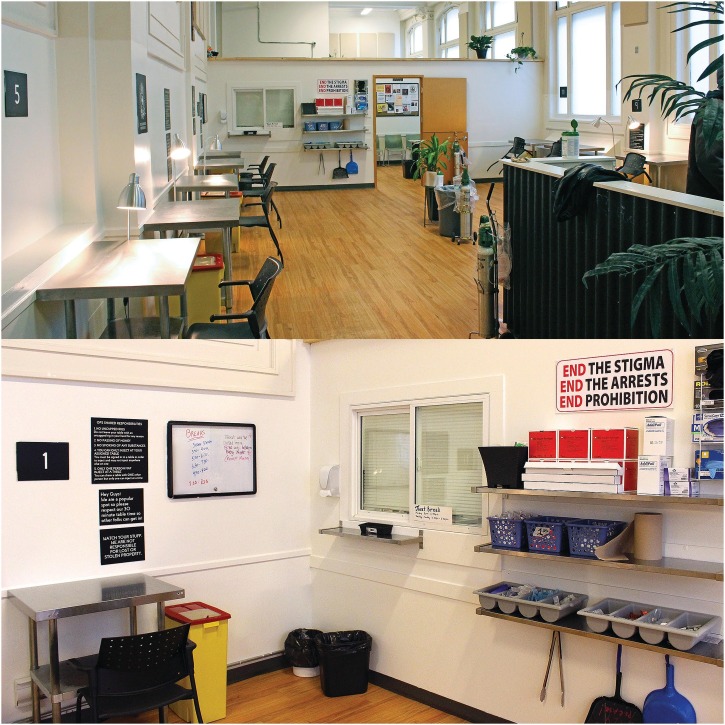
North America is experiencing an overdose crisis driven by illicitly-manufactured fentanyl, related analogues, and fentanyl-adulterated drugs. The concept of 'safe supply' has been suggested as a potential measure to address the overdose crisis by providing a regulated alternative to illicit opioids to people at high risk of fatal overdose. In January 2019, a novel hydromorphone tablet distribution program was implemented within an overdose prevention site in Vancouver, Canada's Downtown Eastside neighbourhood. This study explored barriers and facilitators to engagement with this program.
In-depth interviews were conducted with 42 participants enrolled in the hydromorphone tablet distribution program, and over 100 h of ethnographic observation were conducted in and around the study site. Thematic analysis of the interviews and ethnographic observation focused on program operation, including barriers and facilitators to program uptake, access, and engagement.
Barriers to program engagement identified include: limited operating hours and dose schedule, co-location within the overdose prevention site (e.g., wait times), and receiving the generic formulation of hydromorphone. Facilitators identified include: having access to a reliable source of opioids, co-location within the overdose prevention site (e.g., low-barrier design), experiences of agency, and program flexibility.
Our findings demonstrate key implementation and operational considerations of safe supply programs. In particular, lower-barrier design and operational features should be considered to improve uptake and engagement. Safe opioid supply programs are a promising intervention to address North America's ongoing overdose crisis by providing people at high risk of fatal overdose an alternative to the toxic drug supply.
北美正经历一场由非法制造的芬太尼、相关类似物以及芬太尼掺杂物引发的药物过量危机。“安全供应”的概念被认为是解决药物过量危机的一种潜在措施,通过为有致命药物过量风险的人群提供合法的阿片类药物替代物来实现。2019 年 1 月,加拿大东城区一家药物过量预防场所开始实施一种新型氢吗啡酮片剂分发计划。本研究旨在探讨参与该计划的障碍和促进因素。
对 42 名参与氢吗啡酮片剂分发计划的参与者进行了深入访谈,并在研究现场及其周边进行了超过 100 小时的民族志观察。对访谈和民族志观察的主题分析侧重于计划的运作,包括计划参与、获取和参与的障碍和促进因素。
确定的计划参与障碍包括:营业时间和剂量安排有限、与药物过量预防场所的共置(例如,等待时间)以及接受氢吗啡酮的通用制剂。确定的促进因素包括:有可靠的阿片类药物来源、与药物过量预防场所的共置(例如,低门槛设计)、有代理权的体验以及计划的灵活性。
我们的研究结果表明了安全供应计划的实施和运营方面的关键考虑因素。特别是,应该考虑降低障碍的设计和运营特点,以提高参与度和参与度。安全的阿片类药物供应计划是一种有前途的干预措施,可以通过为有致命药物过量风险的人群提供合法的阿片类药物替代物来解决北美的药物过量危机。