Yokoda Raquel T, Rodriguez Eduardo A
Department of Anatomic and Clinical Pathology, Montefiore Medical Center, Albert Einstein College of Medicine, Bronx, NY 10467, United States.
Department of Gastroenterology, Hepatology and Nutrition, University of Utah, Salt Lake City, UT 84132, United States.
World J Hepatol. 2020 Aug 27;12(8):423-435. doi: 10.4254/wjh.v12.i8.423.
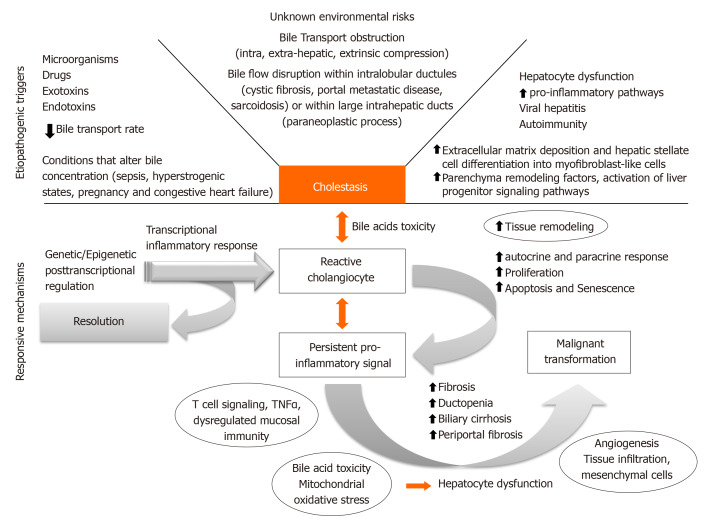
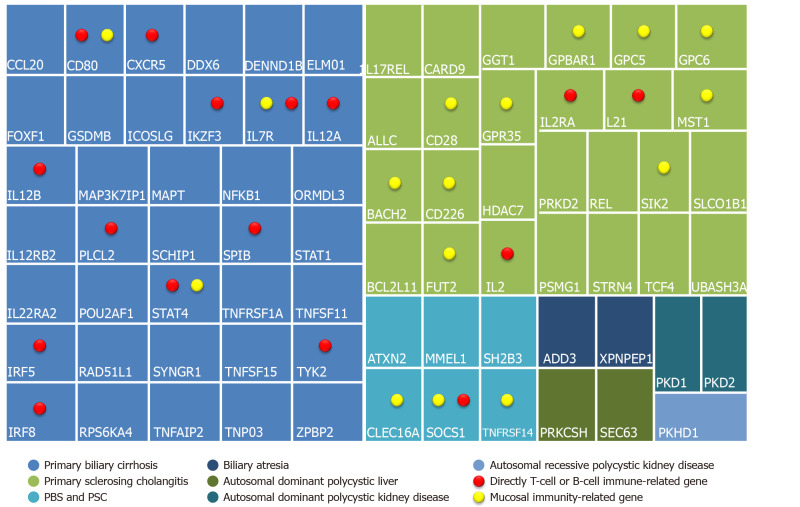
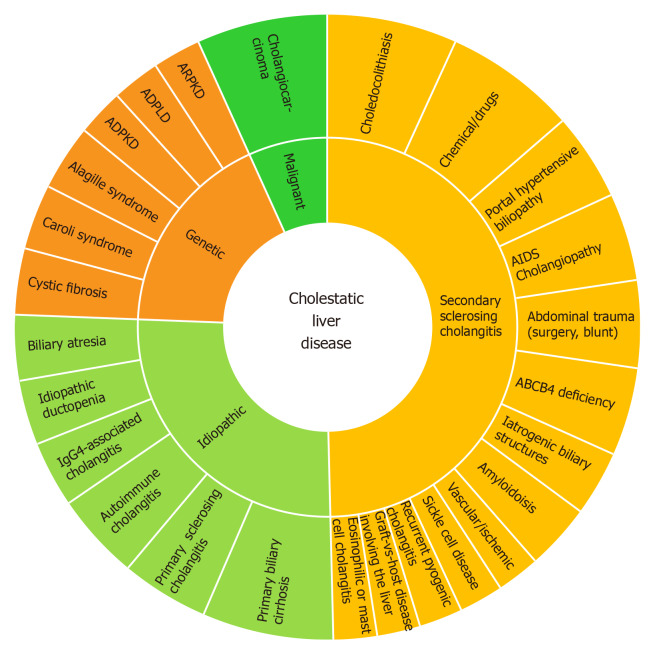
Cholestatic liver diseases (CLD) begin to develop after an impairment of bile flow start to affect the biliary tree. Cholangiocytes actively participate in the liver response to injury and repair and the intensity of this reaction is a determinant factor for the development of CLD. Progressive cholangiopathies may ultimately lead to end-stage liver disease requiring at the end orthotopic liver transplantation. This narrative review will discuss cholangiocyte biology and pathogenesis mechanisms involved in four intrahepatic CLD: Primary biliary cholangitis, primary sclerosing cholangitis, cystic fibrosis involving the liver, and polycystic liver disease.
胆汁淤积性肝病(CLD)在胆汁流动受损开始影响胆管树后开始发展。胆管细胞积极参与肝脏对损伤和修复的反应,这种反应的强度是CLD发生发展的决定性因素。进行性胆管病最终可能导致终末期肝病,最终需要进行原位肝移植。本叙述性综述将讨论四种肝内胆汁淤积性肝病(原发性胆汁性胆管炎、原发性硬化性胆管炎、累及肝脏的囊性纤维化和多囊肝病)中胆管细胞生物学及发病机制。