Patel Parita, Muller Charles, Paul Sonali
Section of Gastroenterology, Hepatology, and Nutrition, University of Chicago Medical Center, Chicago, IL 60637, United States.
World J Hepatol. 2020 Aug 27;12(8):506-518. doi: 10.4254/wjh.v12.i8.506.
Non-alcoholic fatty liver disease (NAFLD) has a heterogeneous distribution across racial and ethnic groups, with a disproportionate burden among Hispanics. Although there are currently no approved therapies for treatment of NAFLD, several therapies have been investigated in clinical trials.
To analyze the inclusion of racial and ethnic minority groups in clinical trials for NAFLD.
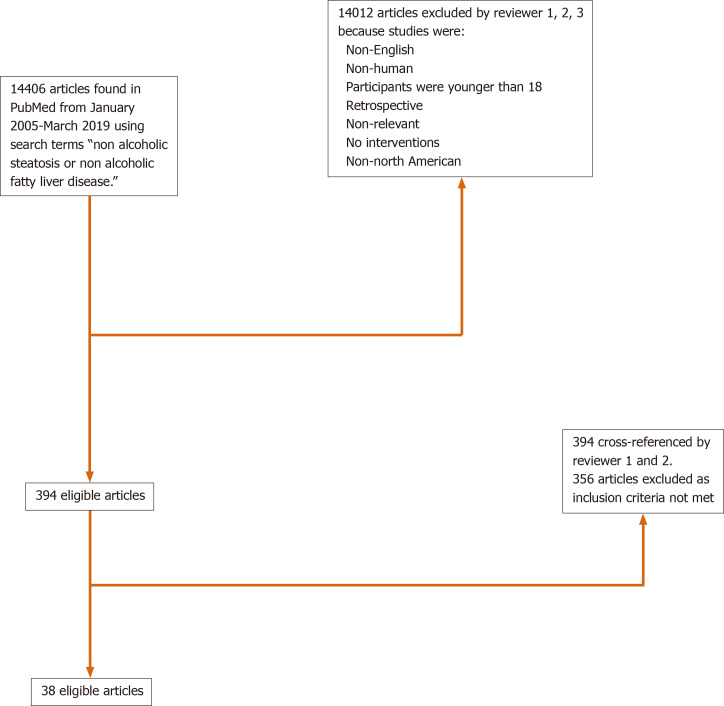
We performed a systematic review of North American, English-language, prospective studies for NAFLD therapies published from 2005 to 2019. Racial and ethnic enrollment data were recorded for each eligible study. Meta-analysis was performed to compute pooled prevalence of different racial and ethnic groups, followed by further subgroup analyses. These analyses were based on diagnosis of non-alcoholic steatohepatitis (NASH) and timing of study on enrollment by ethnicity. Descriptive statistics were performed to compare racial and ethnic study enrollment to previously reported NAFLD population prevalence.
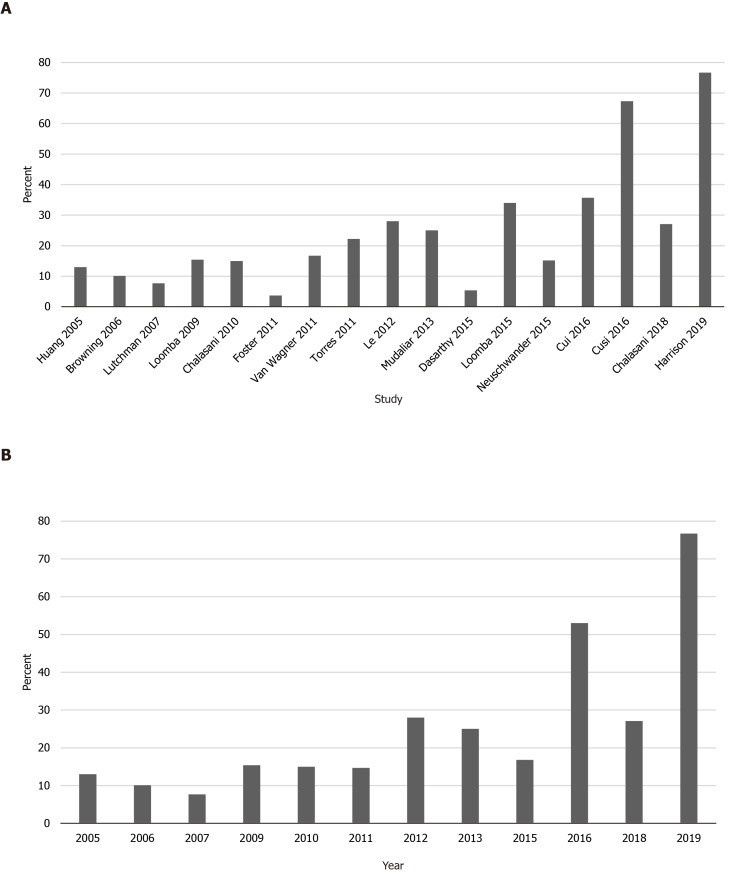
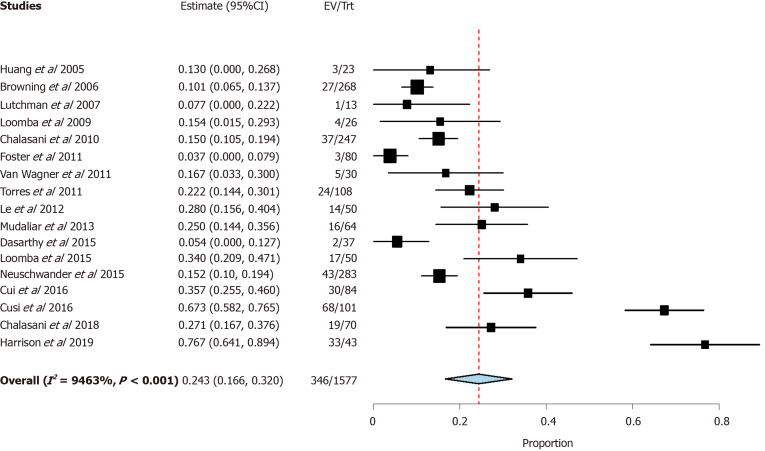
Thirty-eight studies met criteria for inclusion in the systematic review. When reported, median age of enrolled subjects was 49 years (range 41.5-58) with 56% female participants. NAFLD was defined through biopsy findings in 79% ( = 30) of the studies. Of the included articles, treatment modalities ranged from medications ( = 28, 74%), lifestyle interventions ( = 5, 13%), bariatric surgery ( = 4, 11%) and phlebotomy ( = 1, 2%). Twenty-eight studies (73%) included racial and/or ethnic demographic information, while only 17 (45%) included information regarding Hispanic participation. Of the 2983 patients enrolled in all eligible trials, a total of only 346 (11.6%) Hispanic participants was reported. Meta-analysis revealed a pooled Hispanic prevalence of 24.3% (95% confidence interval 16.6-32.0, 94.6%) among studies documenting Hispanic enrollment. Hispanic enrollment increased over time from 15% from 2005-2014 to 37% from 2015-2019.
In a meta-analysis of NAFLD trials, documentation of racial/ethnic demographic data occurred in less than half of studies. Standardization of reporting of race/ethnicity and targeted interventions toward minority recruitment are needed to improve diversity of enrollment.
非酒精性脂肪性肝病(NAFLD)在不同种族和族裔群体中的分布存在差异,西班牙裔人群的负担尤为沉重。尽管目前尚无获批用于治疗NAFLD的疗法,但已有几种疗法在临床试验中进行了研究。
分析NAFLD临床试验中种族和族裔少数群体的纳入情况。
我们对2005年至2019年发表的关于NAFLD疗法的北美英文前瞻性研究进行了系统评价。记录每项符合条件研究的种族和族裔入组数据。进行荟萃分析以计算不同种族和族裔群体的合并患病率,随后进行进一步的亚组分析。这些分析基于非酒精性脂肪性肝炎(NASH)的诊断以及按种族划分的研究入组时间。进行描述性统计以比较种族和族裔研究入组情况与先前报告的NAFLD人群患病率。
38项研究符合纳入系统评价的标准。报告时,入组受试者的中位年龄为49岁(范围41.5 - 58岁),女性参与者占56%。79%(n = 30)的研究通过活检结果定义NAFLD。在所纳入的文章中,治疗方式包括药物治疗(n = 28,74%)、生活方式干预(n = 5,13%)、减重手术(n = 4,11%)和放血疗法(n = 1,2%)。28项研究(73%)纳入了种族和/或族裔人口统计学信息,而只有17项(45%)纳入了关于西班牙裔参与情况的信息。在所有符合条件的试验中入组的2983名患者中,仅报告了总共346名(11.6%)西班牙裔参与者。荟萃分析显示,在记录了西班牙裔入组情况的研究中,西班牙裔的合并患病率为24.3%(95%置信区间16.6 - 32.0,I² = 94.6%)。西班牙裔入组率随时间增加,从2005 - 2014年的15%增至2015 - 2019年的37%。
在一项NAFLD试验的荟萃分析中,不到一半的研究记录了种族/族裔人口统计学数据。需要对种族/族裔报告进行标准化,并针对少数群体招募进行有针对性的干预,以提高入组的多样性。