Jiang Zhengzheng, Hong Xulin, Zhang Shun, Yao Ruilian, Xiao Yi
State Key Laboratory of Microbial Metabolism, School of Life Sciences and Biotechnology, Shanghai Jiao Tong University, Shanghai, 200240, China.
Joint International Research Laboratory of Metabolic & Developmental Sciences, Shanghai Jiao Tong University, Shanghai, 200240, China.
Synth Syst Biotechnol. 2020 Sep 2;5(4):277-292. doi: 10.1016/j.synbio.2020.08.003. eCollection 2020 Dec.
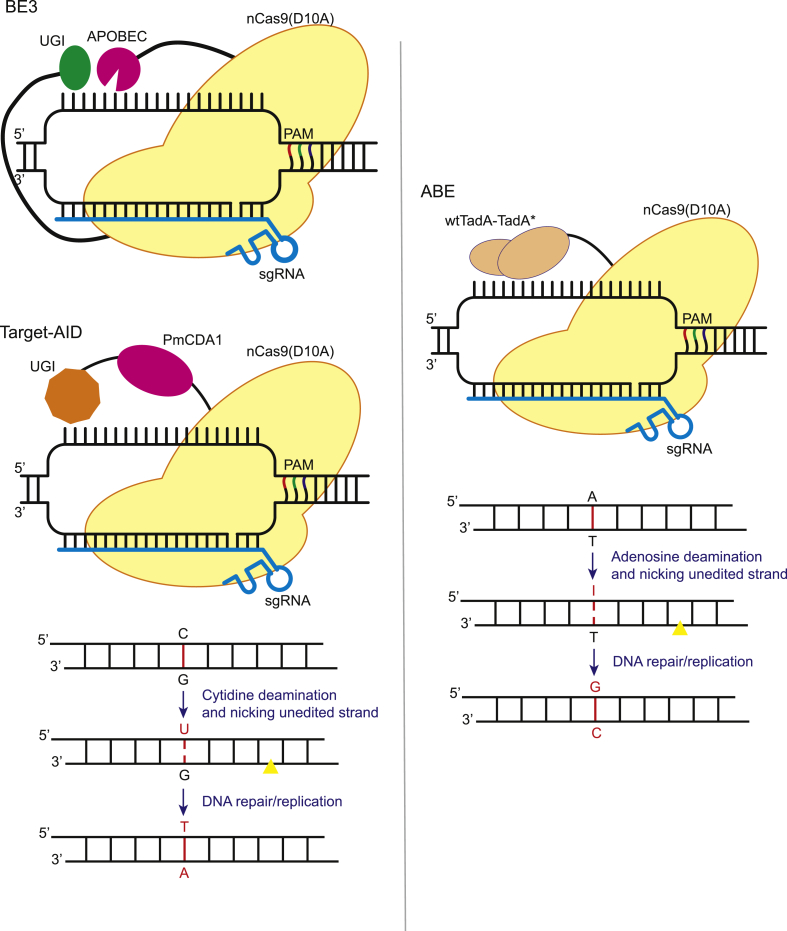
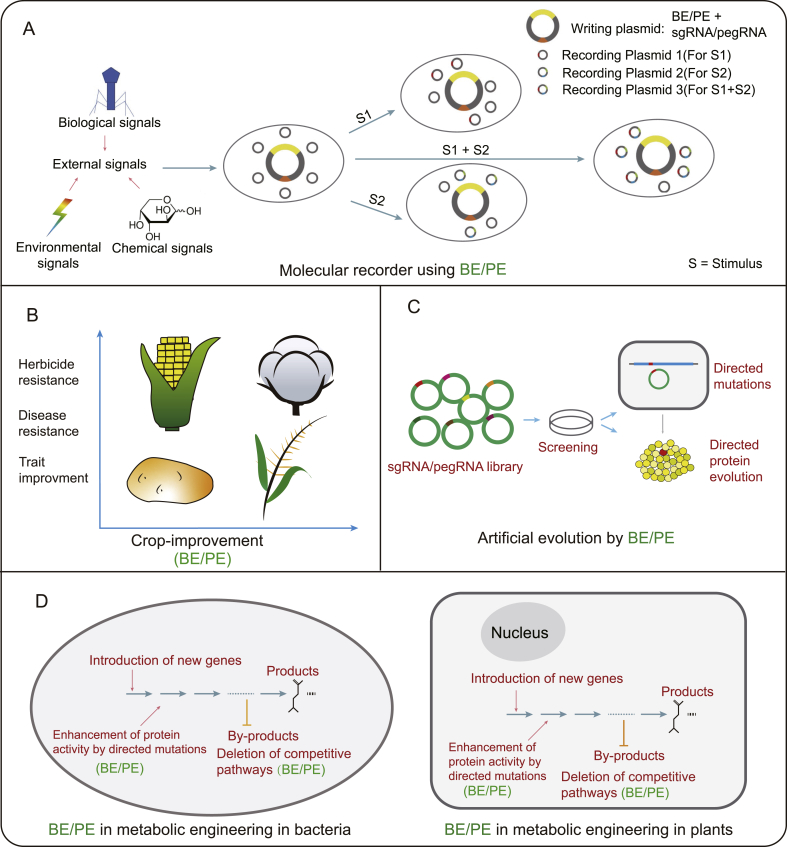
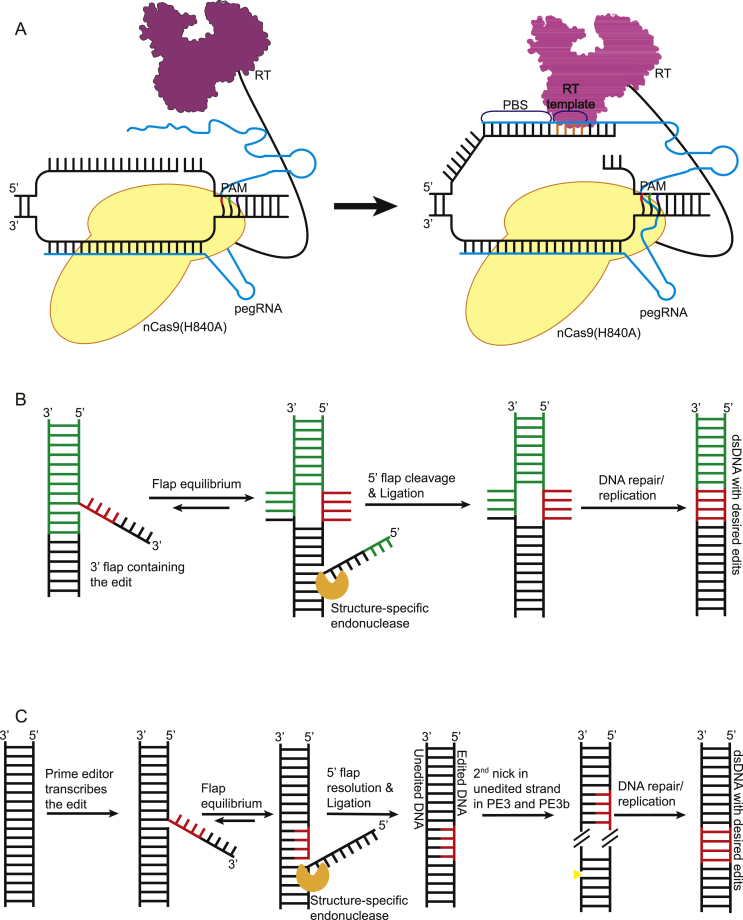
CRISPR-Cas (Clustered Regularly Interspaced Short Palindromic Repeats-CRISPR associated) has been extensively exploited as a genetic tool for genome editing. The RNA guided Cas nucleases generate DNA double-strand break (DSB), triggering cellular repair systems mainly Non-homologous end-joining (NHEJ, imprecise repair) or Homology-directed repair (HDR, precise repair). However, DSB typically leads to unexpected DNA changes and lethality in some organisms. The establishment of bacteria and plants into major bio-production platforms require efficient and precise editing tools. Hence, in this review, we focus on the non-DSB and template-free genome editing, i.e., base editing (BE) and prime editing (PE) in bacteria and plants. We first highlight the development of base and prime editors and summarize their studies in bacteria and plants. We then discuss current and future applications of BE/PE in synthetic biology, crop improvement, evolutionary engineering, and metabolic engineering. Lastly, we critically consider the challenges and prospects of BE/PE in PAM specificity, editing efficiency, off-targeting, sequence specification, and editing window.
CRISPR-Cas(成簇规律间隔短回文重复序列及其相关蛋白)已被广泛用作基因组编辑的遗传工具。RNA引导的Cas核酸酶会产生DNA双链断裂(DSB),触发细胞修复系统,主要是非同源末端连接(NHEJ,不精确修复)或同源定向修复(HDR,精确修复)。然而,DSB通常会在某些生物体中导致意外的DNA变化和致死性。将细菌和植物构建成主要的生物生产平台需要高效且精确的编辑工具。因此,在本综述中,我们聚焦于非DSB和无模板的基因组编辑,即细菌和植物中的碱基编辑(BE)和引导编辑(PE)。我们首先重点介绍碱基编辑器和引导编辑器的发展,并总结它们在细菌和植物中的研究。然后,我们讨论BE/PE在合成生物学、作物改良、进化工程和代谢工程中的当前及未来应用。最后,我们批判性地思考BE/PE在PAM特异性、编辑效率、脱靶效应、序列特异性和编辑窗口方面的挑战与前景。