Ghafar Abdul, Khan Adil, Cabezas-Cruz Alejandro, Gauci Charles G, Niaz Sadaf, Ayaz Sultan, Mateos-Hernández Lourdes, Galon Clemence, Nasreen Nasreen, Moutailler Sara, Gasser Robin B, Jabbar Abdul
Department of Veterinary Biosciences, Melbourne Veterinary School, Faculty of Veterinary and Agricultural Sciences, The University of Melbourne, Werribee 3030, Victoria, Australia.
Department of Zoology, Faculty of Chemical and Life Sciences, The Abdul Wali Khan University, Mardan 23200, Khyber Pakhtunkhwa, Pakistan.
Microorganisms. 2020 Sep 17;8(9):1428. doi: 10.3390/microorganisms8091428.
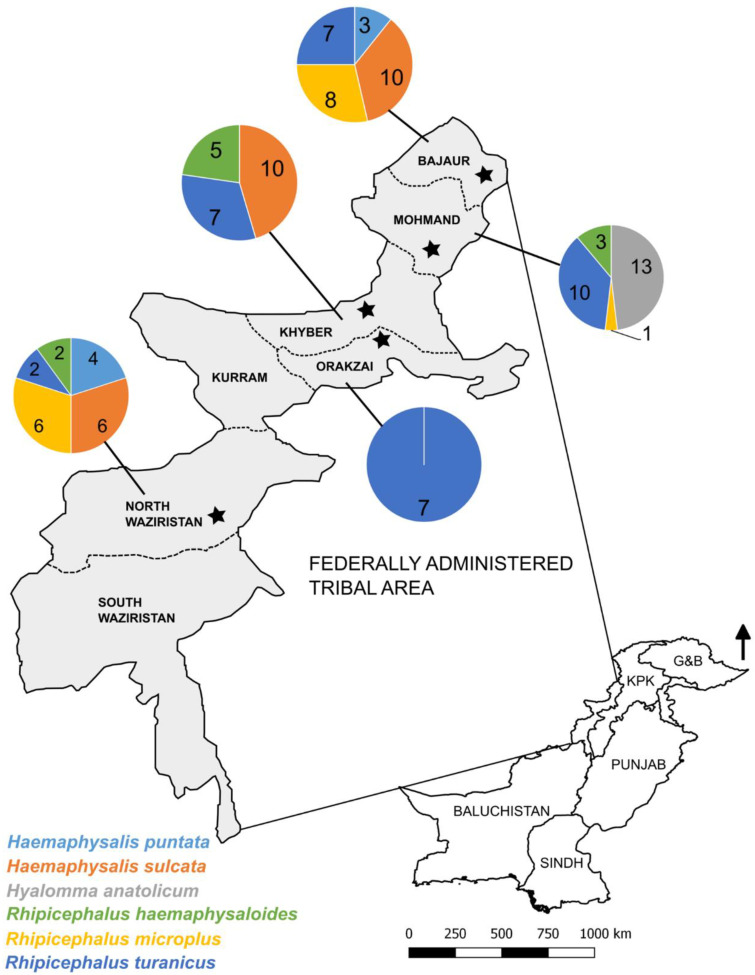
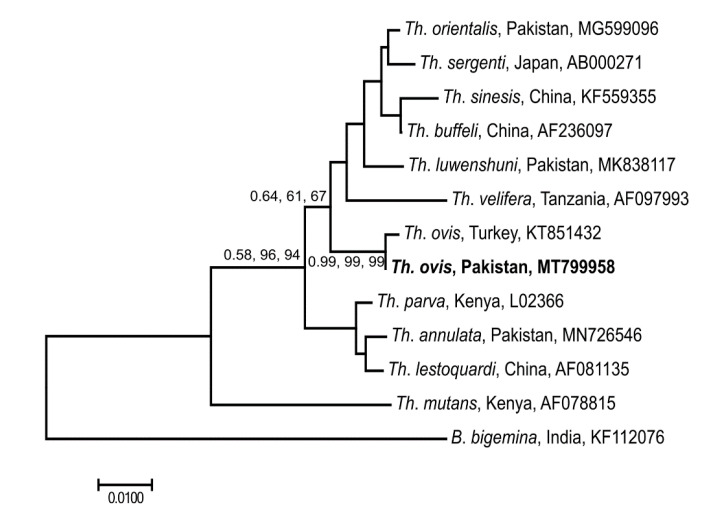
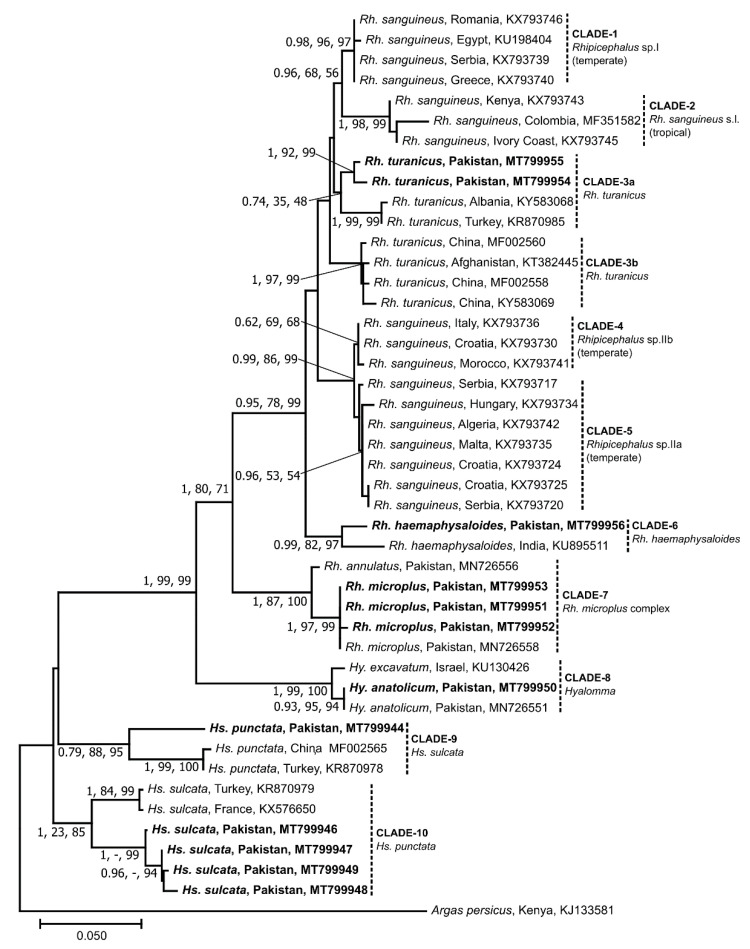
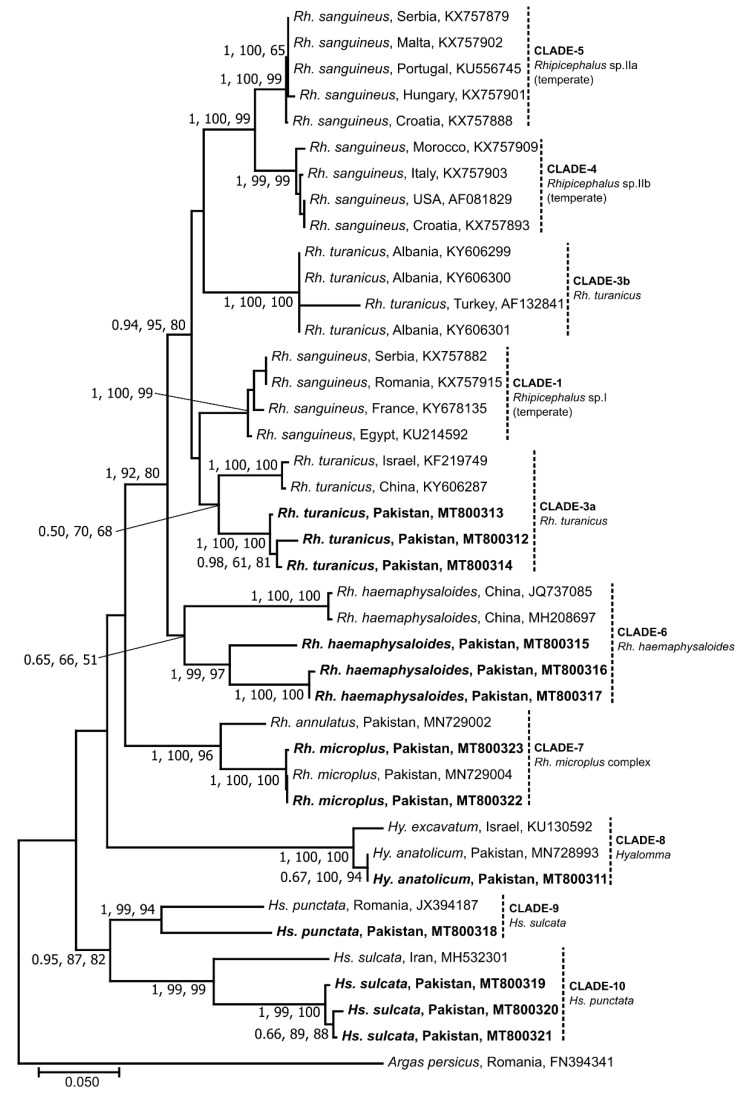
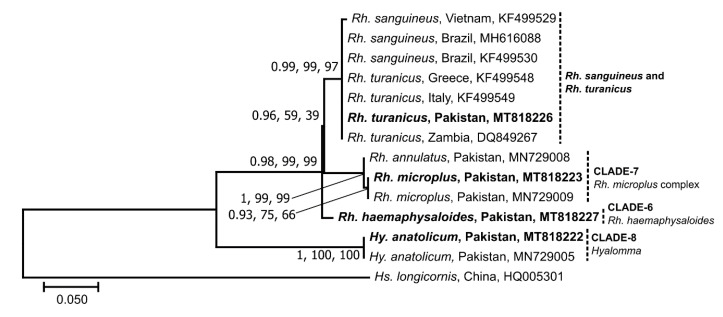
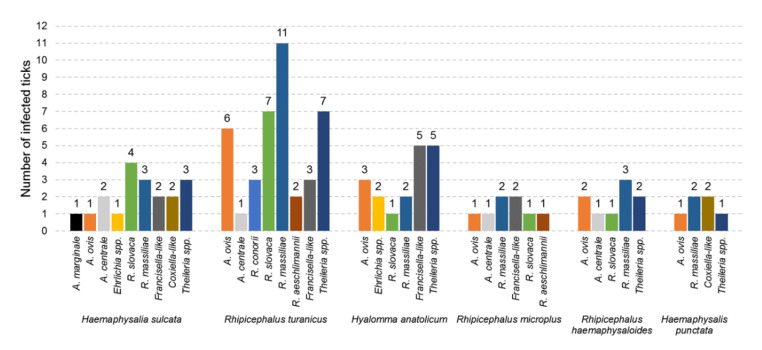
This study investigated ticks and tick-borne microorganisms of small ruminants from five districts of the Federally Administered Tribal Area (FATA) of Pakistan. Morphological ( = 104) and molecular ( = 54) characterization of the ticks revealed the presence of six ixodid ticks: (.) , , , (.) , and . Phylogenetic analyses of nucleotide sequence data for two mitochondrial (16S and cytochrome oxidase 1) and one nuclear (second internal transcribed spacer) DNA regions provided strong support for the grouping of the six tick species identified in this study. Microfluidic real-time PCR, employing multiple pre-validated nuclear and mitochondrial genetic markers, detected 11 potential pathogens and endosymbionts in 72.2% of the ticks ( = 54) tested. () was the most common pathogen found (42.6% of ticks) followed by spp. (33.3%), () and (25.9% each). , , spp., , and endosymbionts (- and -like) were detected at much lower rates (1.9-22.2%) in ticks. Ticks from goats (83.9%) carried significantly higher microorganisms than those from sheep (56.5%). This study demonstrates that ticks of small ruminants from the FATA are carrying multiple microorganisms of veterinary and medical health significance and provides the basis for future investigations of ticks and tick-borne diseases of animals and humans in this and neighboring regions.
本研究调查了巴基斯坦联邦直辖部落地区(FATA)五个地区小型反刍动物的蜱及蜱传播微生物。蜱的形态学(n = 104)和分子学(n = 54)特征鉴定显示存在六种硬蜱:微小牛蜱(Boophilus microplus)、长角血蜱(Haemaphysalis longicornis)、亚洲璃眼蜱(Hyalomma asiaticum)、边缘革蜱(Dermacentor marginatus)、草原革蜱(Dermacentor nuttalli)和银盾革蜱(Dermacentor niveus)。对两个线粒体(16S和细胞色素氧化酶1)和一个核(第二内部转录间隔区)DNA区域的核苷酸序列数据进行的系统发育分析,为该研究中鉴定出的六种蜱的分组提供了有力支持。采用多个预先验证的核和线粒体遗传标记的微流控实时PCR,在72.2%(n = 54)的检测蜱中检测到11种潜在病原体和共生菌。微小巴贝斯虫(Babesia microti)是最常见的病原体(占蜱的42.6%),其次是泰勒虫属(Theileria spp.)(33.3%)、嗜吞噬细胞无形体(Anaplasma phagocytophilum)和伯氏疏螺旋体(Borrelia burgdorferi)(各占25.9%)。在蜱中检测到的羊巴贝斯虫(Babesia ovis)、牛巴贝斯虫(Babesia bovis)、泰勒虫属、嗜吞噬细胞无形体、伯氏疏螺旋体和共生菌(Candidatus Midichloria mitochondrii和Candidatus Rickettsia mitochondrii样)的比例要低得多(1.9 - 22.2%)。来自山羊的蜱(83.9%)携带的微生物明显多于来自绵羊的蜱(56.5%)。本研究表明,FATA地区小型反刍动物的蜱携带多种对兽医和人类健康具有重要意义的微生物,并为该地区及周边地区未来对蜱及蜱传播疾病的调查提供了依据。