Dobrynina Larisa A, Gadzhieva Zukhra Sh, Shamtieva Kamila V, Kremneva Elena I, Akhmetzyanov Bulat M, Kalashnikova Ludmila A, Krotenkova Marina V
Research Center of Neurology, 80 Volokolamskoe shosse, 125367 Moscow, Russia.
Diagnostics (Basel). 2020 Sep 19;10(9):720. doi: 10.3390/diagnostics10090720.
Cerebral small vessel disease (CSVD) is the leading cause of vascular and mixed degenerative cognitive impairment (CI). The variability in the rate of progression of CSVD justifies the search for sensitive predictors of CI.
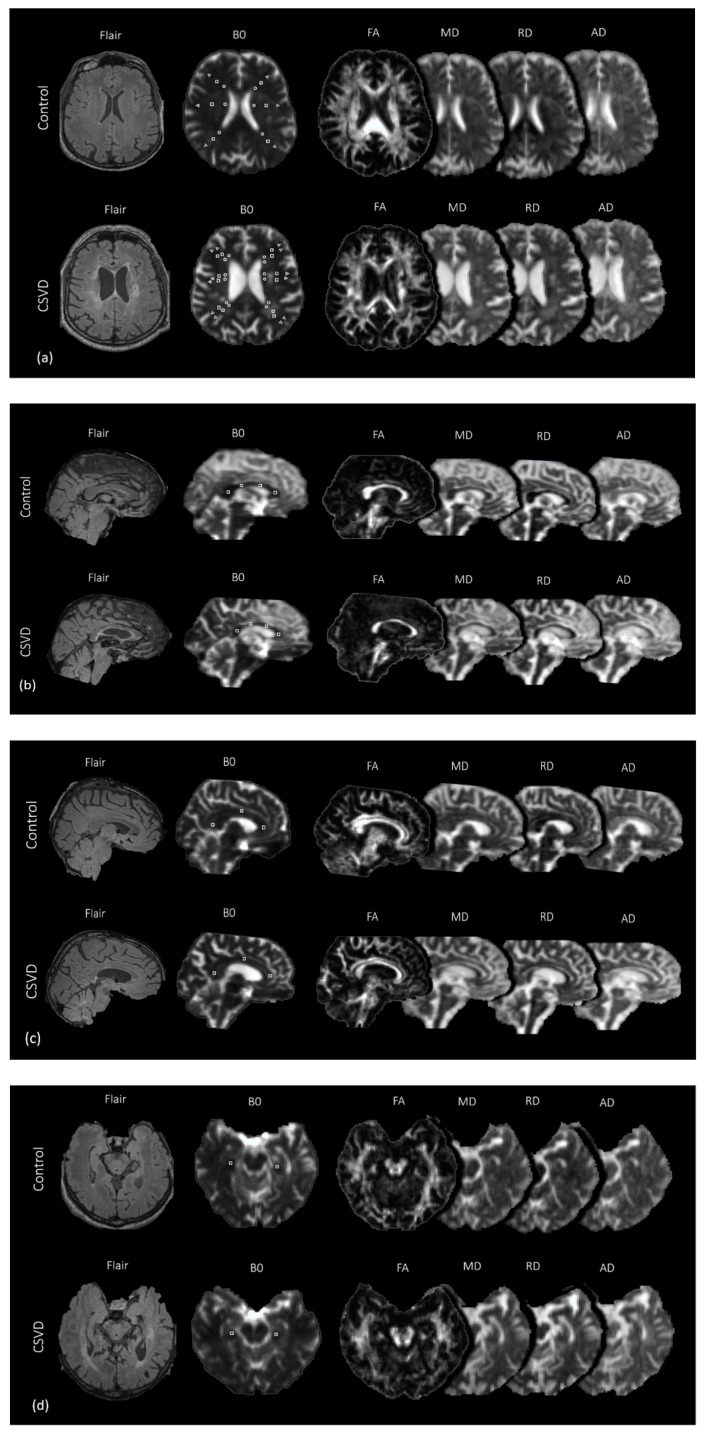
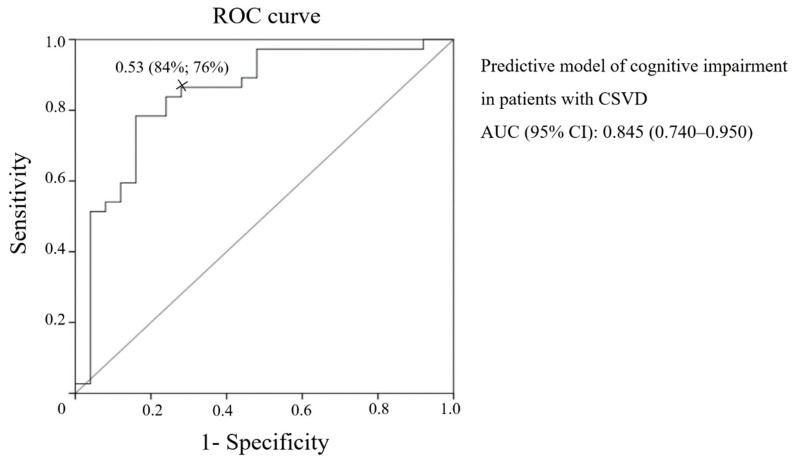
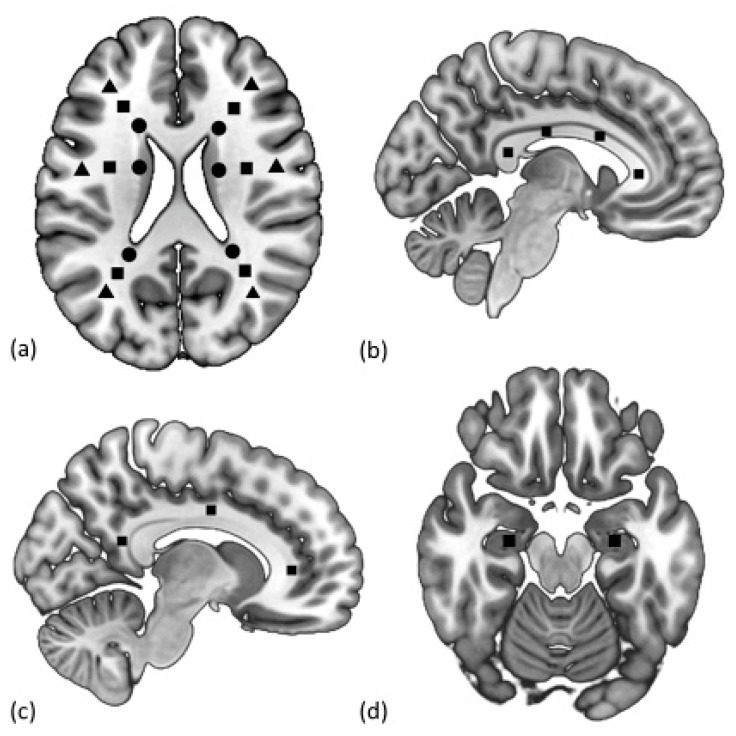
A total of 74 patients (48 women, average age 60.6 ± 6.9 years) with CSVD and CI of varying severity were examined using 3T MRI. The results of diffusion tensor imaging with a region of interest (ROI) analysis were used to construct a predictive model of CI using binary logistic regression, while phase-contrast magnetic resonance imaging and voxel-based morphometry were used to clarify the conditions for the formation of CI predictors.
According to the constructed model, the predictors of CI are axial diffusivity (AD) of the posterior frontal periventricular normal-appearing white matter (pvNAWM), right middle cingulum bundle (CB), and mid-posterior corpus callosum (CC). These predictors showed a significant correlation with the volume of white matter hyperintensity; arterial and venous blood flow, pulsatility index, and aqueduct cerebrospinal fluid (CSF) flow; and surface area of the aqueduct, volume of the lateral ventricles and CSF, and gray matter volume.
Disturbances in the AD of pvNAWM, CB, and CC, associated with axonal damage, are a predominant factor in the development of CI in CSVD. The relationship between AD predictors and both blood flow and CSF flow indicates a disturbance in their relationship, while their location near the floor of the lateral ventricle and their link with indicators of internal atrophy, CSF volume, and aqueduct CSF flow suggest the importance of transependymal CSF transudation when these regions are damaged.
脑小血管病(CSVD)是血管性和混合性退行性认知障碍(CI)的主要原因。CSVD进展速度的变异性使得寻找CI的敏感预测指标成为必要。
对74例(48例女性,平均年龄60.6±6.9岁)不同严重程度的CSVD和CI患者进行了3T磁共振成像(MRI)检查。利用感兴趣区域(ROI)分析的扩散张量成像结果,通过二元逻辑回归构建CI预测模型,同时利用相位对比磁共振成像和基于体素的形态学测量来阐明CI预测指标形成的条件。
根据构建的模型,CI的预测指标为额后脑室周围正常外观白质(pvNAWM)、右侧扣带束(CB)和胼胝体中后部(CC)的轴向扩散率(AD)。这些预测指标与白质高信号体积、动静脉血流、搏动指数和导水管脑脊液(CSF)流量、导水管表面积、侧脑室和CSF体积以及灰质体积显著相关。
与轴突损伤相关的pvNAWM、CB和CC的AD紊乱是CSVD中CI发生发展的主要因素。AD预测指标与血流和CSF流量之间的关系表明它们之间的关系受到干扰,而它们在侧脑室底部附近的位置以及与内部萎缩指标、CSF体积和导水管CSF流量的联系表明,当这些区域受损时,经室管膜CSF渗出具有重要意义。