Yeves-Lite Alba, Zuil-Escobar Juan Carlos, Martínez-Cepa Carmen, Romay-Barrero Helena, Ferri-Morales Asunción, Palomo-Carrión Rocío
San-José Institute Foundation, Avda. de la Hospitalidad, s/n, 28054 Madrid, Spain.
Department of Physiotherapy, Faculty of Medicine, CEU-San Pablo University, Urb. Montepríncipe, s/n., 28668 Madrid, Spain.
J Clin Med. 2020 Sep 19;9(9):3021. doi: 10.3390/jcm9093021.
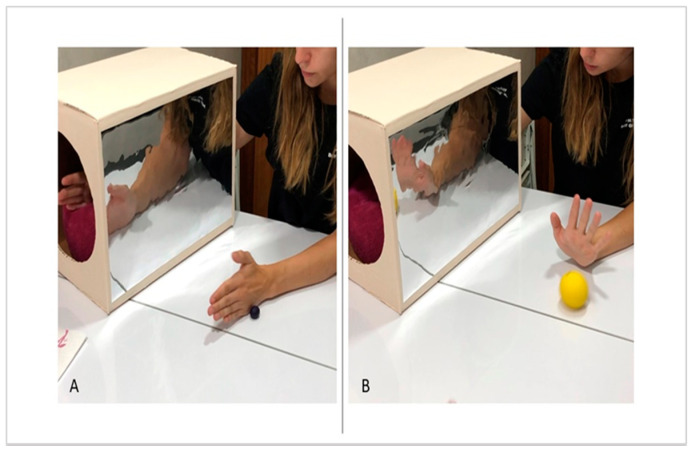
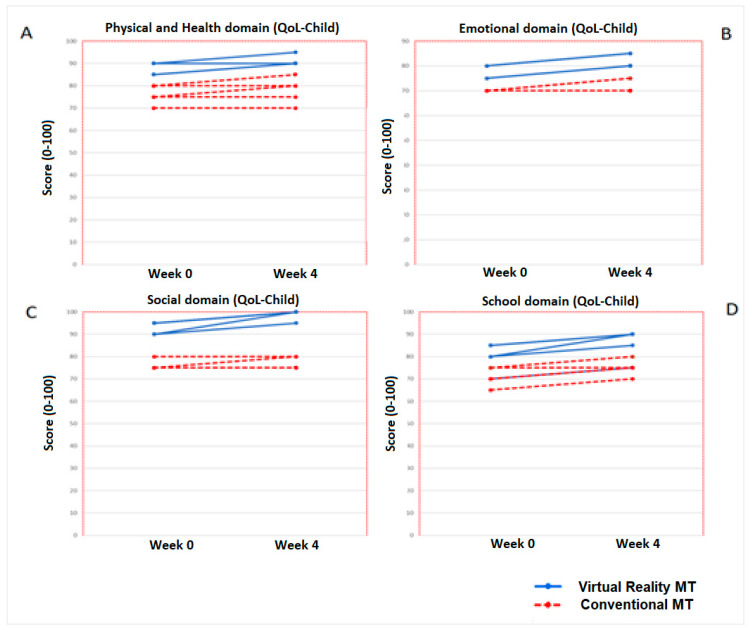
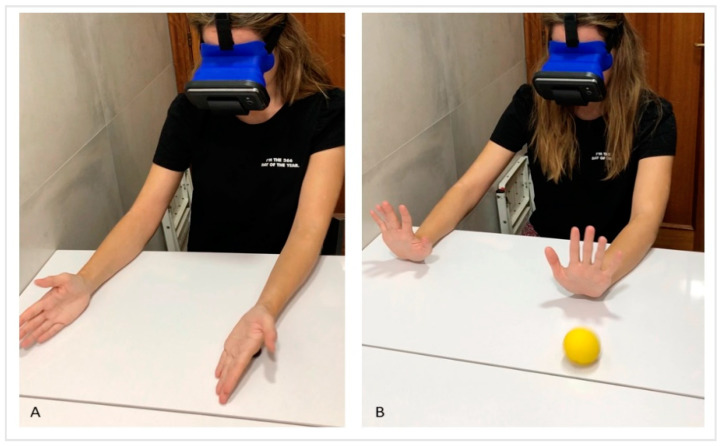
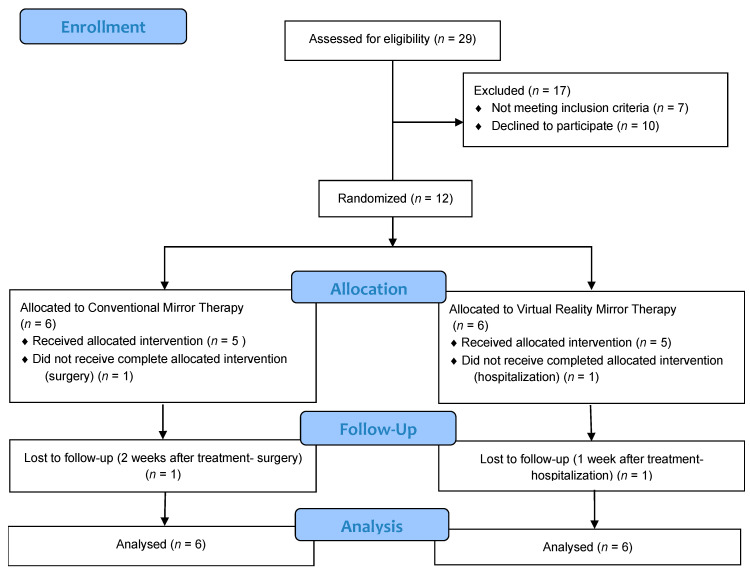
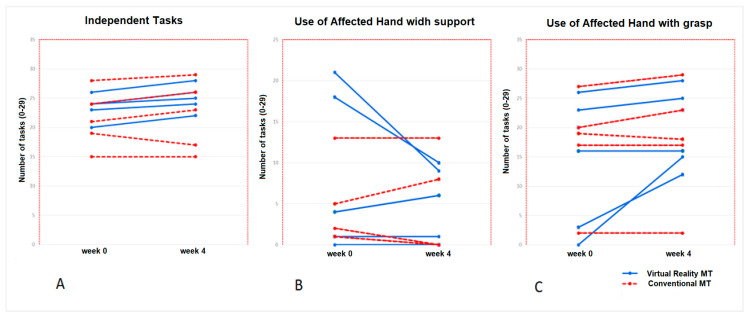
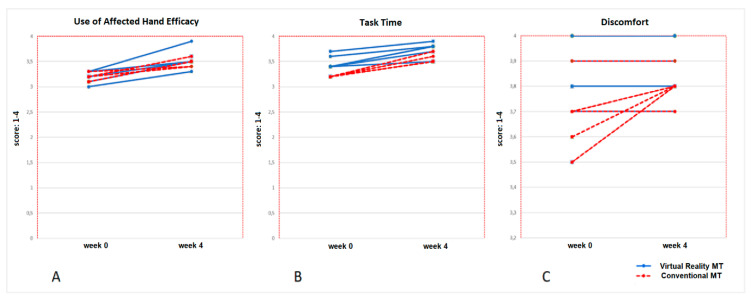
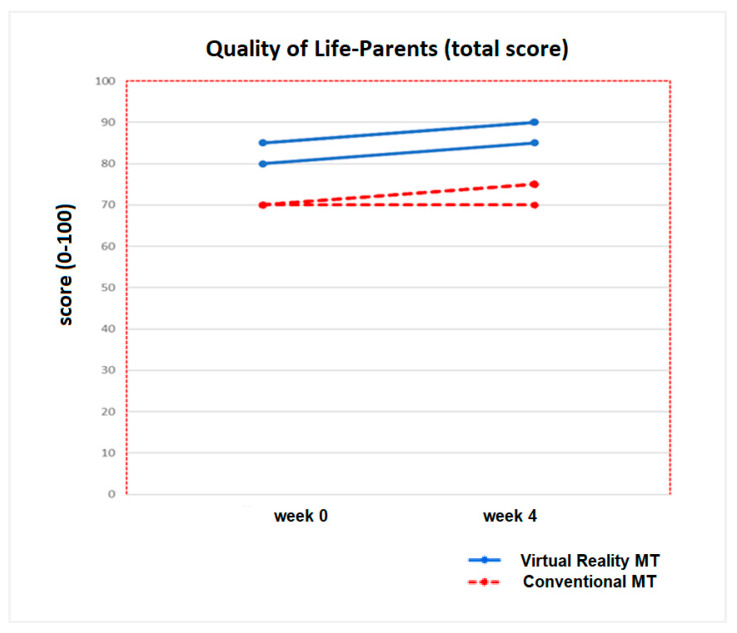
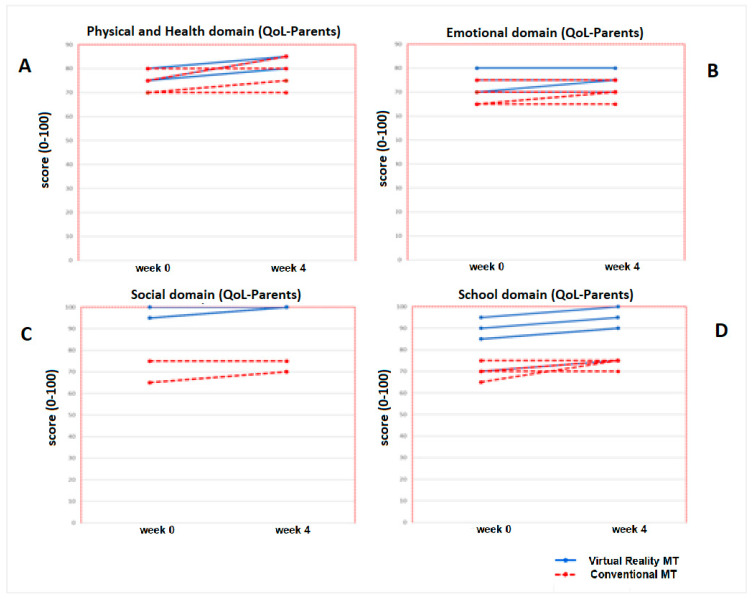
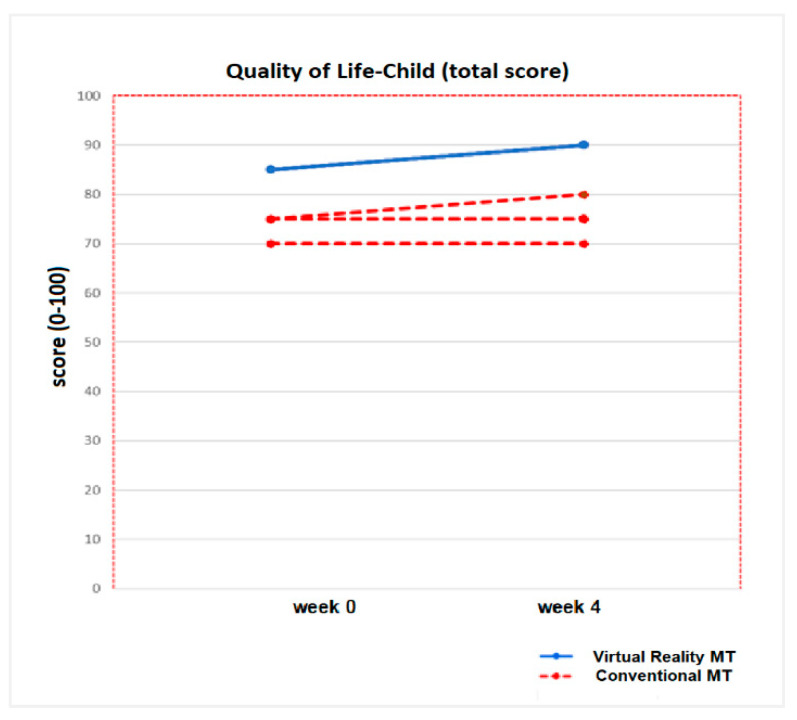
The abilities of children diagnosed with Obstetric Brachial Palsy (OBP) are limited by brachial plexus injuries. Thus, their participation in the community is hindered, which involves a lower quality of life due to worse performance in activities of daily living as a consequence of the functional limitations of the affected upper limb. Conventional Mirror Therapy (Conventional MT) and Virtual Therapy improve the affected upper limb functionality. Therefore, the aim of this study was to compare the effects of Conventional MT and Virtual Reality MT on the spontaneous use of the affected upper limb and quality of life of children with upper Obstetric Brachial Palsy between 6 and 12 years of age. A randomized pilot study was performed. Twelve children were randomly assigned to perform Conventional Mirror Therapy or Virtual Reality Mirror Therapy for four weeks. Ten children completed the treatment. Two assessments (pre/post-intervention) were carried out to assess the spontaneous use of the affected upper limb and the quality of life using the Children's Hand-use Experience Questionnaire (CHEQ) and the Pediatric Quality of Life Inventory Generic Core Scales (PedsQL TM 4.0), respectively. There was a statistically significant increment in spontaneous use, observed in independent tasks ( = 0.02) and in the use of the affected hand with grasp ( = 0.04), measured with the CHEQ, for the Virtual Reality MT group. There were no statistically significant changes ( > 0.05) for the Conventional MT group in the spontaneous use of the affected upper limb. Regarding the quality of life, statistically significant changes were obtained in the Physical and Health activity categories of the parents' questionnaire ( = 0.03) and in the total score of the children's questionnaire ( = 0.04) in the Virtual Reality MT group, measured using the PedsQL TM 4.0. Statistically significant changes were not obtained for the quality of life in the Conventional MT group. This study suggests that, compared to Conventional MT, Virtual Reality MT would be a home-based therapeutic complement to increase independent bimanual tasks using grasp in the affected upper limb and improve the quality of life of children diagnosed with upper OBP in the age range of 6-12 years.
被诊断为产瘫性臂丛神经麻痹(OBP)的儿童的能力受到臂丛神经损伤的限制。因此,他们参与社区活动受到阻碍,由于受影响上肢的功能限制导致日常生活活动表现较差,进而生活质量较低。传统镜像疗法(Conventional MT)和虚拟疗法可改善受影响上肢的功能。因此,本研究的目的是比较传统镜像疗法和虚拟现实镜像疗法对6至12岁产瘫性臂丛神经麻痹患儿受影响上肢的自发使用情况和生活质量的影响。进行了一项随机试点研究。12名儿童被随机分配进行四周的传统镜像疗法或虚拟现实镜像疗法。10名儿童完成了治疗。分别使用儿童手部使用经验问卷(CHEQ)和儿童生活质量量表通用核心量表(PedsQL TM 4.0)进行了两项评估(干预前/后),以评估受影响上肢的自发使用情况和生活质量。虚拟现实镜像疗法组在使用CHEQ测量的独立任务(p = 0.02)和使用受影响手抓握(p = 0.04)方面,自发使用情况有统计学上的显著增加。传统镜像疗法组在受影响上肢的自发使用方面没有统计学上的显著变化(p>0.05)。关于生活质量,在虚拟现实镜像疗法组中,使用PedsQL TM 4.0测量,父母问卷的身体和健康活动类别(p = 0.03)以及儿童问卷的总分(p = 0.04)有统计学上的显著变化。传统镜像疗法组的生活质量没有获得统计学上的显著变化。本研究表明,与传统镜像疗法相比,虚拟现实镜像疗法将是一种基于家庭的治疗补充方法,可增加受影响上肢使用抓握进行独立双手任务的能力,并改善6至12岁被诊断为产瘫性臂丛神经麻痹患儿的生活质量。