Chartoumpekis Dionysios V, Ziros Panos G, Georgakopoulos-Soares Ilias, Smith Adam A T, Marques Ana Claudia, Ibberson Mark, A Kopp Peter, Habeos Ioannis, Trougakos Ioannis P, Khoo Nicholas K H, Sykiotis Gerasimos P
Service of Endocrinology and Diabetology, Lausanne University Hospital, and Faculty of Biology and Medicine, University of Lausanne, 1011 Lausanne, Switzerland.
Division of Endocrinology, Department of Internal Medicine, University of Patras, 26504 Patras, Greece.
Antioxidants (Basel). 2020 Sep 18;9(9):884. doi: 10.3390/antiox9090884.
Thyroid follicular cells have physiologically high levels of reactive oxygen species because oxidation of iodide is essential for the iodination of thyroglobulin (Tg) during thyroid hormone synthesis. Thyroid follicles (the functional units of the thyroid) also utilize incompletely understood autoregulatory mechanisms to defend against exposure to excess iodide. To date, no transcriptomic studies have investigated these phenomena in vivo. Nuclear erythroid factor 2 like 2 (Nrf2 or Nfe2l2) is a transcription factor that regulates the expression of numerous antioxidant and other cytoprotective genes. We showed previously that the Nrf2 pathway regulates the antioxidant defense of follicular cells, as well as transcription and Tg iodination. We, thus, hypothesized that Nrf2 might be involved in the transcriptional response to iodide overload.
C57BL6/J wild-type (WT) or Nrf2 knockout (KO) male mice were administered regular water or water supplemented with 0.05% sodium iodide for seven days. RNA from their thyroids was prepared for next-generation RNA sequencing (RNA-Seq). Gene expression changes were assessed and pathway analyses were performed on the sets of differentially expressed genes.
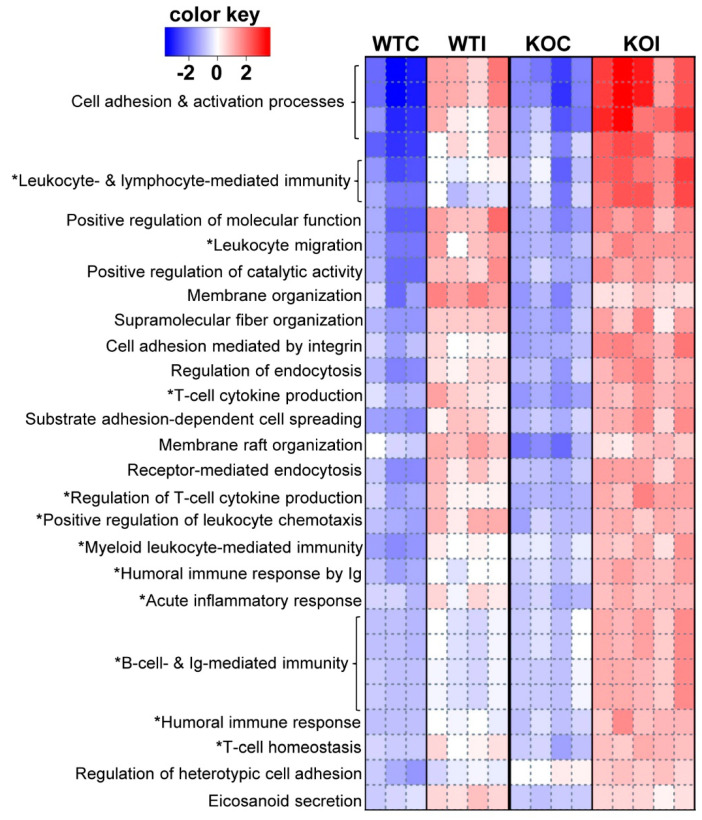
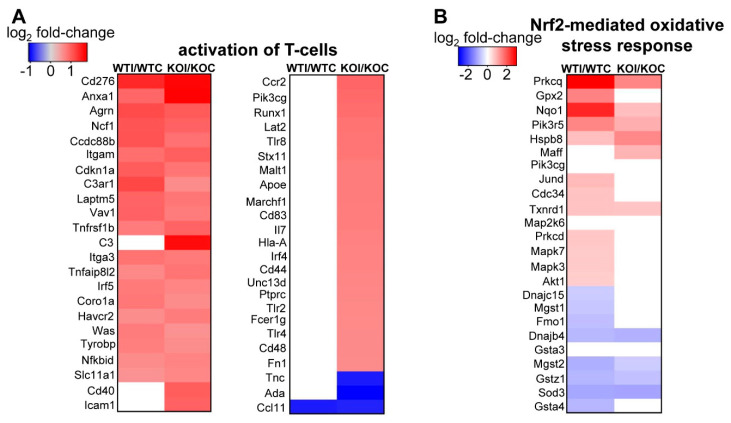
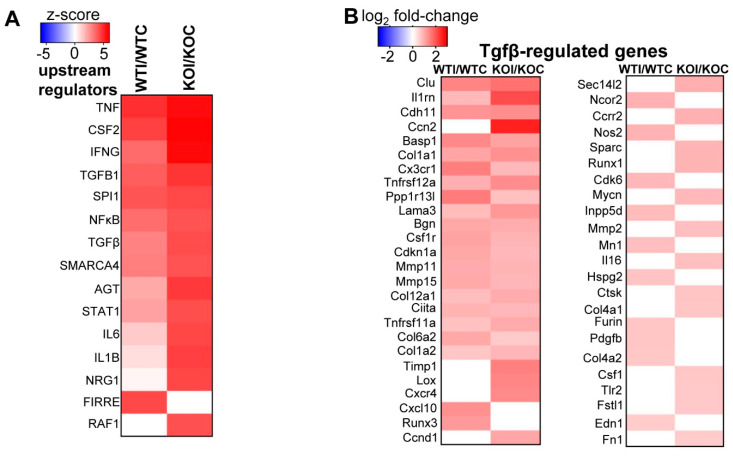
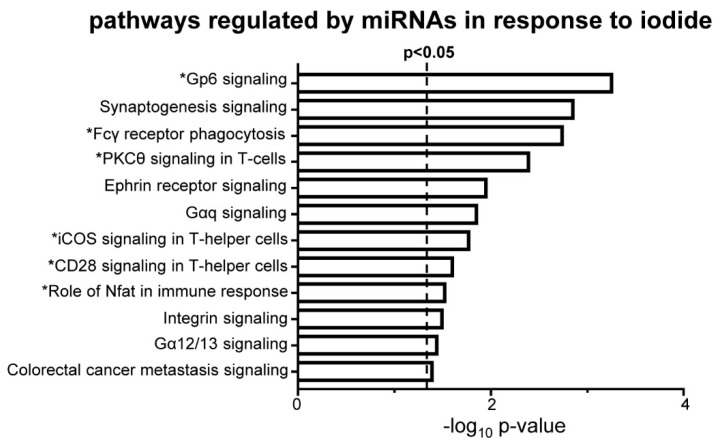
Analysis of differentially expressed messenger RNAs (mRNAs) indicated that iodide overload upregulates inflammatory-, immune-, fibrosis- and oxidative stress-related pathways, including the Nrf2 pathway. Nrf2 KO mice showed a more pronounced inflammatory-autoimmune transcriptional response to iodide than WT mice. Compared to previously published datasets, the response patterns observed in WT mice had strong similarities with the patterns typical of Graves' disease and papillary thyroid carcinoma (PTC). Long non-coding RNAs (lncRNAs) and microRNAs (miRNAs) also responded to iodide overload, with the latter targeting mRNAs that participate mainly in inflammation pathways.
Iodide overload induces the Nrf2 cytoprotective response and upregulates inflammatory, immune, and fibrosis pathways similar to autoimmune hyperthyroidism (Graves' disease) and PTC.
甲状腺滤泡细胞在生理状态下具有高水平的活性氧,因为在甲状腺激素合成过程中,碘化物的氧化对于甲状腺球蛋白(Tg)的碘化至关重要。甲状腺滤泡(甲状腺的功能单位)还利用尚未完全了解的自身调节机制来抵御过量碘化物的暴露。迄今为止,尚无转录组学研究在体内研究这些现象。核红细胞2样因子2(Nrf2或Nfe2l2)是一种转录因子,可调节众多抗氧化剂和其他细胞保护基因的表达。我们之前表明,Nrf2途径调节滤泡细胞的抗氧化防御以及转录和Tg碘化。因此,我们推测Nrf2可能参与对碘化物过载的转录反应。
给C57BL6/J野生型(WT)或Nrf2基因敲除(KO)雄性小鼠饮用常规水或补充0.05%碘化钠的水,持续7天。提取它们甲状腺的RNA用于下一代RNA测序(RNA-Seq)。评估基因表达变化,并对差异表达基因集进行通路分析。
差异表达信使RNA(mRNA)分析表明,碘化物过载会上调炎症、免疫、纤维化和氧化应激相关通路,包括Nrf2途径。与WT小鼠相比,Nrf2基因敲除小鼠对碘化物表现出更明显的炎症-自身免疫转录反应。与先前发表的数据集相比,WT小鼠中观察到的反应模式与格雷夫斯病和甲状腺乳头状癌(PTC)的典型模式有很强的相似性。长链非编码RNA(lncRNA)和微小RNA(miRNA)也对碘化物过载有反应,后者靶向主要参与炎症通路的mRNA。
碘化物过载诱导Nrf2细胞保护反应,并上调与自身免疫性甲状腺功能亢进症(格雷夫斯病)和PTC相似的炎症、免疫和纤维化通路。