Department of Prevention and Communal Dentistry, Sechenov First State Medical University, 119992, Moscow, Russia.
Ars and Technology, Sotto il Monte Giovanni XXIII, 24039, Bergamo, Italy.
BMC Oral Health. 2020 Sep 22;20(1):263. doi: 10.1186/s12903-020-01254-9.
The literature has not yet validated the use of intraoral scanners (IOSs) for full-arch (FA) implant impression. Hence, the aim of this in vitro study was to assess and compare the trueness of 12 different IOSs in FA implant impression.
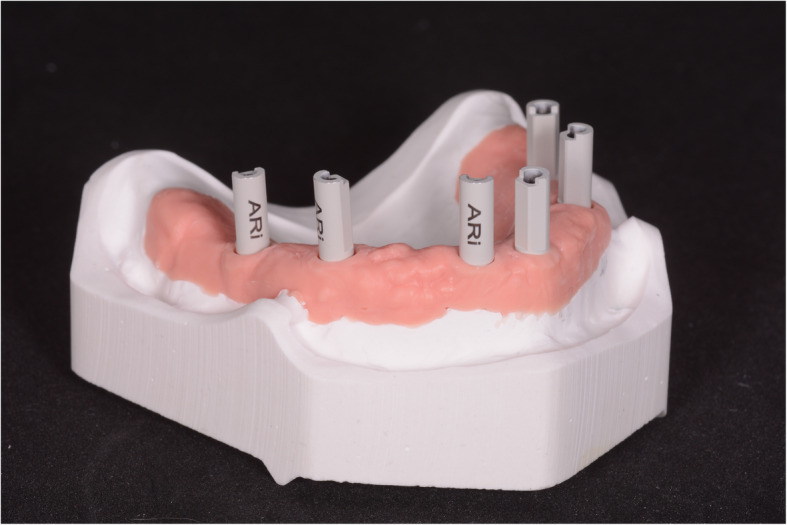
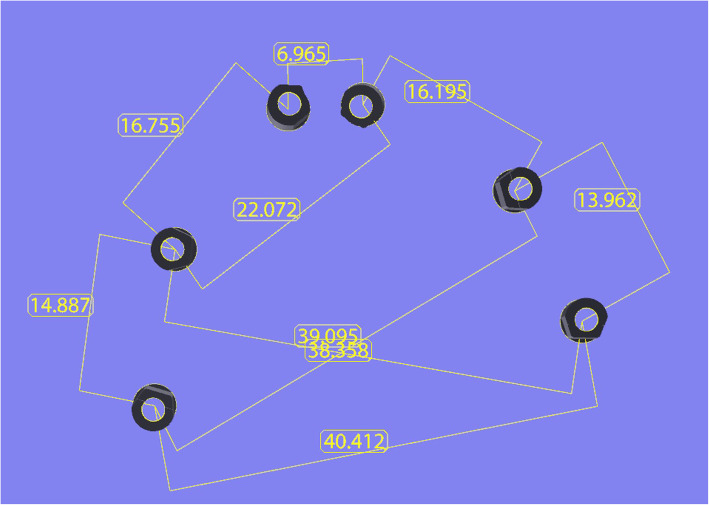
A stone-cast model of a totally edentulous maxilla with 6 implant analogues and scanbodies (SBs) was scanned with a desktop scanner (Freedom UHD®) to capture a reference model (RM), and with 12 IOSs (ITERO ELEMENTS 5D®; PRIMESCAN® and OMNICAM®; CS 3700® and CS 3600®; TRIOS3®; i-500®; EMERALD S® and EMERALD®; VIRTUO VIVO® and DWIO®; RUNEYES QUICKSCAN®). Ten scans were taken using each IOS, and each was compared to the RM, to evaluate trueness. A mesh/mesh method and a nurbs/nurbs method were used to evaluate the overall trueness of the scans; linear and cross distances between the SBs were used to evaluate the local trueness of the scans. The analysis was performed using reverse engineering software (Studio®, Geomagics; Magics®, Materialise). A statistical evaluation was performed.
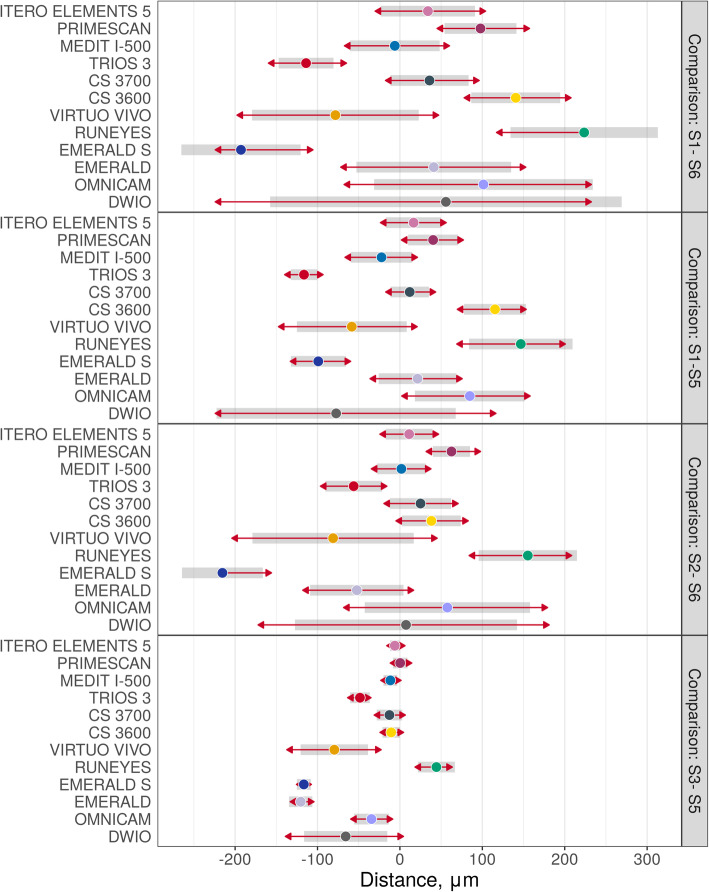
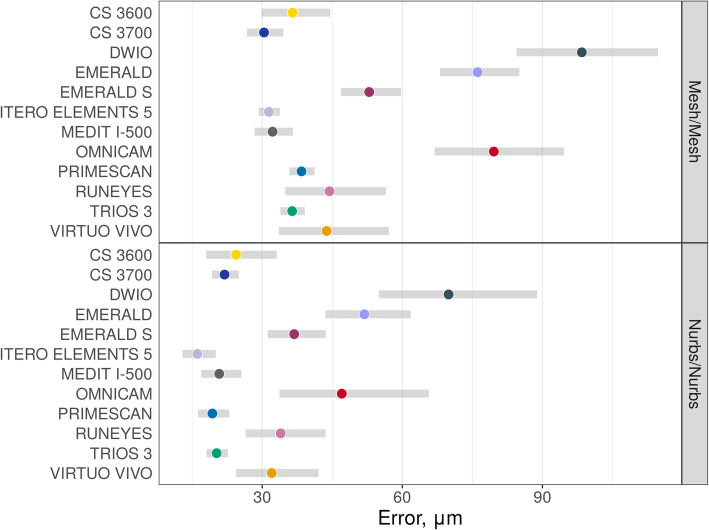
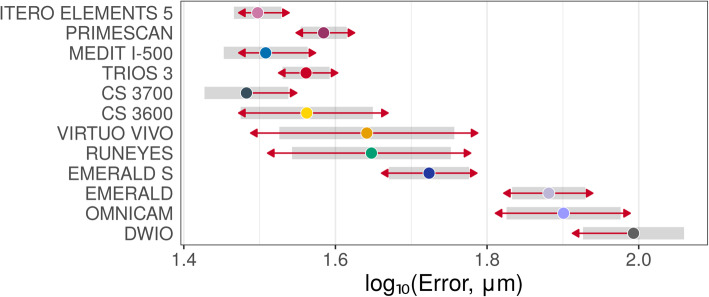
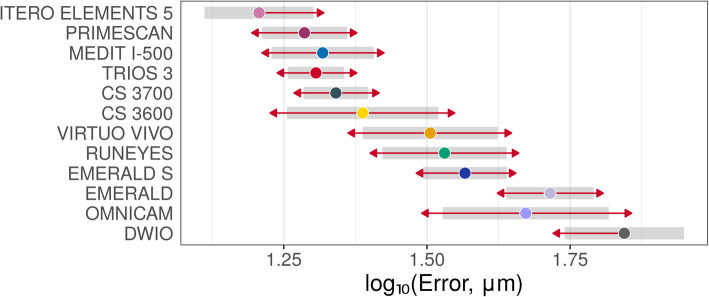
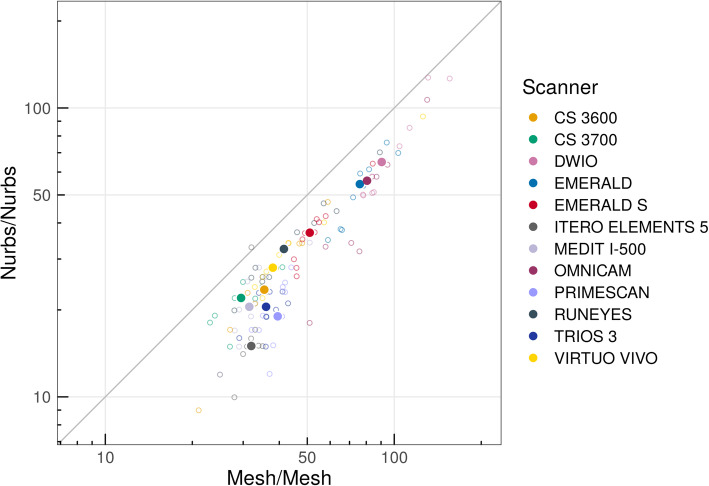
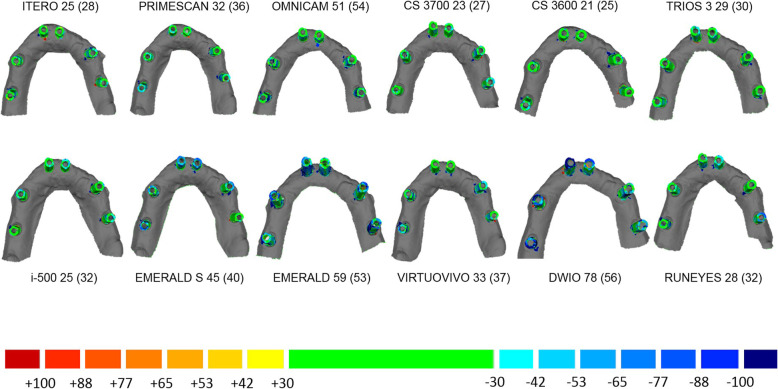
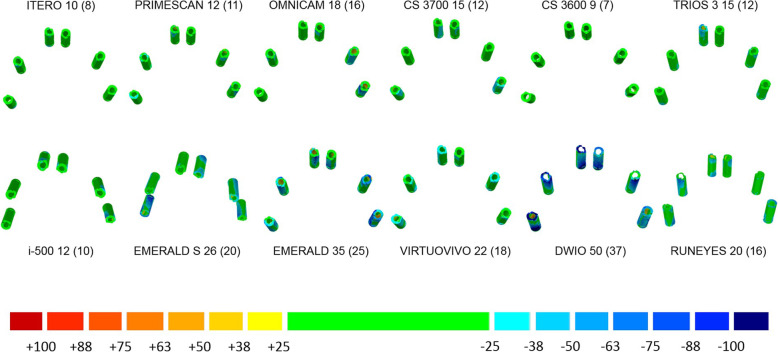
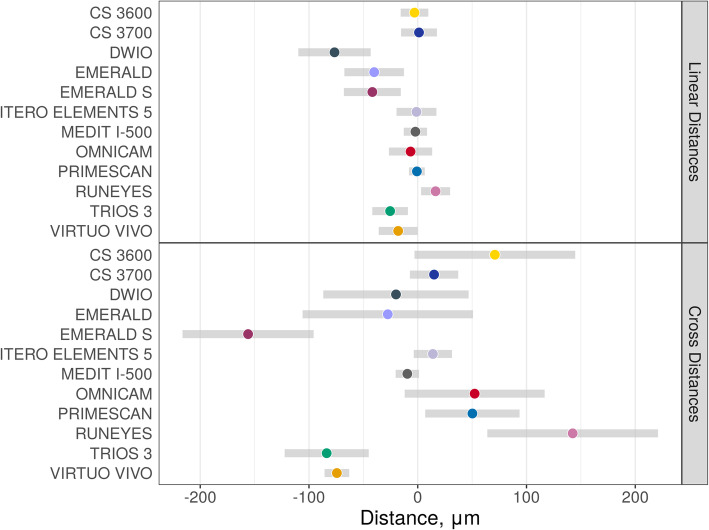
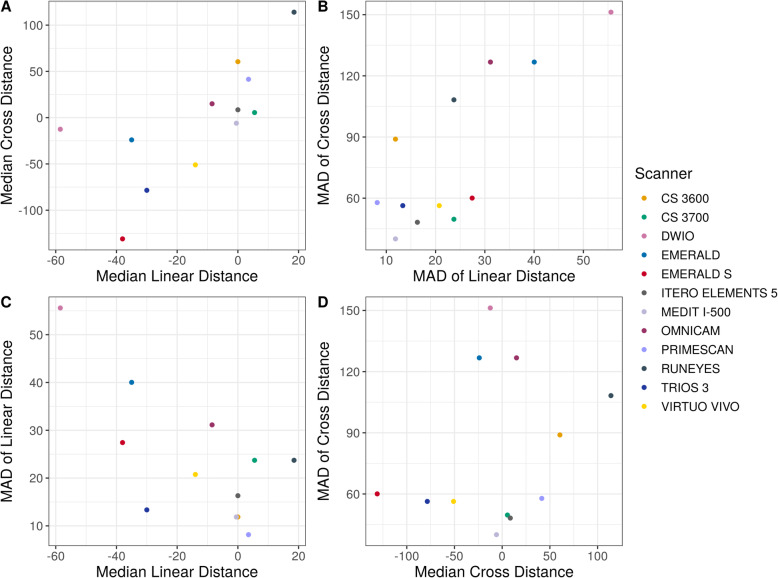
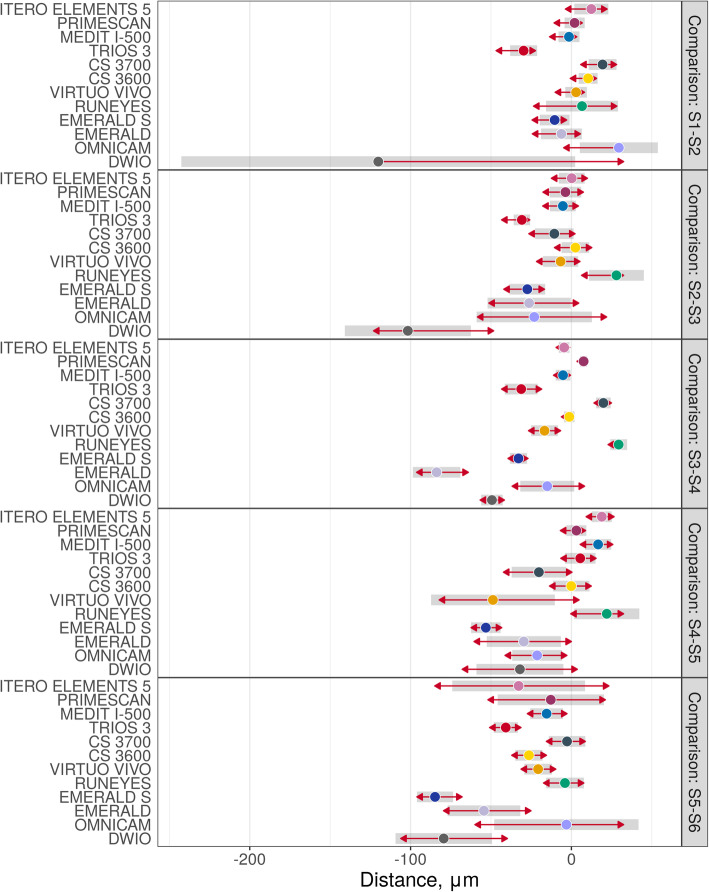
With the mesh/mesh method, the best results were obtained by CS 3700® (mean error 30.4 μm) followed by ITERO ELEMENTS 5D® (31.4 μm), i-500® (32.2 μm), TRIOS 3® (36.4 μm), CS 3600® (36.5 μm), PRIMESCAN® (38.4 μm), VIRTUO VIVO® (43.8 μm), RUNEYES® (44.4 μm), EMERALD S® (52.9 μm), EMERALD® (76.1 μm), OMNICAM® (79.6 μm) and DWIO® (98.4 μm). With the nurbs/nurbs method, the best results were obtained by ITERO ELEMENTS 5D® (mean error 16.1 μm), followed by PRIMESCAN® (19.3 μm), TRIOS 3® (20.2 μm), i-500® (20.8 μm), CS 3700® (21.9 μm), CS 3600® (24.4 μm), VIRTUO VIVO® (32.0 μm), RUNEYES® (33.9 μm), EMERALD S® (36.8 μm), OMNICAM® (47.0 μm), EMERALD® (51.9 μm) and DWIO® (69.9 μm). Statistically significant differences were found between the IOSs. Linear and cross distances between the SBs (local trueness analysis) confirmed the data that emerged from the overall trueness evaluation.
Different levels of trueness were found among the IOSs evaluated in this study. Further studies are needed to confirm these results.
文献尚未验证口内扫描仪(IOS)在全颌(FA)种植体印模中的应用。因此,本体外研究的目的是评估和比较 12 种不同 IOS 在 FA 种植体印模中的准确性。
使用桌面扫描仪(Freedom UHD®)对完全无牙上颌的石铸模型进行扫描,以获取参考模型(RM),并使用 12 种 IOS(ITERO ELEMENTS 5D®;PRIMESCAN®和 OMNICAM®;CS 3700®和 CS 3600®;TRIOS3®;i-500®;EMERALD S®和 EMERALD®;VIRTUO VIVO®和 DWIO®;RUNEYES QUICKSCAN®)进行扫描。每种 IOS 扫描 10 次,每次扫描与 RM 进行比较,以评估准确性。使用网格/网格方法和 nurbs/nurbs 方法评估扫描的整体准确性;使用 SB 之间的线性和交叉距离评估扫描的局部准确性。使用逆向工程软件(Studio®,Geomagics;Magics®,Materialise)进行分析。进行了统计评估。
使用网格/网格方法,CS 3700®(平均误差 30.4μm)的结果最好,其次是 ITERO ELEMENTS 5D®(31.4μm)、i-500®(32.2μm)、TRIOS 3®(36.4μm)、CS 3600®(36.5μm)、PRIMESCAN®(38.4μm)、VIRTUO VIVO®(43.8μm)、RUNEYES®(44.4μm)、EMERALD S®(52.9μm)、EMERALD®(76.1μm)、OMNICAM®(79.6μm)和 DWIO®(98.4μm)。使用 nurbs/nurbs 方法, ITERO ELEMENTS 5D®(平均误差 16.1μm)的结果最好,其次是 PRIMESCAN®(19.3μm)、TRIOS 3®(20.2μm)、i-500®(20.8μm)、CS 3700®(21.9μm)、CS 3600®(24.4μm)、VIRTUO VIVO®(32.0μm)、RUNEYES®(33.9μm)、EMERALD S®(36.8μm)、OMNICAM®(47.0μm)、EMERALD®(51.9μm)和 DWIO®(69.9μm)。IOS 之间存在显著的统计学差异。SB 之间的线性和交叉距离(局部准确性分析)证实了整体准确性评估中出现的数据。
在本研究中评估的 IOS 之间存在不同程度的准确性。需要进一步的研究来证实这些结果。