School of Human Resource Management, York University, 4700 Keele St, Toronto, ON, M3J 1P3, Canada.
School of Public Health and Health Systems, University of Waterloo, 200 University Ave W, Waterloo, ON, N2L 3G1, Canada.
Hum Resour Health. 2020 Sep 22;18(1):68. doi: 10.1186/s12960-020-00509-4.
Midwifery students' intention to stay in the profession can be influenced by how the interface of their work and personal life is affected by their clinical placement experience. The purpose of this study is to compare the intention to stay in the midwifery profession and its association with three work/personal life interface constructs among pre- and post-clinical placement midwifery students in Canada. The constructs investigated are work interference with personal life, personal life interference with work, and work/personal life enhancement.
Quantitative cross-sectional data were collected through two separate online surveys completed by pre- and post-clinical placement students. In total, 456 midwifery students attending six different midwifery education programs responded to the surveys.
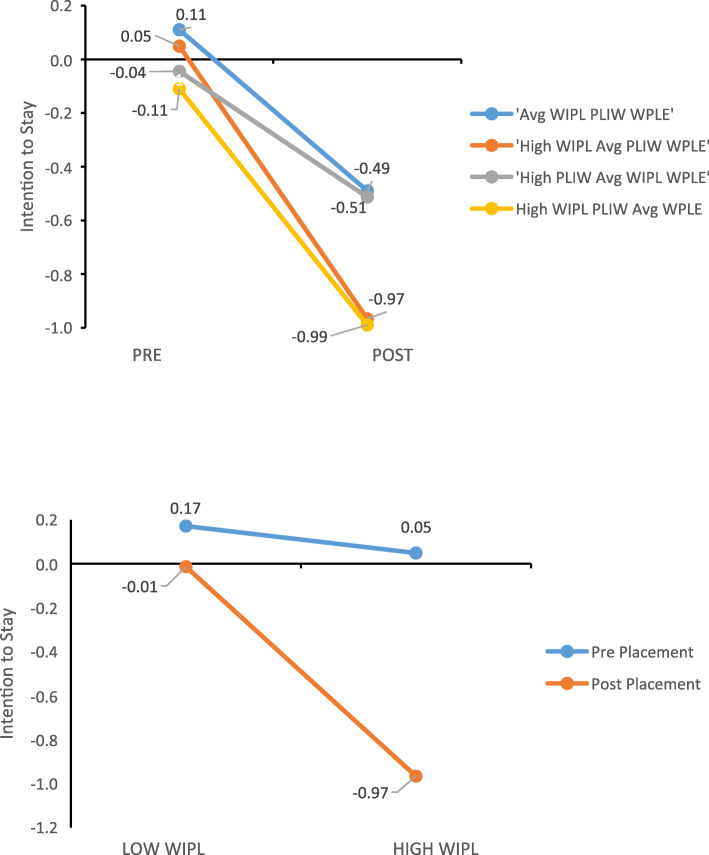
Compared to pre-clinical placement students, post-clinical placement students had significantly lower intention to stay in the profession. For pre-clinical placement students, higher personal life interference with work was significantly associated with lower intention to stay in the profession. For post-clinical placement students, higher work interference with personal life was associated with lower intention to stay in the profession. We did not find any significant relationships between work/personal life enhancement and intention to stay in the profession in pre- or post-clinical placement students.
Pre- and post-clinical placement students have different intentions to stay in the profession. For pre-clinical placement students, those who report that their personal lives highly interfere with work are less likely to want to stay in the midwifery profession. Post-clinical placement students reported that when working interfered with their personal lives they were less likely to want to stay in the profession. Our findings highlight the importance of offering students a realistic preview of the required commitment, workload, and personal involvement in the midwifery profession prior to applying or accepting a spot in a midwifery education program. Furthermore, facilitating the development of skills to better manage the expectations in midwifery work and personal lives might help with maintaining positive intentions to stay in the profession.
助产士学生留在该行业的意愿可能会受到其临床实习经历如何影响工作与个人生活界面的影响。本研究的目的是比较加拿大临床前和临床后助产学生的专业意向及其与工作/个人生活界面三个结构的关联。研究的结构包括工作对个人生活的干扰、个人生活对工作的干扰以及工作/个人生活的增强。
通过两个独立的在线调查,收集了定量的横断面数据。共有来自六个不同助产教育项目的 456 名助产学生完成了调查。
与临床前实习学生相比,临床后实习学生的专业意向明显较低。对于临床前实习学生,个人生活对工作的干扰程度越高,专业意向越低。对于临床后实习学生,工作对个人生活的干扰程度越高,专业意向越低。我们没有发现工作/个人生活增强与临床前或临床后实习学生的专业意向之间有任何显著关系。
临床前和临床后实习学生的专业意向不同。对于临床前实习学生,那些报告个人生活对工作干扰较大的人不太可能想留在助产行业。临床后实习学生报告说,当工作干扰到他们的个人生活时,他们不太可能想留在这个行业。我们的研究结果强调了在申请或接受助产教育项目之前,向学生提供对所需承诺、工作量和个人投入的现实预览的重要性。此外,培养更好地管理助产工作和个人生活期望的技能,可能有助于保持对该专业的积极意向。