Wang Songyun, Luo Qinyu, Chen Hui, Huang Jingyu, Li Xuemeng, Wu Lin, Li Binxun, Wang Zhen, Zhao Dongdong, Jiang Hong
Department of Cardiology, Renmin Hospital of Wuhan University, Cardiovascular Research Institute of Wuhan University, Wuhan, Hubei, China.
Department of Cardiology, Shanghai Tenth People's Hospital, Tongji University School of Medicine, Shanghai, China.
Oxid Med Cell Longev. 2020 Sep 3;2020:9343160. doi: 10.1155/2020/9343160. eCollection 2020.
Neuroinflammation plays a key role in myocardial ischemia-reperfusion (I/R) injury. Previous studies showed that light-emitting diode (LED) therapy might improve M2 microglia activation and brain-derived neurotrophic factor (BDNF) expression, thereby exerting anti-inflammatory effects. Therefore, we hypothesized that LED therapy might reduce myocardial I/R injury by neuroinflammation modulation.
To explore the effect of LED therapy on myocardial I/R-induced injury and seek the underlying mechanism.
Thirty rats were randomly divided into three groups: Control group (without LED treatment or myocardial I/R, = 6), I/R group (with myocardial I/R only, = 12), and LED+I/R group (with myocardial I/R and LED therapy, = 12). Electrocardiogram was recorded continuously during the procedure. In addition, brain tissue was extracted for BDNF, Iba1, and CD206 analyses, and heart tissue for myocardial injury (ischemic size and infarct size), IL-4 and IL-10 mRNA analysis.
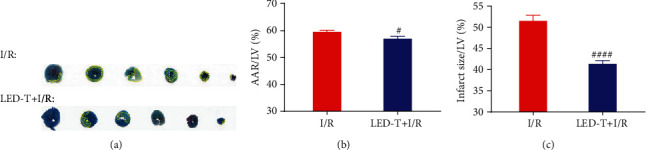
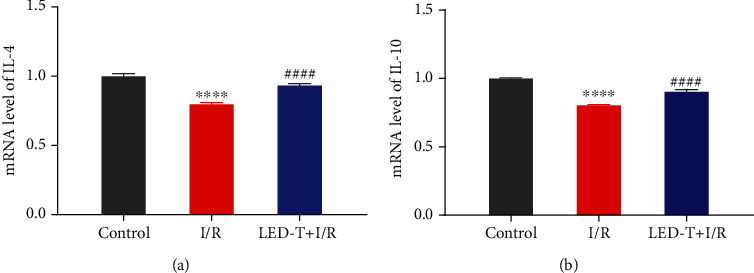
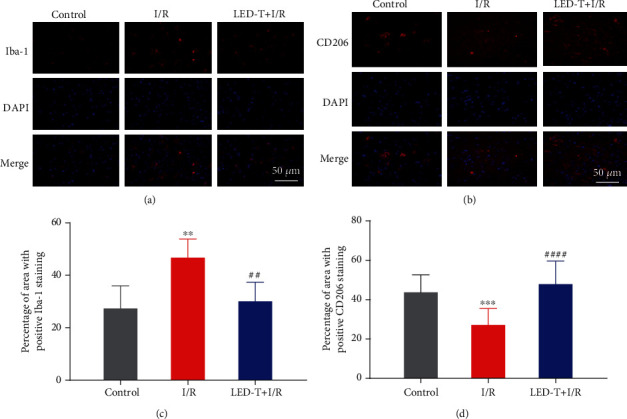
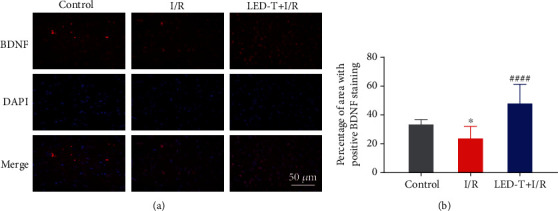
In comparison with the I/R group, the ischemia size and the infarct size were significantly attenuated by LED therapy in the LED+I/R group. Meanwhile, the microglia activation induced by I/R injury was prominently attenuated by LED treatment either. And it is apparent that there was also an increase in the beneficial neuroinflammation markers (BDNF and CD206) in the paraventricular nucleus (PVN) in the LED+I/R group. Furthermore, the anti-inflammatory cytokines, IL-4 and IL-10, were greatly decreased by I/R while improved by LED treatment in myocardium.
LED therapy might reduce neuroinflammation in PVN and decrease myocardium injury by elevating BDNF and M2 microglia.
神经炎症在心肌缺血再灌注(I/R)损伤中起关键作用。先前的研究表明,发光二极管(LED)疗法可能会改善M2小胶质细胞的激活和脑源性神经营养因子(BDNF)的表达,从而发挥抗炎作用。因此,我们推测LED疗法可能通过调节神经炎症来减轻心肌I/R损伤。
探讨LED疗法对心肌I/R诱导损伤的影响并寻找潜在机制。
将30只大鼠随机分为三组:对照组(未接受LED治疗或心肌I/R,n = 6)、I/R组(仅接受心肌I/R,n = 12)和LED + I/R组(接受心肌I/R和LED疗法,n = 12)。在实验过程中持续记录心电图。此外,提取脑组织进行BDNF、Iba1和CD206分析,提取心脏组织进行心肌损伤(缺血面积和梗死面积)、IL-4和IL-10 mRNA分析。
与I/R组相比,LED + I/R组中LED疗法显著减小了缺血面积和梗死面积。同时,LED治疗也显著减轻了I/R损伤诱导的小胶质细胞激活。显然,LED + I/R组室旁核(PVN)中有益的神经炎症标志物(BDNF和CD206)也有所增加。此外,I/R使心肌中的抗炎细胞因子IL-4和IL-10大幅降低,而LED治疗使其得到改善。
LED疗法可能通过提高BDNF和M2小胶质细胞来减轻PVN中的神经炎症并减少心肌损伤。