Department of Neurobiology, University of Alabama at Birmingham, Birmingham, AL, USA.
Department of Psychology, University of California, Riverside, Riverside, CA, USA.
J Vis. 2020 Sep 2;20(9):15. doi: 10.1167/jov.20.9.15.
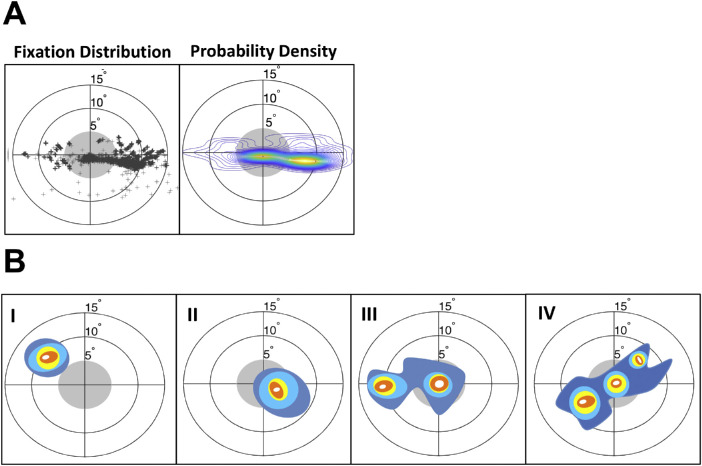
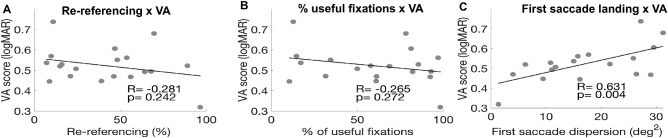
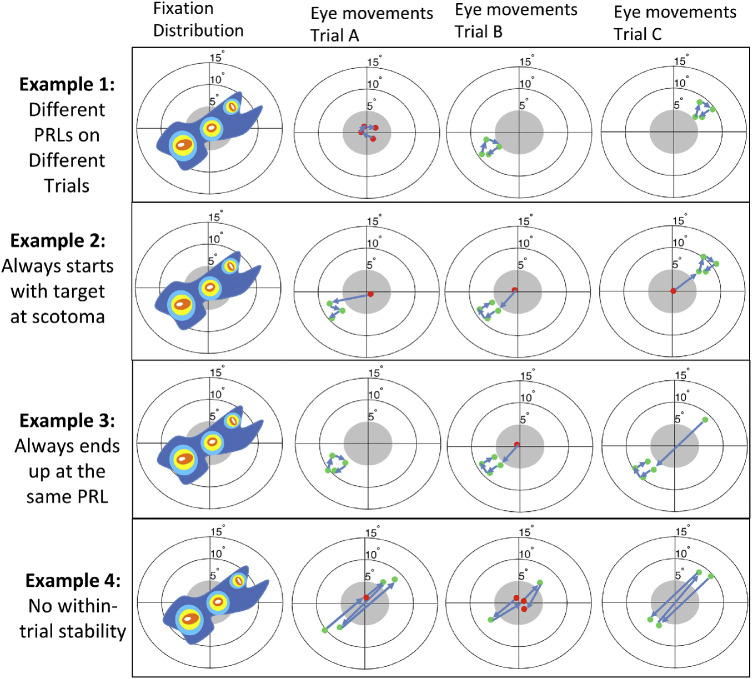
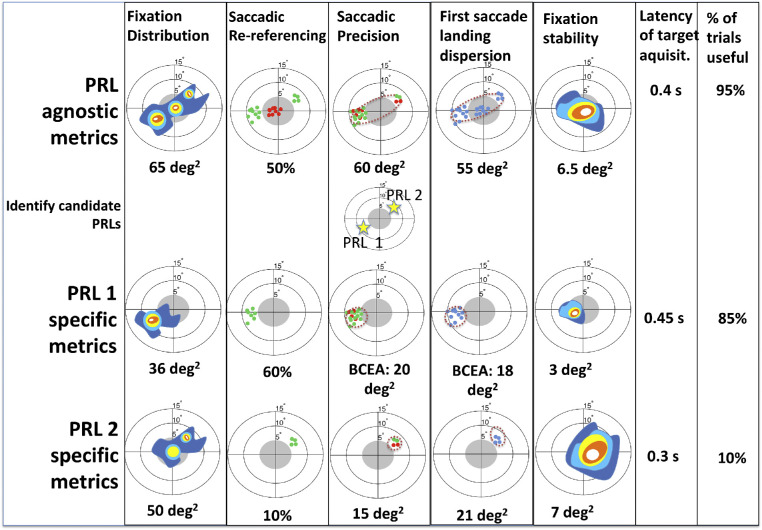
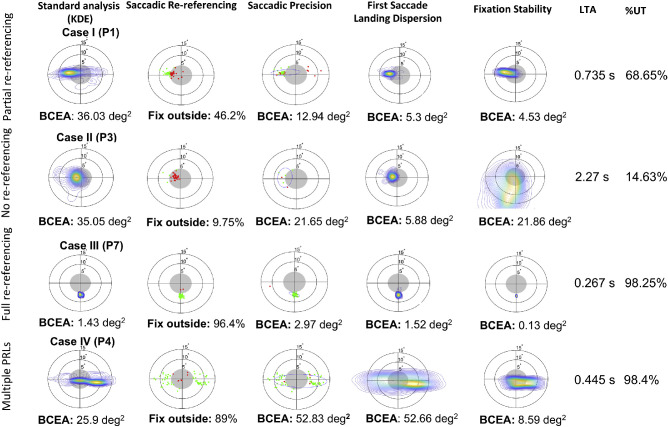
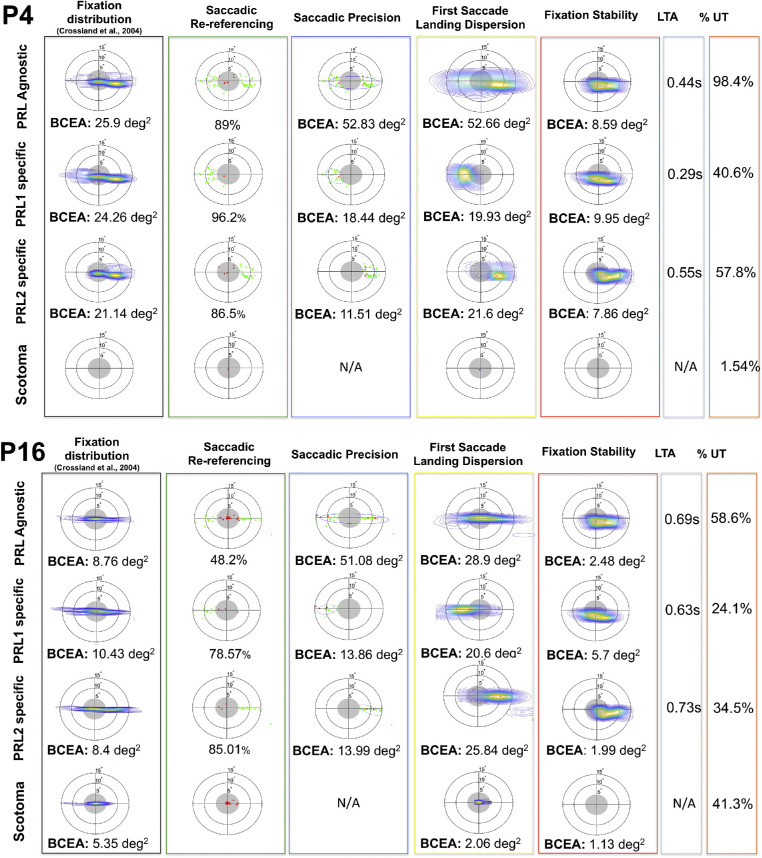
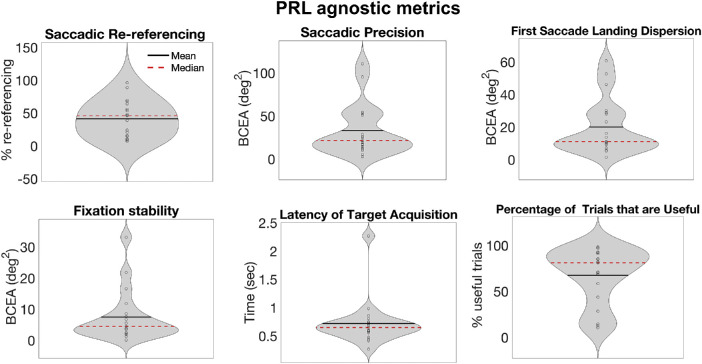
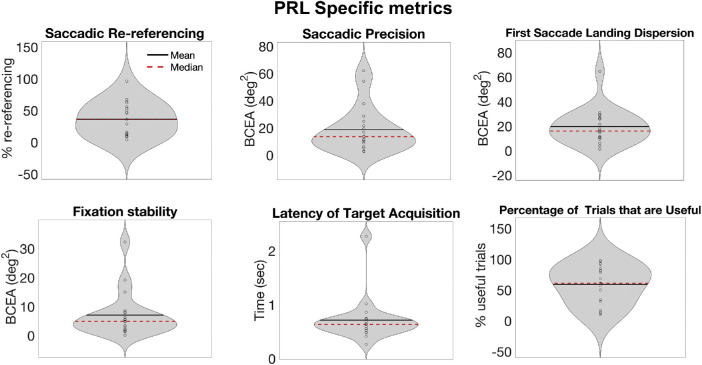
Loss of central vision can be partially compensated by increased use of peripheral vision. For example, patients experiencing central vision loss due to disease (macular degeneration) or healthy participants trained with simulated central vision loss, tend to develop eccentric fixation spots for reading or other visual tasks. In both patients and in simulated conditions, there are substantial individual variations in the effective use of the periphery. The factors driving these individual differences are still unclear. Although early approaches have described some dimensions of these strategies, the field is still in its initial stages and important elements are often conflated when examining gaze patterns. Here, we propose a systematic approach to characterize oculomotor strategies in cases of central vision loss that distinguishes different components: saccadic re-referencing, saccadic precision, first saccade landing dispersion, fixation stability, latency of target acquisition, and percentage of trials that are useful. We tested this approach in healthy individuals trained with a gaze-contingent display obstructing the central 10 degrees of the visual field. The use of simulated scotoma helps overcome known challenges in clinical research, from recruitment and compliance to the diverse extent and nature of the visual loss. Importantly, this approach offers the ability to examine oculomotor strategies as they develop in controlled settings where viewing conditions are similar across participants. Results show substantial differences in characteristics of peripheral looking strategies, both across trials and individuals. This more complete characterization of peripheral looking strategies can help us understand individual differences in rehabilitation after central vision loss.
中央视觉丧失可以通过增加周边视觉的使用来部分补偿。例如,由于疾病(黄斑变性)而导致中央视觉丧失的患者或通过模拟中央视觉丧失进行训练的健康参与者,往往会为阅读或其他视觉任务发展出偏心注视点。在患者和模拟条件下,周边区域的有效利用存在很大的个体差异。导致这些个体差异的因素尚不清楚。尽管早期的方法已经描述了这些策略的一些维度,但该领域仍处于起步阶段,在检查注视模式时,重要的元素经常被混淆。在这里,我们提出了一种系统的方法来描述中央视觉丧失病例中的眼动策略,该方法区分了不同的组成部分:扫视重新参考、扫视精度、第一次扫视着陆分散、注视稳定性、目标获取潜伏期以及有用试验的百分比。我们在接受注视相关显示训练的健康个体中测试了这种方法,该显示会遮挡视野中央的 10 度。模拟暗点的使用有助于克服临床研究中的已知挑战,从招募和依从性到视觉丧失的不同程度和性质。重要的是,这种方法提供了在观看条件在参与者之间相似的受控环境中检查眼动策略的能力。结果显示,在周边视觉策略的特征方面存在很大差异,无论是在试验之间还是个体之间。对周边视觉策略的这种更完整的描述可以帮助我们理解中央视觉丧失后的康复中的个体差异。