Capetti Francesca, Cagliero Cecilia, Marengo Arianna, Bicchi Carlo, Rubiolo Patrizia, Sgorbini Barbara
Department of Drug Science and Technology, University of Turin, Via Pietro Giuria 9, 10125 Turin, Italy.
Plants (Basel). 2020 Sep 21;9(9):1242. doi: 10.3390/plants9091242.
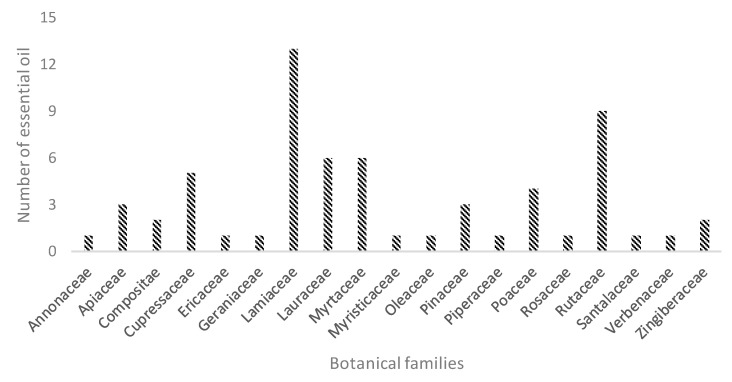
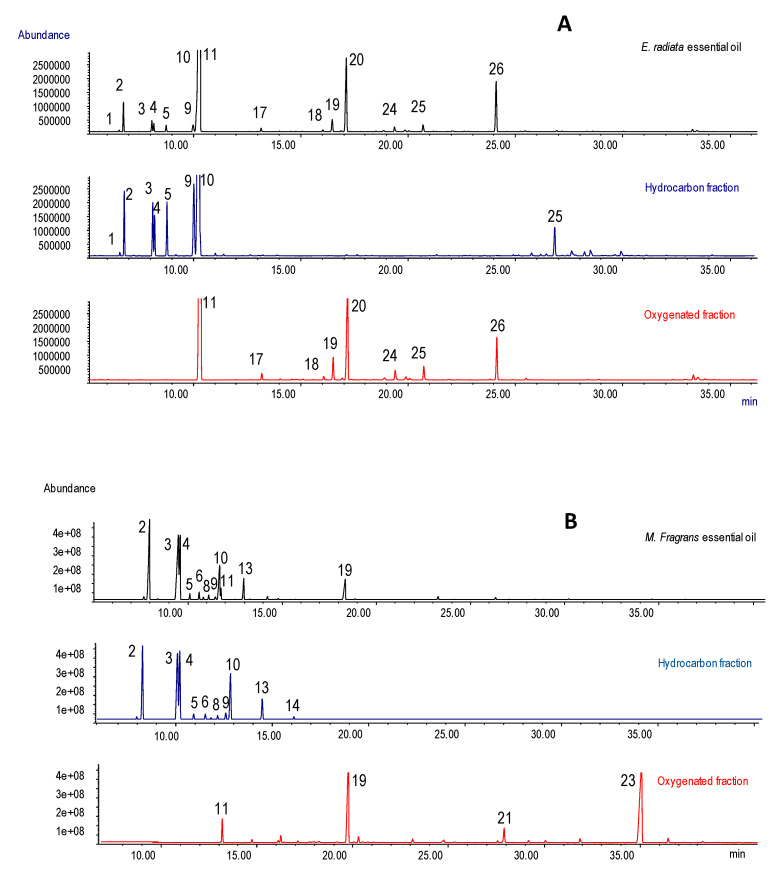
Type 2 diabetes mellitus (T2DM) is a metabolic disorder characterized by unpaired blood glycaemia maintenance. T2DM can be treated by inhibiting carbohydrate hydrolyzing enzymes (α-amylases and α-glucosidases) to decrease postprandial hyperglycemia. Acarbose and voglibose are inhibitors used in clinical practice. However, these drugs are associated with unpleasant gastrointestinal side effects. This study explores new α-amylase inhibitors deriving from plant volatile specialized metabolites. Sixty-two essential oils (EOs) from different plant species and botanical families were subjected to α-amylase in vitro enzymatic assay and chemically characterized using gas chromatography coupled to mass spectrometry. Several EOs were found to be potential α-amylase inhibitors, and , , and EOs displayed inhibitory capacities comparable to that of the positive control (i.e., acarbose). A bio-guided fractionation approach was adopted to isolate and identify the active fractions/compounds of and EOs. The bio-guided fractionation revealed that EOs α-amylase inhibitory activity is often the result of antagonist, additive, or synergistic interactions among their bioactive constituents and led to the identification of 1,8-cineole, 4-terpineol, α-terpineol, α-pinene, and β-pinene as bioactive compounds, also confirmed when they were tested singularly. These results demonstrate that EO oils are a promising source of potential α-amylase inhibitors.
2型糖尿病(T2DM)是一种以血糖维持失衡为特征的代谢紊乱疾病。T2DM可通过抑制碳水化合物水解酶(α-淀粉酶和α-葡萄糖苷酶)来降低餐后高血糖进行治疗。阿卡波糖和伏格列波糖是临床实践中使用的抑制剂。然而,这些药物会带来令人不适的胃肠道副作用。本研究探索源自植物挥发性特殊代谢产物的新型α-淀粉酶抑制剂。对来自不同植物种类和植物科的62种精油(EOs)进行了α-淀粉酶体外酶活性测定,并采用气相色谱-质谱联用技术对其进行化学表征。发现几种精油是潜在的α-淀粉酶抑制剂,其中[具体精油名称1]、[具体精油名称2]和[具体精油名称3]精油表现出与阳性对照(即阿卡波糖)相当的抑制能力。采用生物导向分级分离方法分离和鉴定了[具体精油名称1]和[具体精油名称2]精油的活性组分/化合物。生物导向分级分离表明,精油的α-淀粉酶抑制活性通常是其生物活性成分之间拮抗、相加或协同相互作用的结果,并鉴定出1,8-桉叶素、4-松油醇、α-松油醇、α-蒎烯和β-蒎烯为生物活性化合物,单独测试时也得到了证实。这些结果表明,精油是潜在α-淀粉酶抑制剂的一个有前景的来源。