Department of Stomatology, Clinical Department of Aerospace City, Northern Beijing Medical District, Chinese PLA General Hospital, Beijing, China.
Department of Stomatology, The 7th Medical Center, Chinese PLA General Hospital, Beijing, China.
J Cell Mol Med. 2020 Nov;24(21):12234-12245. doi: 10.1111/jcmm.15803. Epub 2020 Sep 23.
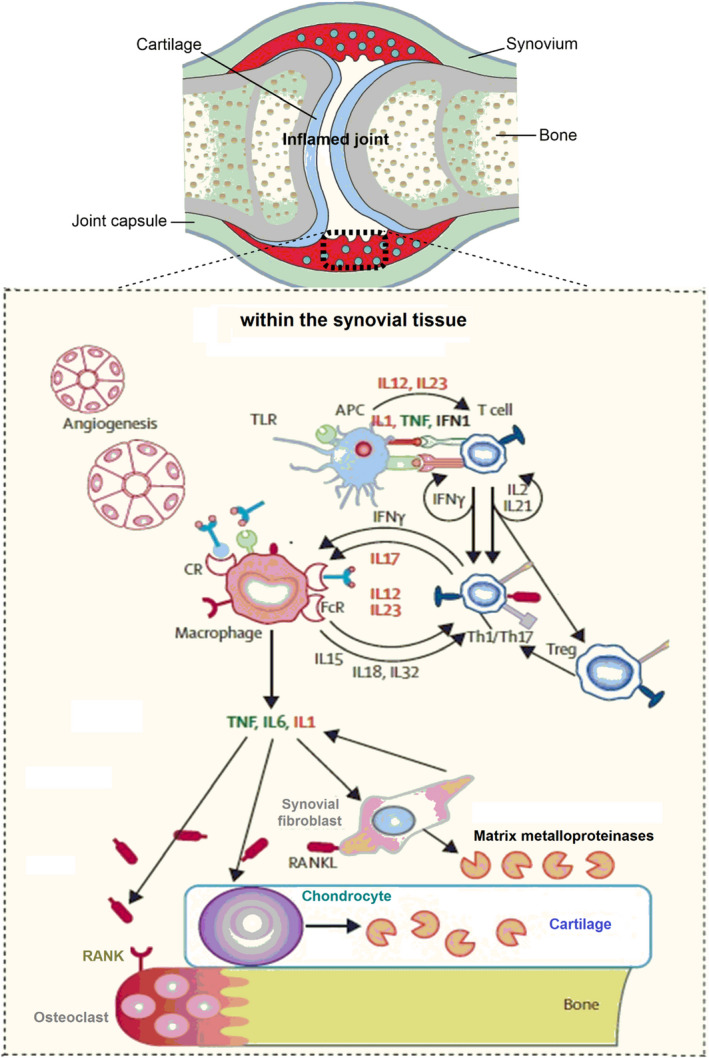
Rheumatoid arthritis (RA) is a chronic inflammatory syndrome designated by synovial joint inflammation leading to cartilage degradation and bone damage as well as progressive disability. Synovial inflammation is promoted through the infiltration of mononuclear immune cells, dominated by CD4 T cells, macrophages and dendritic cells (DCs), together with fibroblast-like synoviocytes (FLS), into the synovial compartment. Berberine is a bioactive isoquinoline alkaloid compound showing various pharmacological properties that are mainly attributed to immunomodulatory and anti-inflammatory effects. Several lines of experimental study have recently investigated the therapeutic potential of berberine and its underlying mechanisms in treating RA condition. The present review aimed to clarify determinant cellular and molecular targets of berberine in RA and found that berberine through modulating several signalling pathways involved in the joint inflammation, including PI3K/Akt, Wnt1/β-catenin, AMPK/lipogenesis and LPA/LPA /ERK/p38 MAPK can inhibit inflammatory proliferation of FLS cells, suppress DC activation and modulate Th17/Treg balance and thus prevent cartilage and bone destruction. Importantly, these molecular targets may explore new therapeutic targets for RA treatment.
类风湿关节炎(RA)是一种慢性炎症综合征,其特征为滑膜关节炎症,导致软骨降解和骨损伤以及进行性残疾。滑膜炎症是通过单核免疫细胞(主要是 CD4 T 细胞、巨噬细胞和树突状细胞(DC))以及成纤维样滑膜细胞(FLS)浸润到滑膜腔而促进的。小檗碱是一种生物活性异喹啉生物碱化合物,具有多种药理特性,主要归因于免疫调节和抗炎作用。最近的一些实验研究探讨了小檗碱在治疗 RA 方面的治疗潜力及其潜在机制。本综述旨在阐明小檗碱在 RA 中的关键细胞和分子靶点,并发现小檗碱通过调节参与关节炎症的几种信号通路,包括 PI3K/Akt、Wnt1/β-catenin、AMPK/脂肪生成和 LPA/LPA/ERK/p38 MAPK,可以抑制 FLS 细胞的炎症增殖,抑制 DC 激活,并调节 Th17/Treg 平衡,从而防止软骨和骨破坏。重要的是,这些分子靶点可能为 RA 的治疗探索新的治疗靶点。