Center for Cognitive Health, Portland, OR, USA.
Am J Alzheimers Dis Other Demen. 2020 Jan-Dec;35:1533317520960873. doi: 10.1177/1533317520960873.
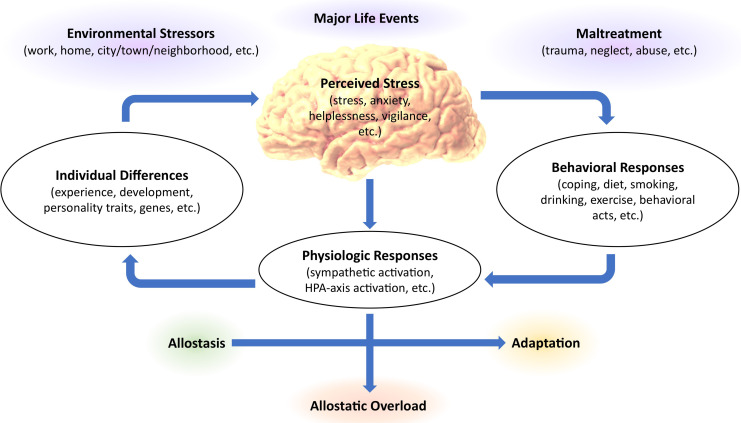
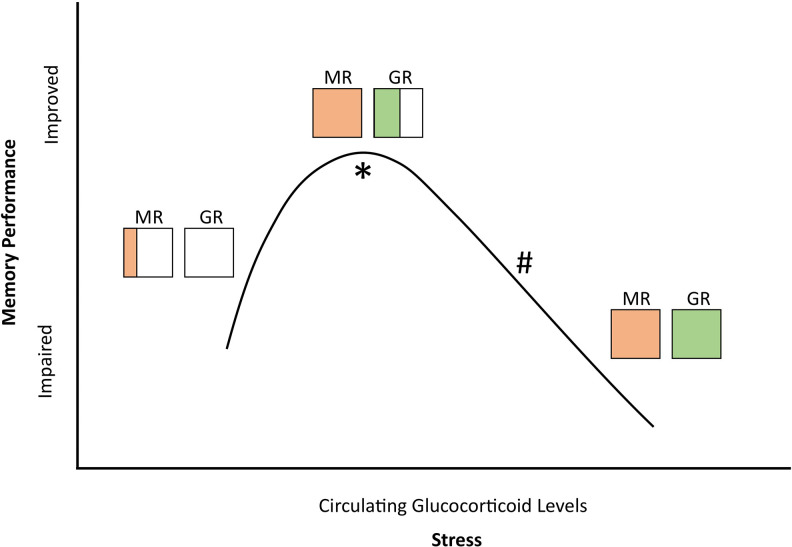
Stress responses are essential for survival, but become detrimental to health and cognition with chronic activation. Chronic hypothalamic-pituitary-adrenal axis release of glucocorticoids induces hypothalamic-pituitary-adrenal axis dysfunction and neuronal loss, decreases learning and memory, and modifies glucocorticoid receptor/mineralocorticoid receptor expression. Elderly who report increased stress are nearly 3 times more likely to develop Alzheimer's disease, have decreased global cognition and faster cognitive decline than those reporting no stress. Patients with mild cognitive impairment are more sensitive to stress compared to healthy elderly and those with Alzheimer's disease. Stress may also transduce neurodegeneration via the gut microbiome. Coping styles determine hippocampal mineralocorticoid receptor expression in mice, indicating that coping modifies cortisol's effect on the brain. Identifying neuroprotective coping strategies that lessen the burden of stress may prevent or slow cognitive decline. Treatments and education designed to reduce stress should be recognized as neuroprotective.
应激反应对生存至关重要,但慢性激活会对健康和认知造成损害。慢性下丘脑-垂体-肾上腺轴释放糖皮质激素会导致下丘脑-垂体-肾上腺轴功能障碍和神经元丢失,降低学习和记忆能力,并改变糖皮质激素受体/盐皮质激素受体的表达。报告压力增加的老年人患阿尔茨海默病的风险几乎增加了 3 倍,与报告无压力的老年人相比,他们的整体认知能力下降更快,认知衰退速度更快。与健康老年人和阿尔茨海默病患者相比,轻度认知障碍患者对压力更敏感。压力也可能通过肠道微生物组传递神经退行性变。应对方式决定了小鼠海马盐皮质激素受体的表达,表明应对方式改变了皮质醇对大脑的影响。确定减轻压力负担的神经保护应对策略可能预防或减缓认知衰退。旨在减轻压力的治疗和教育应被视为神经保护。