Department of Veterans Affairs, San Francisco Veterans Affairs Health Care System, San Francisco, California, USA.
Department of Orthopaedic Surgery, University of California, San Francisco, California, USA.
J Orthop Res. 2021 Jul;39(7):1452-1462. doi: 10.1002/jor.24865. Epub 2020 Oct 6.
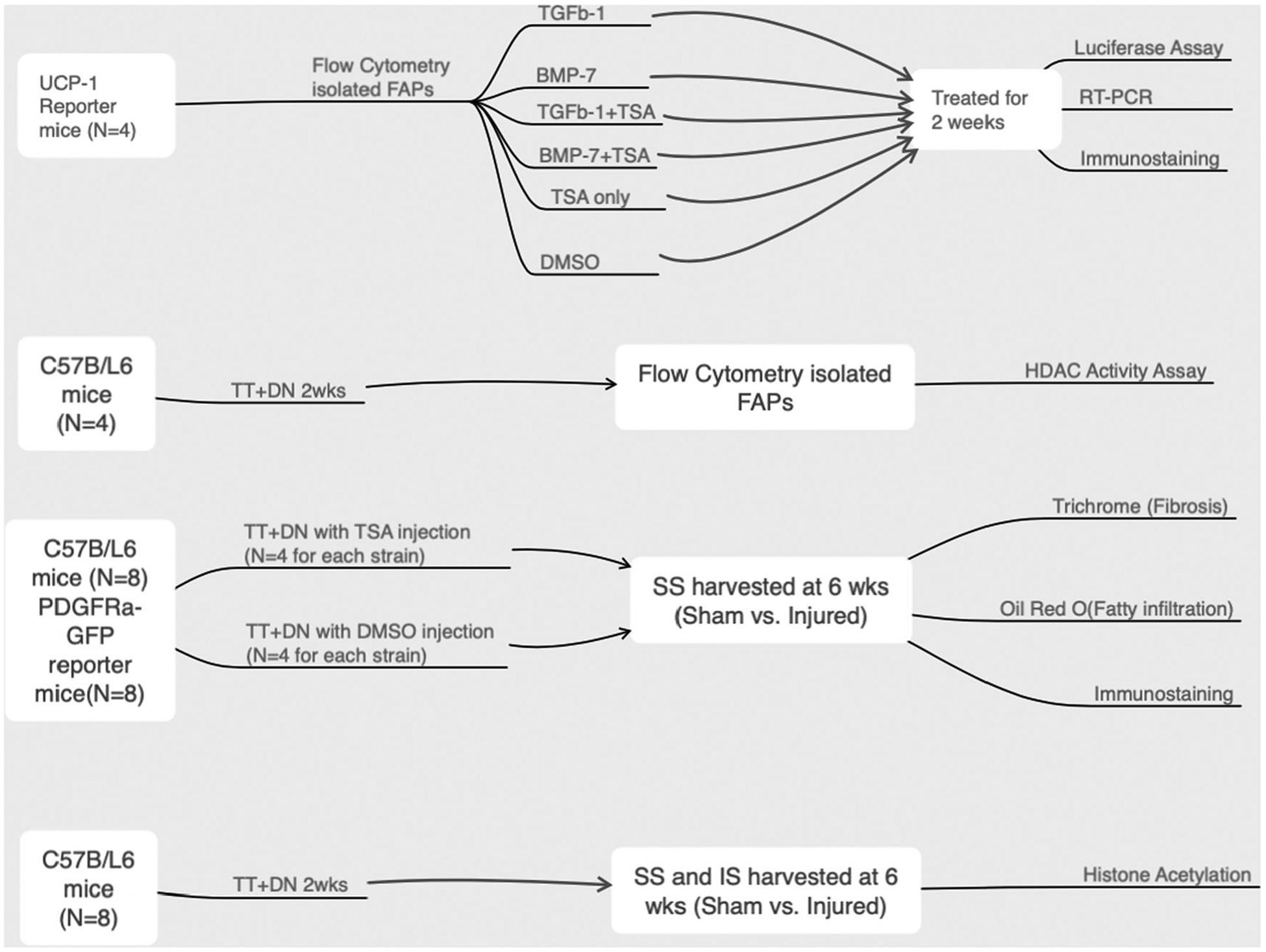
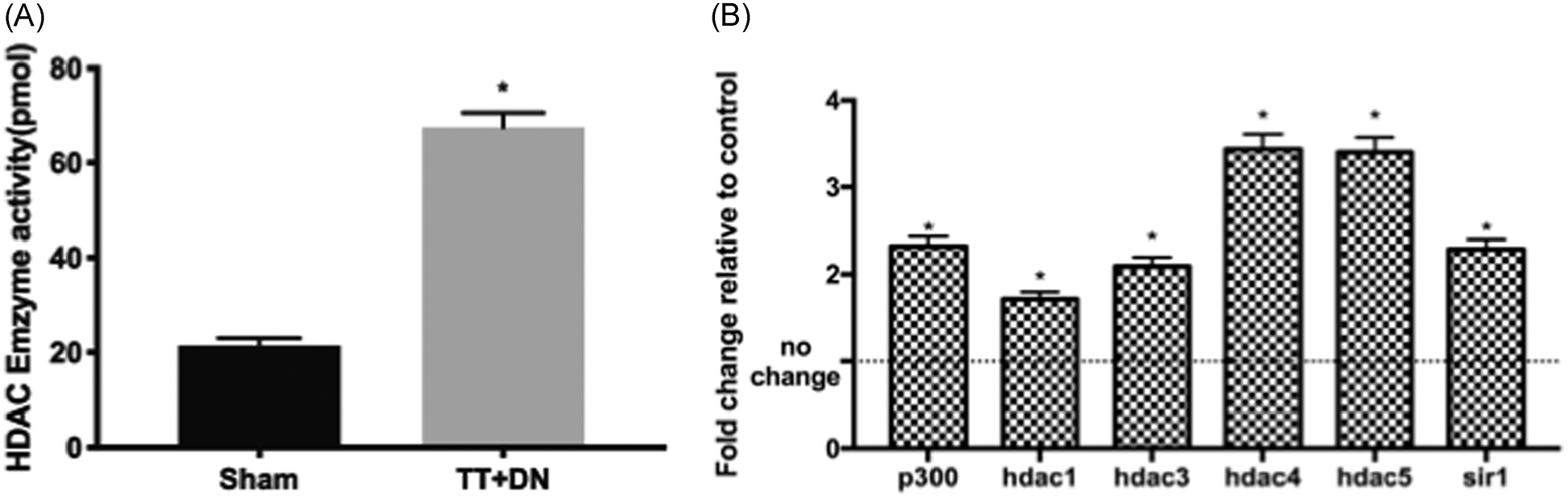
Rotator cuff (RC) muscle fatty infiltration (FI) is an important factor that determines the clinical outcome of patients with RC repair. There is no effective treatment for RC muscle FI at this time. The goal of this study is to define the role Trichostatin A (TSA), a histone deacetylase (HDAC) inhibitor in regulating muscle fibro/adipogenic progenitors (FAPs) adipogenesis and treating muscle fatty degeneration after massive RC tears in a mouse model. We hypothesize that TSA reduces muscle FI after massive RC tears. HDAC activity was measured in FAPs in RC muscle after tendon/nerve transection or sham surgery. FAPs were treated with TSA for 2 weeks and FAP adipogenesis was evaluated with perilipin and Oil Red O staining, as well as reverse transcript-polymerase chain reaction for adipogenesis-related genes. About 0.5 mg/kg TSA or dimethyl sulfoxide was administered to C57B/L6 mice with massive rotator cuff tears through daily intraperitoneal injection for 6 weeks. Supraspinatus muscles were harvested for biochemical and histology analysis. We found that FAPs showed significantly higher HDAC activity after RC tendon/nerve transection. TSA treatment significantly reduced HDAC activity and inhibited adipogenesis of FAPs. TSA also abolished the role of bone morphogenetic protein-7 in inducing FAP adipogenesis and promoted FAP brown/beige adipose tissue (BAT) differentiation. TSA injection significantly increased histone H3 acetylation and reduced FI of rotator cuff muscles after massive tendon tears. Results from this study showed that TSA can regulate FAP adipogenesis and promote FAP BAT differentiation epigenetically. HDAC inhibition may be a new treatment strategy to reduce muscle FI after RC tears and repair.
肩袖(RC)肌肉脂肪浸润(FI)是决定 RC 修复患者临床结果的重要因素。目前,RC 肌肉 FI 没有有效的治疗方法。本研究的目的是确定组蛋白去乙酰化酶(HDAC)抑制剂 Trichostatin A(TSA)在调节肌肉成纤维/脂肪祖细胞(FAP)脂肪生成以及在鼠模型中治疗巨大 RC 撕裂后肌肉脂肪变性中的作用。我们假设 TSA 可减少巨大 RC 撕裂后的肌肉 FI。在 RC 肌肉中的 FAP 中测量肌腱/神经横断或假手术后的 HDAC 活性。用 TSA 处理 FAP 2 周,并通过 perilipin 和油红 O 染色以及与脂肪生成相关基因的逆转录-聚合酶链反应评估 FAP 脂肪生成。通过每日腹腔内注射约 0.5mg/kg TSA 或二甲基亚砜,向具有巨大肩袖撕裂的 C57B/L6 小鼠给药 6 周。收获冈上肌进行生化和组织学分析。我们发现 RC 肌腱/神经横断后 FAP 显示出明显更高的 HDAC 活性。TSA 处理显著降低了 HDAC 活性并抑制了 FAP 的脂肪生成。TSA 还消除了骨形态发生蛋白-7 在诱导 FAP 脂肪生成中的作用,并促进了 FAP 棕色/米色脂肪组织(BAT)分化。TSA 注射显著增加了组蛋白 H3 的乙酰化,并减少了巨大肌腱撕裂后 RC 肌肉的 FI。这项研究的结果表明,TSA 可以调节 FAP 脂肪生成并通过表观遗传促进 FAP BAT 分化。HDAC 抑制可能是减少 RC 撕裂后和修复时肌肉 FI 的新治疗策略。