Cai Ting-Ting, Ye Xiao-Long, Li Ru-Run, Chen Hui, Wang Ya-Yun, Yong Hui-Juan, Pan Ming-Lin, Lu Wei, Tang Ying, Miao Heng, Snijders Antoine M, Mao Jian-Hua, Liu Xing-Yin, Lu Yi-Bing, Ding Da-Fa
Department of Endocrinology, The Second Affiliated Hospital of Nanjing Medical University, Nanjing, China.
Biological Systems and Engineering Division, Lawrence Berkeley National Laboratory, Berkeley, CA, United States.
Front Pharmacol. 2020 Aug 19;11:1249. doi: 10.3389/fphar.2020.01249. eCollection 2020.
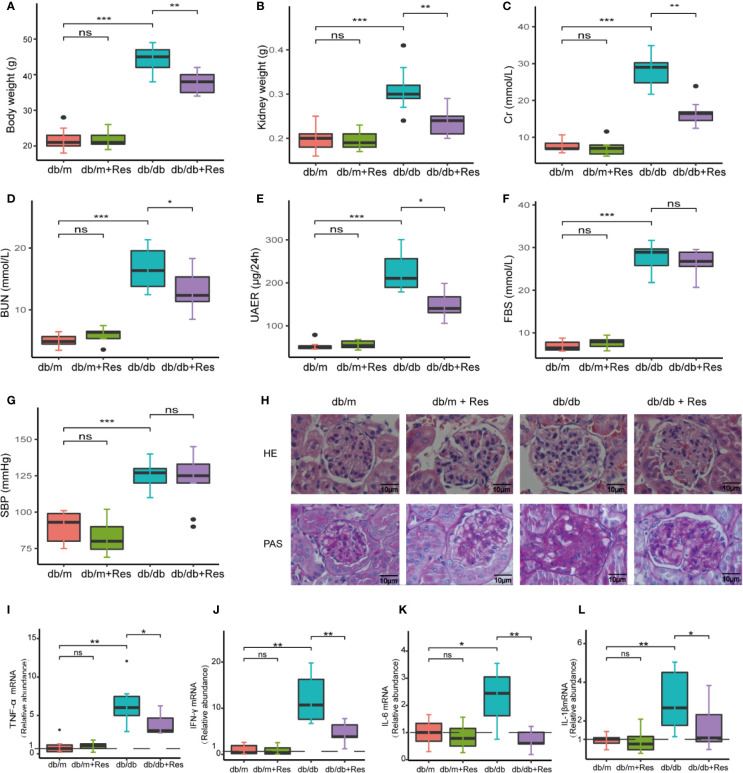
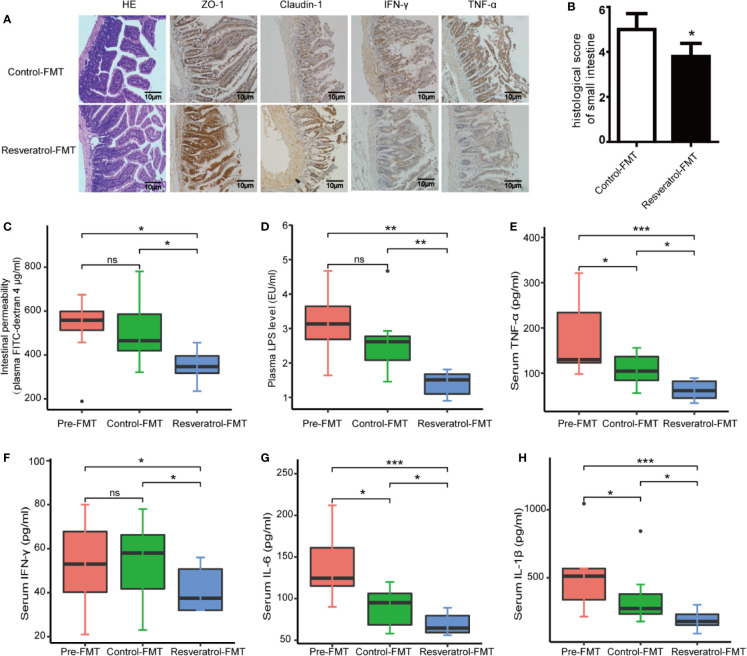
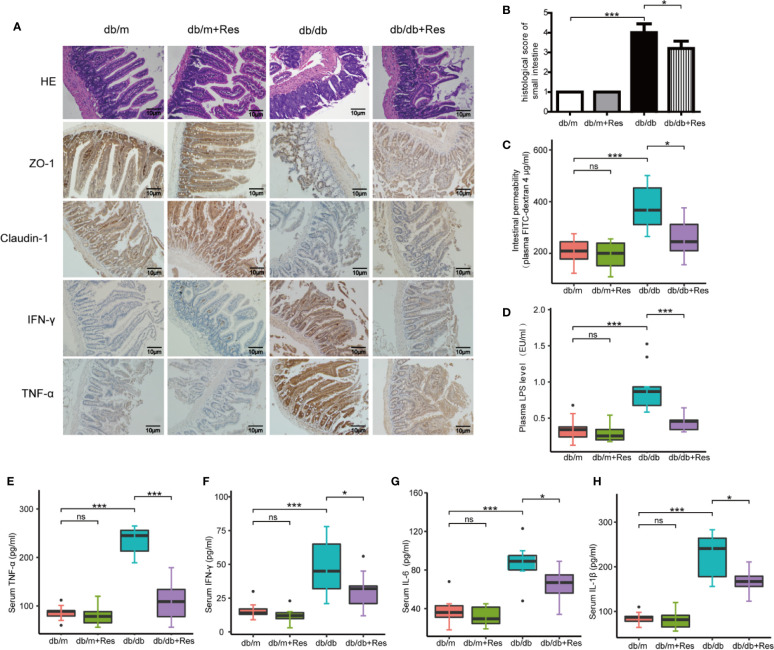
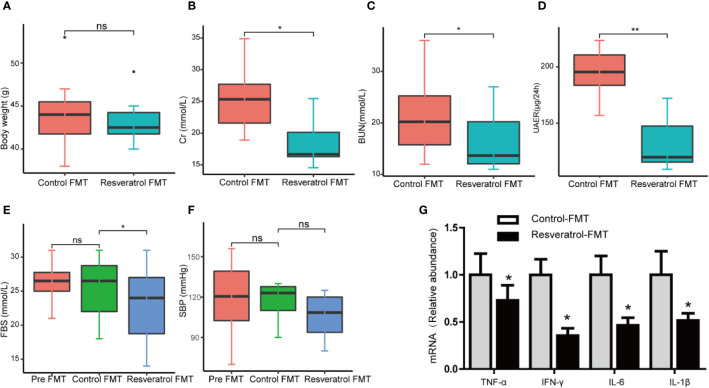
Oral administration of resveratrol is able to ameliorate the progression of diabetic nephropathy (DN); however, its mechanisms of action remain unclear. Recent evidence suggested that the gut microbiota is involved in the metabolism therapeutics. In the current study, we sought to determine whether the anti-DN effects of resveratrol are mediated through modulation of the gut microbiota using the genetic db/db mouse model of DN. We demonstrate that resveratrol treatment of db/db mice relieves a series of clinical indicators of DN. We then show that resveratrol improves intestinal barrier function and ameliorates intestinal permeability and inflammation. The composition of the gut microbiome was significantly altered in db/db mice compared to control db/m mice. Dysbiosis in db/db mice characterized by low abundance levels of , , , , , and genera were reversed by resveratrol treatment, suggesting a potential role for the microbiome in DN progression. Furthermore, fecal microbiota transplantation, derived from healthy resveratrol-treated db/m mice, was sufficient to antagonize the renal dysfunction, rebalance the gut microbiome and improve intestinal permeability and inflammation in recipient db/db mice. These results indicate that resveratrol-mediated changes in the gut microbiome may play an important role in the mechanism of action of resveratrol, which provides supporting evidence for the gut-kidney axis in DN.
口服白藜芦醇能够改善糖尿病肾病(DN)的进展;然而,其作用机制仍不清楚。最近的证据表明,肠道微生物群参与了代谢治疗。在本研究中,我们试图使用DN的基因db/db小鼠模型来确定白藜芦醇的抗DN作用是否通过调节肠道微生物群来介导。我们证明,用白藜芦醇治疗db/db小鼠可缓解一系列DN的临床指标。然后我们表明,白藜芦醇可改善肠道屏障功能,减轻肠道通透性和炎症。与对照db/m小鼠相比,db/db小鼠的肠道微生物组组成发生了显著变化。白藜芦醇治疗可逆转db/db小鼠中以 、 、 、 、 及 属丰度水平低为特征的生态失调,提示微生物群在DN进展中可能发挥作用。此外,源自健康的经白藜芦醇治疗的db/m小鼠的粪便微生物群移植足以拮抗受体db/db小鼠的肾功能障碍,重新平衡肠道微生物群并改善肠道通透性和炎症。这些结果表明,白藜芦醇介导的肠道微生物群变化可能在白藜芦醇的作用机制中起重要作用,这为DN中的肠-肾轴提供了支持证据。