National Institute for Medical Research, Mbeya Research Centre, Mbeya, Tanzania.
National Institute for Medical Research, Headquarters, Dar es Salaam, Tanzania.
Int Health. 2021 Jul 3;13(4):334-343. doi: 10.1093/inthealth/ihaa070.
Globally, large numbers of children die shortly after birth and many of them within the first 4 wk of life. This study aimed to determine the trends, patterns and causes of neonatal mortality in hospitals in Tanzania during 2006-2015.
This retrospective study involved 35 hospitals. Mortality data were extracted from inpatient registers, death registers and International Classification of Diseases-10 report forms. Annual specific hospital-based neonatal mortality rates were calculated and discussed. Two periods of 2006-2010 and 2011-2015 were assessed separately to account for data availability and interventions.
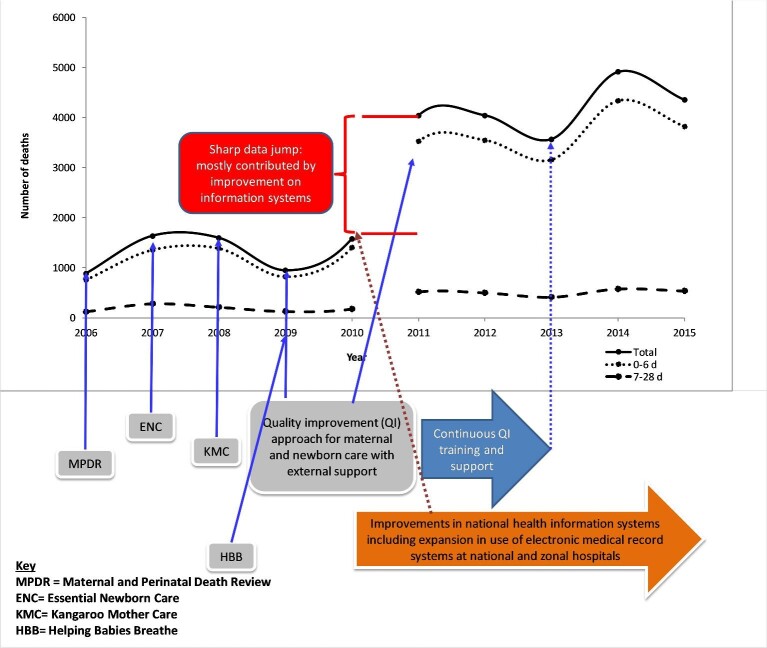
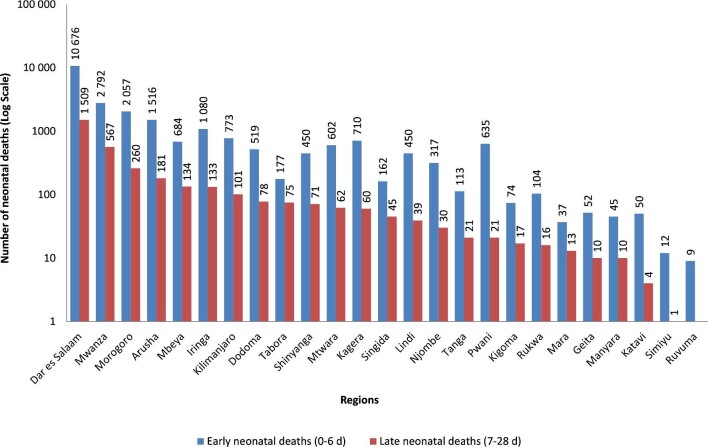
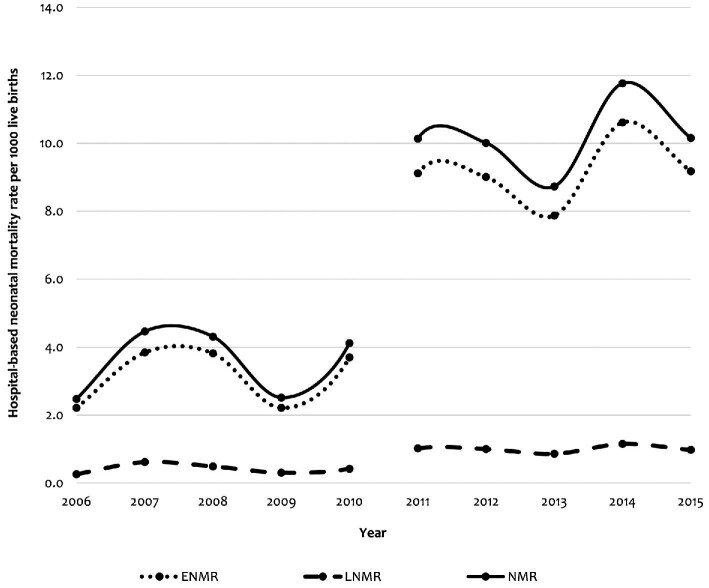
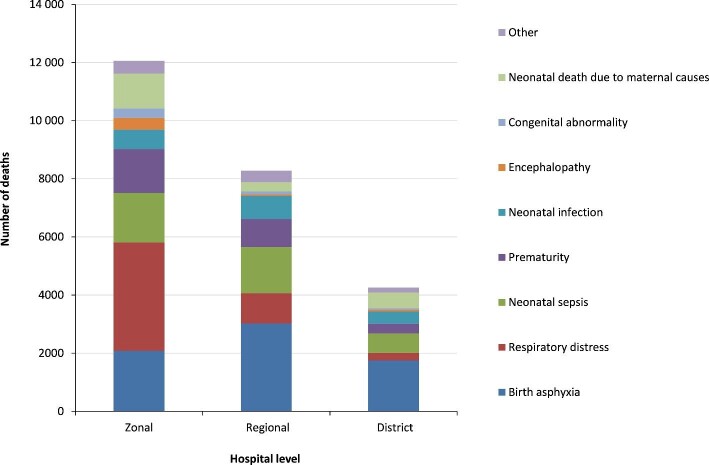
A total of 235 689 deaths were recorded and neonatal deaths accounted for 11.3% (n=26 630) of the deaths. The majority of neonatal deaths (87.5%) occurred in the first week of life. Overall hospital-based neonatal mortality rates increased from 2.6 in 2006 to 10.4 deaths per 1000 live births in 2015, with the early neonates contributing 90% to this rate constantly over time. The neonatal mortality rate was 3.7/1000 during 2006-2010 and 10.4/1000 during 2011-2015, both periods indicating a stagnant trend in the years between. The leading causes of early neonatal death were birth asphyxia (22.3%) and respiratory distress (20.8%), while those of late neonatal death were sepsis (29.1%) and respiratory distress (20.0%).
The majority of neonatal deaths in Tanzania occur among the early newborns and the trend over time indicates a slow improvement. Most neonatal deaths are preventable, hence there are opportunities to reduce mortality rates with improvements in service delivery during the first 7 d and maternal care.
在全球范围内,大量儿童在出生后不久死亡,其中许多儿童在生命的头 4 周内死亡。本研究旨在确定 2006-2015 年期间坦桑尼亚医院新生儿死亡的趋势、模式和原因。
这是一项回顾性研究,涉及 35 家医院。从住院患者登记处、死亡登记处和国际疾病分类-10 报告表中提取死亡率数据。计算并讨论了每年特定的医院基础新生儿死亡率。为了考虑数据可用性和干预措施,分别评估了 2006-2010 年和 2011-2015 年两个时期。
共记录了 235689 例死亡,新生儿死亡占死亡人数的 11.3%(n=26630)。大多数新生儿死亡(87.5%)发生在生命的第一周。总体而言,医院基础新生儿死亡率从 2006 年的 2.6 上升到 2015 年的每 1000 例活产 10.4 例死亡,其中早期新生儿在此期间始终占该比率的 90%。2006-2010 年期间的新生儿死亡率为 3.7/1000,2011-2015 年期间为 10.4/1000,两个时期均表明在这几年中呈停滞趋势。早期新生儿死亡的主要原因是出生窒息(22.3%)和呼吸窘迫(20.8%),而晚期新生儿死亡的主要原因是败血症(29.1%)和呼吸窘迫(20.0%)。
坦桑尼亚的大多数新生儿死亡发生在早期新生儿中,随着时间的推移,趋势表明改善缓慢。大多数新生儿死亡是可以预防的,因此通过改善头 7 天和产妇护理期间的服务提供,有机会降低死亡率。