Department of Disease Control, London School of Hygiene & Tropical Medicine, Keppel Street, London, WC1E 7HT England.
Institute of Public Health, Ruprecht-Karls-University, Heidelberg, Germany.
Bull World Health Organ. 2017 Dec 1;95(12):810-820. doi: 10.2471/BLT.17.194126. Epub 2017 Oct 31.
To determine if improved geographical accessibility led to increased uptake of maternity care in the south of the United Republic of Tanzania.
In a household census in 2007 and another large household survey in 2013, we investigated 22 243 and 13 820 women who had had a recent live birth, respectively. The proportions calculated from the 2013 data were weighted to account for the sampling strategy. We examined the association between the straight-line distances to the nearest primary health facility or hospital and uptake of maternity care.
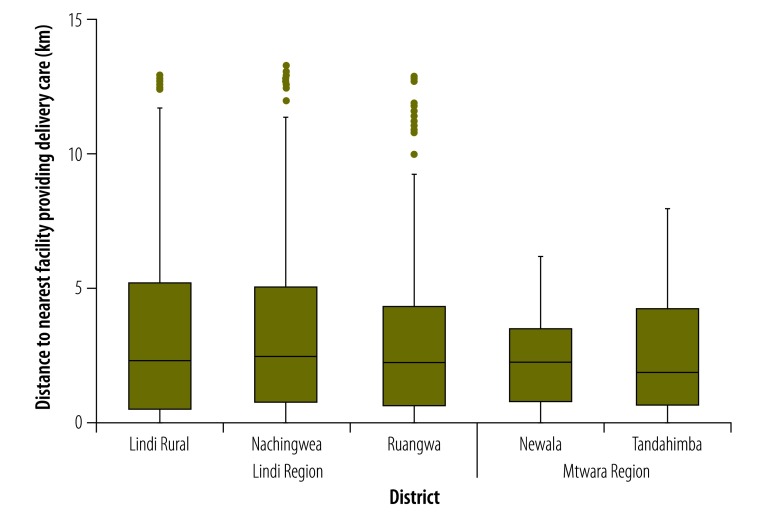
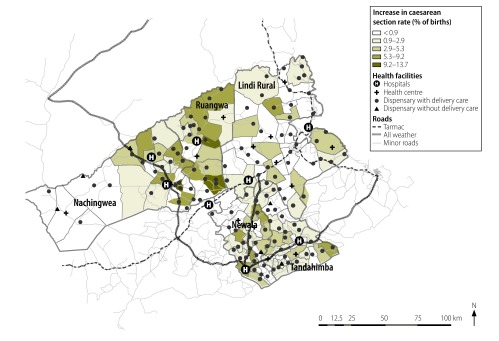
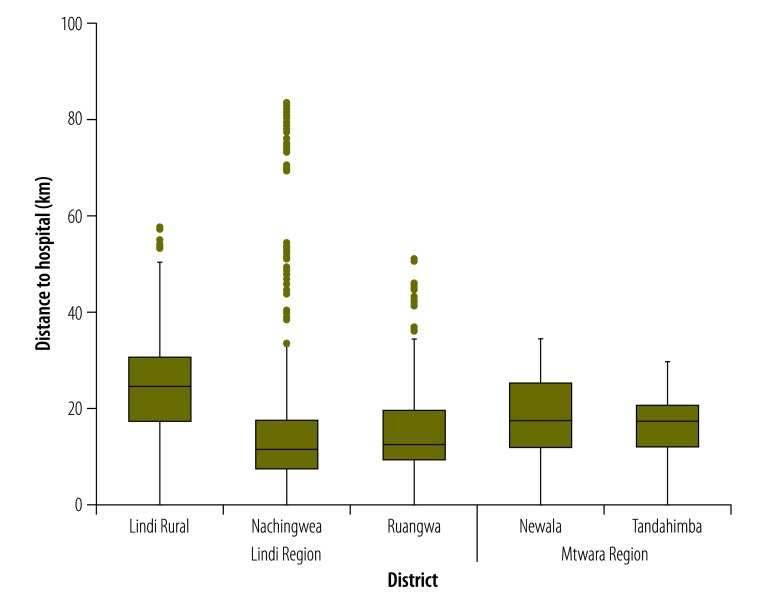
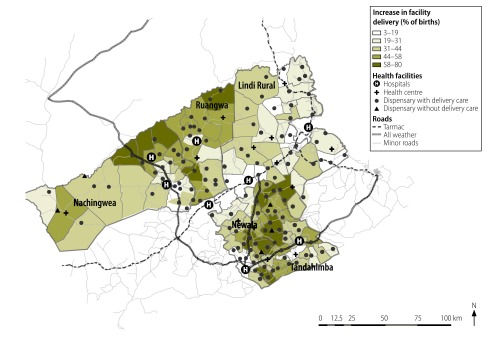
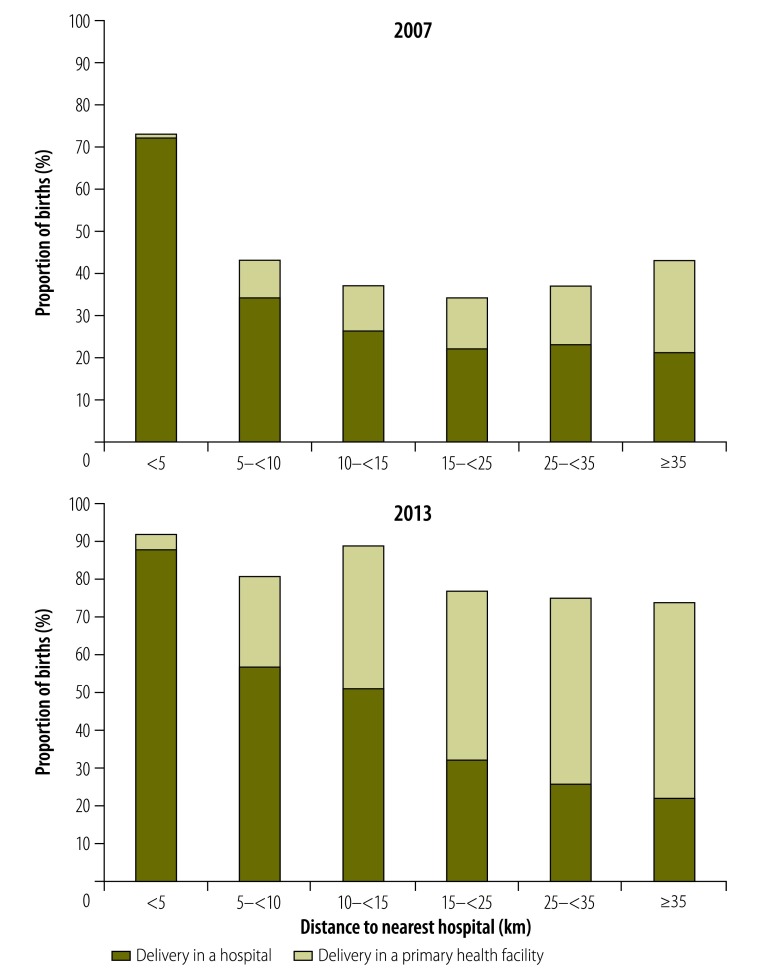
The percentages of live births occurring in primary facilities and hospitals rose from 12% (2571/22 243) and 29% (6477/22 243), respectively, in 2007 to weighted values of 39% and 40%, respectively, in 2013. Between the two surveys, women living far from hospitals showed a marked gain in their use of primary facilities, but the proportion giving birth in hospitals remained low (20%). Use of four or more antenatal visits appeared largely unaffected by survey year or the distance to the nearest antenatal clinic. Although the overall percentage of live births delivered by caesarean section increased from 4.1% (913/22 145) in the first survey to a weighted value of 6.5% in the second, the corresponding percentages for women living far from hospital were very low in 2007 (2.8%; 35/1254) and 2013 (3.3%).
For women living in our study districts who sought maternity care, access to primary facilities appeared to improve between 2007 and 2013, however access to hospital care and caesarean sections remained low.
确定在坦桑尼亚联合共和国南部,改善地理可达性是否会增加产妇保健服务的利用率。
在 2007 年的家庭普查和 2013 年的另一次大型家庭调查中,我们分别调查了 22243 名和 13820 名最近分娩的妇女。从 2013 年的数据中计算得出的比例经过加权处理,以考虑到抽样策略。我们研究了最近的初级卫生保健机构或医院的直线距离与产妇保健服务利用率之间的关联。
2007 年,在初级医疗机构和医院分娩的活产比例分别为 12%(2571/22243)和 29%(6477/22243),经加权后,2013 年分别为 39%和 40%。在两次调查之间,距离医院较远的妇女在使用初级医疗机构方面明显增加,但在医院分娩的比例仍然较低(20%)。四次或更多次产前检查的利用率在很大程度上不受调查年份或最近产前诊所的距离影响。虽然剖宫产的总体比例从第一次调查的 4.1%(913/22145)增加到第二次调查的加权值 6.5%,但距离医院较远的妇女的相应比例在 2007 年(2.8%;35/1254)和 2013 年(3.3%)非常低。
对于在我们研究地区寻求产妇保健服务的妇女来说,获得初级医疗机构的机会似乎在 2007 年至 2013 年间有所改善,但获得医院保健和剖宫产的机会仍然很低。