Department of Ultrasound, First Affiliated Hospital of China Medical University, Shenyang, 110001 Liaoning People's Republic of China.
Cell Mol Biol Lett. 2020 Sep 24;25:44. doi: 10.1186/s11658-020-00236-7. eCollection 2020.
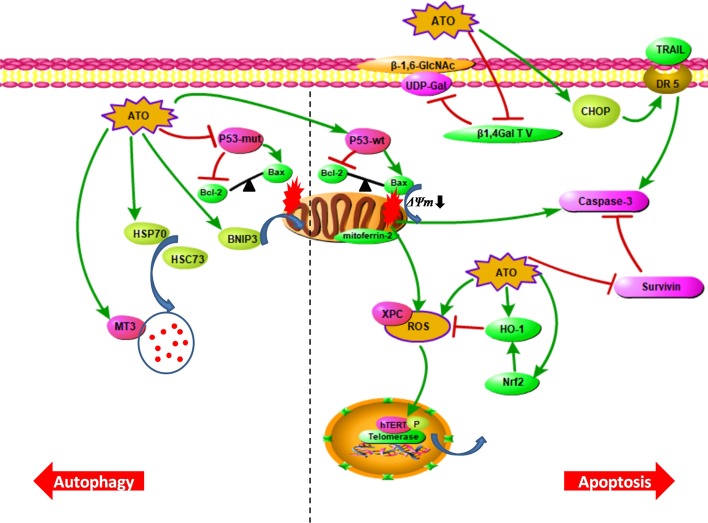
Arsenic trioxide has shown a strong anti-tumor effect with little toxicity when used in the treatment of acute promyelocytic leukemia (APL). An effect on glioma has also been shown. Its mechanisms include regulation of apoptosis and autophagy; promotion of the intracellular production of reactive oxygen species, causing oxidative damage; and inhibition of tumor stem cells. However, glioma cells and tissues from other sources show different responses to arsenic trioxide. Researchers are working to enhance its efficacy in anti-glioma treatments and reducing any adverse reactions. Here, we review recent research on the efficacy and mechanisms of action of arsenic trioxide in the treatment of gliomas to provide guidance for future studies.
三氧化二砷在治疗急性早幼粒细胞白血病(APL)时表现出较强的抗肿瘤作用且毒性较小。它对神经胶质瘤也有一定作用。其作用机制包括调节细胞凋亡和自噬;促进细胞内活性氧的产生,造成氧化损伤;以及抑制肿瘤干细胞。然而,神经胶质瘤细胞和其他来源的组织对三氧化二砷的反应不同。研究人员正在努力提高其在抗神经胶质瘤治疗中的疗效并减少不良反应。在这里,我们对三氧化二砷治疗神经胶质瘤的疗效和作用机制的最新研究进行综述,为今后的研究提供指导。