Wei Rongfang, Zhong Sixia, Qiao Li, Guo Mengjie, Shao Miaomiao, Wang Suyu, Jiang Bin, Yang Ye, Gu Chunyan
The Third Affiliated Hospital of Nanjing University of Chinese Medicine, Nanjing, China.
School of Medicine & Holistic Integrative Medicine, Nanjing University of Chinese Medicine, Nanjing, China.
Front Oncol. 2020 Aug 28;10:1501. doi: 10.3389/fonc.2020.01501. eCollection 2020.
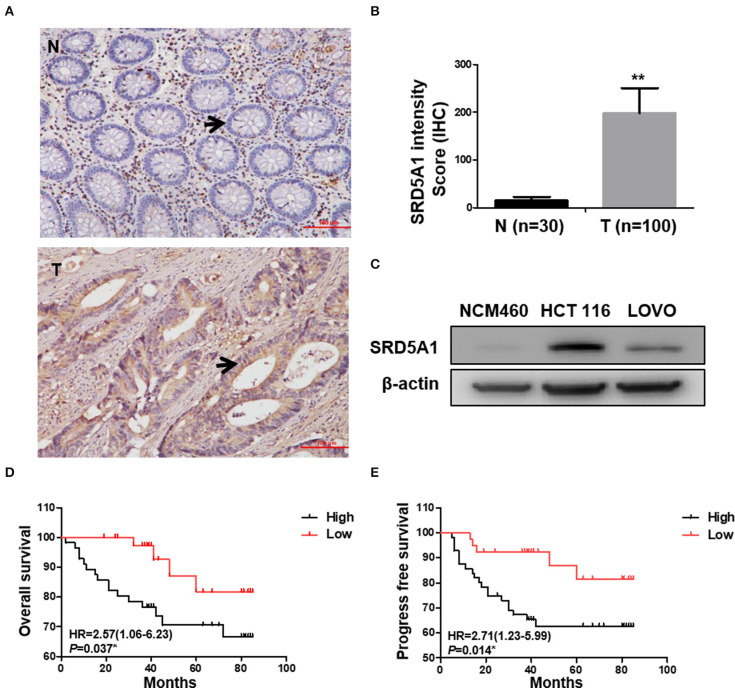
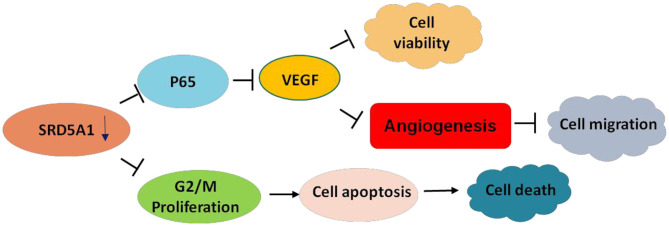
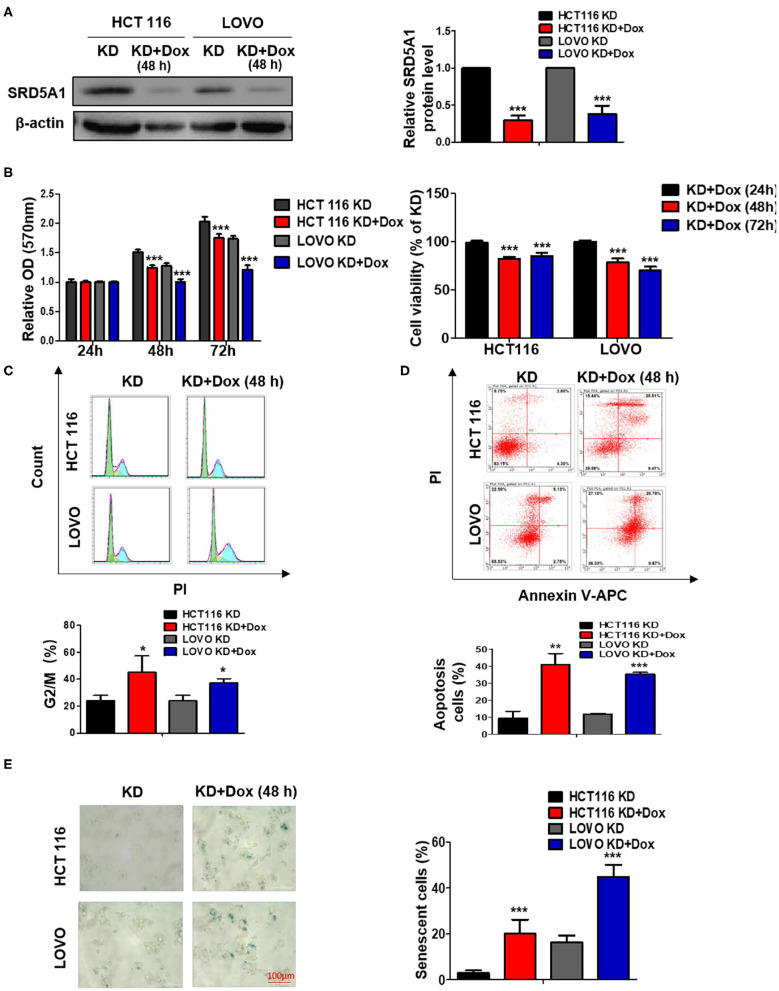
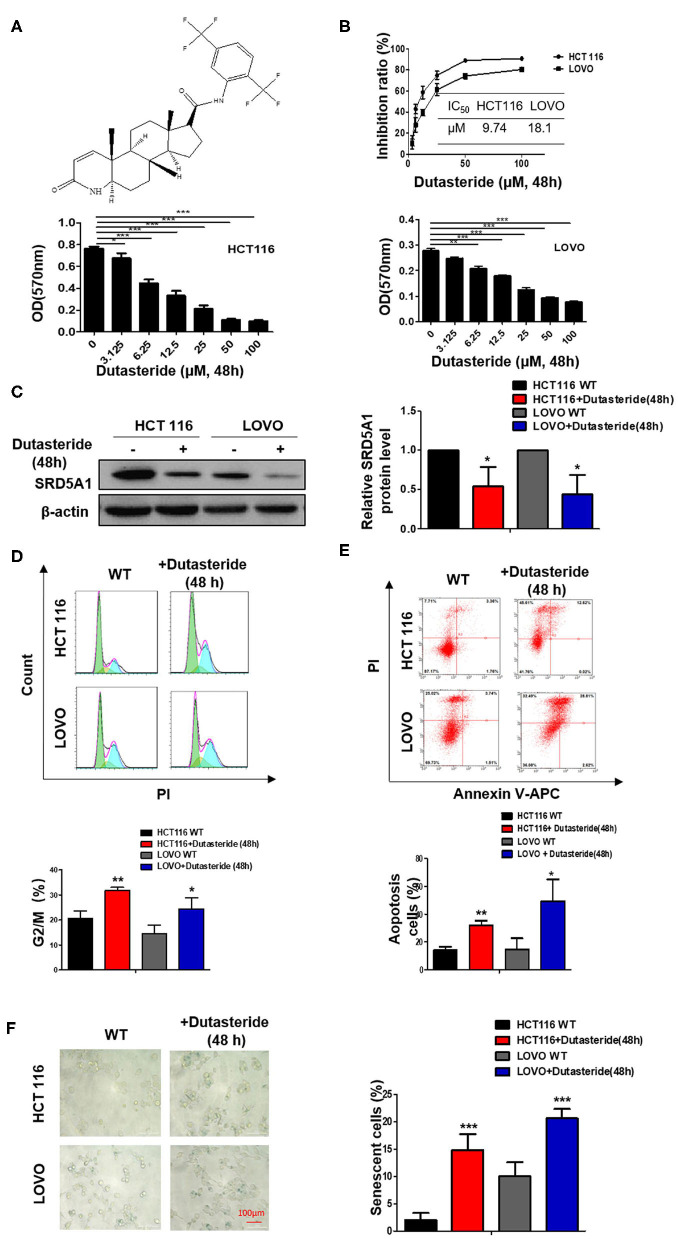
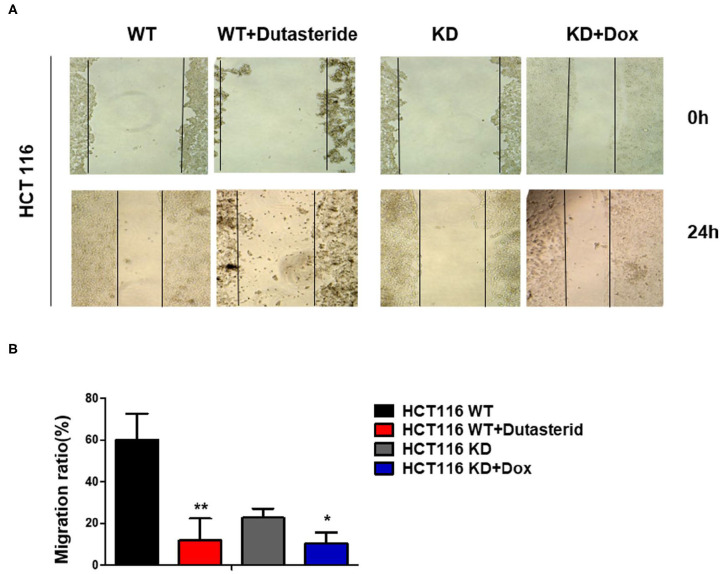
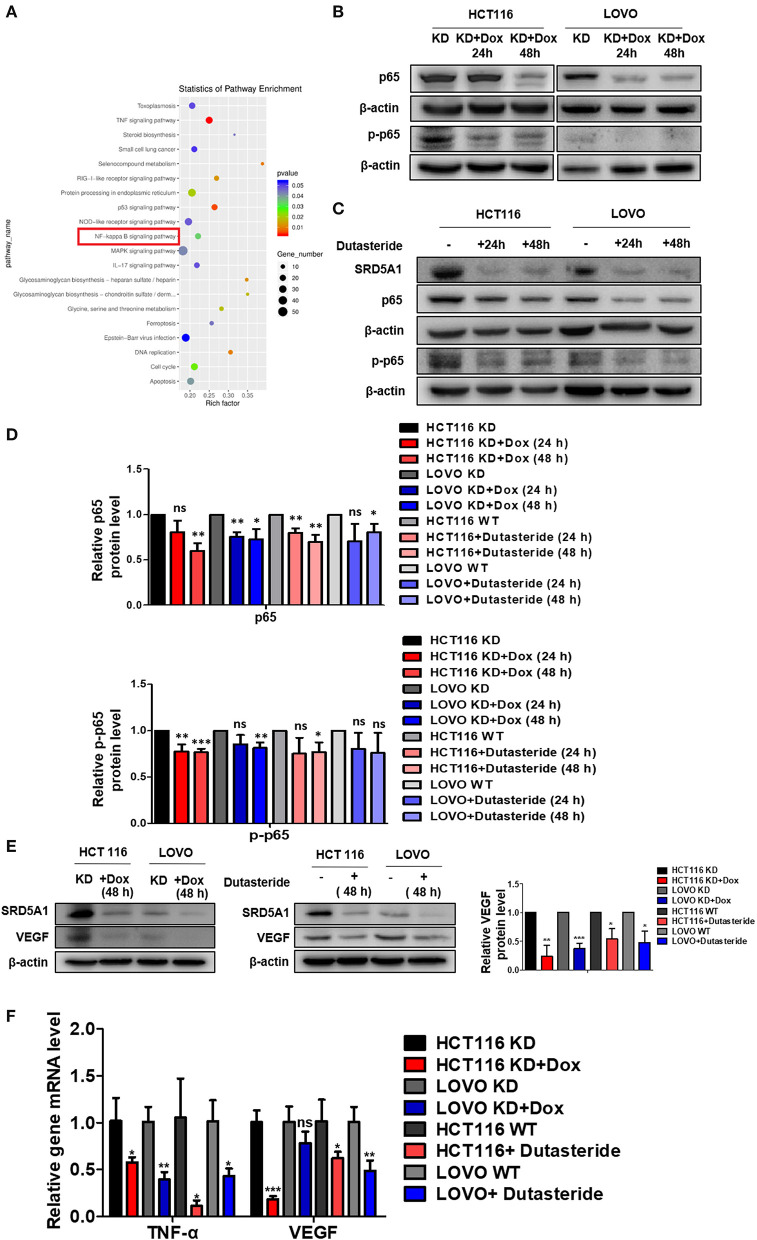
Colorectal cancer (CRC) is a common malignant tumor of the digestive system. Steroid 5α-reductase type I (SRD5A1), as an important part of the steroid metabolism, converts testosterone to dihydrotestosterone and regulates sex hormone levels, which accommodates tumor occurrence or development. However, the underlying molecular mechanism of SRD5A1 in CRC remains unclear. We compared SRD5A1 expression in CRC tissues with normal controls by immunohistochemistry and found that elevated SRD5A1 in CRC was relevant for poor patient prognosis. Furthermore, inducible downregulation of SRD5A1 by small hairpin RNA reduced cell viability, promoted cell cycle arrest, and induced cell apoptosis and cellular senescence of CRC cells, as well as attenuated cell migration ability. In the following experiments, we used dutasteride (an inhibitor of SRD5A1/2) to explore its inhibitory effect on the biological processes of CRC cells, as mentioned earlier. Further mechanism study demonstrated that the repression of SRD5A1 abolished the expression of p65 and vascular endothelial growth factor, suggesting that SRD5A1 might regulate cell viability and migration through nuclear factor-κB/vascular endothelial growth factor signaling pathway. Collectively, these findings implicate SRD5A1 acting as a novel biomarker for CRC diagnosis and prognosis and provide compelling evidence for the future evaluation of dutasteride as a promising candidate for CRC treatment.
结直肠癌(CRC)是消化系统常见的恶性肿瘤。I型类固醇5α-还原酶(SRD5A1)作为类固醇代谢的重要组成部分,将睾酮转化为二氢睾酮并调节性激素水平,这与肿瘤的发生或发展有关。然而,SRD5A1在结直肠癌中的潜在分子机制仍不清楚。我们通过免疫组织化学比较了结直肠癌组织与正常对照中SRD5A1的表达,发现结直肠癌中SRD5A1升高与患者预后不良有关。此外,小发夹RNA诱导下调SRD5A1可降低细胞活力,促进细胞周期停滞,诱导结直肠癌细胞凋亡和细胞衰老,并减弱细胞迁移能力。在接下来的实验中,我们使用度他雄胺(SRD5A1/2的抑制剂)来探索其对结直肠癌细胞生物学过程的抑制作用,如前所述。进一步的机制研究表明,抑制SRD5A1可消除p65和血管内皮生长因子的表达,提示SRD5A1可能通过核因子-κB/血管内皮生长因子信号通路调节细胞活力和迁移。总的来说,这些发现表明SRD5A1可作为结直肠癌诊断和预后的新型生物标志物,并为未来评估度他雄胺作为结直肠癌治疗的有前景候选药物提供了有力证据。