
医疗保健中的文档工程方法:一种基于行为科学的创新方法以增强患者自主权。
Document-Engineering Methodology in Health Care: An Innovative Behavioral Science-Based Approach to Improve Patient Empowerment.
作者信息
Pohlmann-Eden Bernd, Eden Silke C
机构信息
Department of Pharmacology & Toxicology, University of Toronto, Toronto, ON, Canada.
Problem-Based Online Health Consultancy, Toronto, ON, Canada.
出版信息
JMIR Hum Factors. 2020 Sep 28;7(3):e19196. doi: 10.2196/19196.
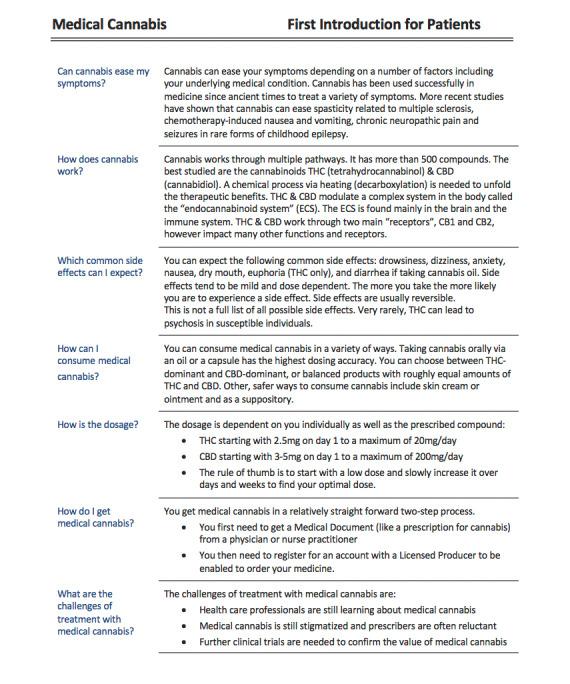
Engaging patients in their treatment and making them experts of their condition has been identified as a high priority across many medical disciplines. Patient empowerment claims to improve compliance, patient safety, and disease outcome. Patient empowerment may help the patient in shared decision making and in becoming an informed partner of the health care professional. We consider patient empowerment to be in jeopardy if written medical information for patients is too complex and confusing. We introduce document-engineering methodology (DEM) as a new tool for the health care industry. DEM tries to implement principles of cognitive science and neuroscience-based concepts of reading and comprehension. It follows the most recent document design techniques. DEM has been used in the aviation, mining, and oil industries. In these very industries, DEM was integrated to improve user performance, prevent harm, and increase safety. We postulate that DEM, applied to written documents in health care, will help patients to quickly navigate through complex written information and thereby enable them to better comprehend the essence of the medical information. DEM aims to empower the patient and help start an informed conversation with their health care professional. The ultimate goals of DEM are to increase adherence and compliance, leading to improved outcomes. Our approach is innovative, as we apply our learning from other industries to health care; we call this cross-industry innovation. In this manuscript, we provide illustrative examples of DEM in three frequent clinical scenarios: (1) explaining a complex diagnosis for the first time, (2) understanding medical leaflet information, and (3) exploring cannabis-based medicine. There is an urgent need to test DEM in larger clinical cohorts and for careful proof-of-concept studies, regarding patient and stakeholder engagement, to be conducted.
让患者参与治疗并使其成为自身病情的专家,已被确定为众多医学学科的高度优先事项。患者赋权旨在提高依从性、患者安全性和疾病治疗效果。患者赋权可能有助于患者参与共同决策,并成为医护专业人员的明智合作伙伴。如果为患者提供的书面医疗信息过于复杂且令人困惑,我们认为患者赋权将受到威胁。我们引入文档工程方法(DEM)作为医疗保健行业的一种新工具。DEM试图应用基于认知科学和神经科学的阅读与理解概念的原则。它遵循最新的文档设计技术。DEM已在航空、采矿和石油行业中使用。在这些行业中,DEM被整合以提高用户绩效、预防伤害并提高安全性。我们假设,将DEM应用于医疗保健中的书面文档,将帮助患者快速浏览复杂的书面信息,从而使他们能够更好地理解医疗信息的本质。DEM旨在增强患者权能,并帮助开启与医护专业人员的明智对话。DEM的最终目标是提高依从性和顺从性,从而改善治疗效果。我们的方法具有创新性,因为我们将从其他行业学到的知识应用于医疗保健领域;我们将此称为跨行业创新。在本手稿中,我们提供了DEM在三种常见临床场景中的示例:(1)首次解释复杂诊断,(2)理解药品说明书信息,以及(3)探索基于大麻的药物。迫切需要在更大的临床队列中测试DEM,并进行关于患者和利益相关者参与的仔细的概念验证研究。


 Zotero 插件