Behavioral Pharmacology Research Unit.
Exp Clin Psychopharmacol. 2022 Apr;30(2):180-193. doi: 10.1037/pha0000398. Epub 2020 Sep 28.
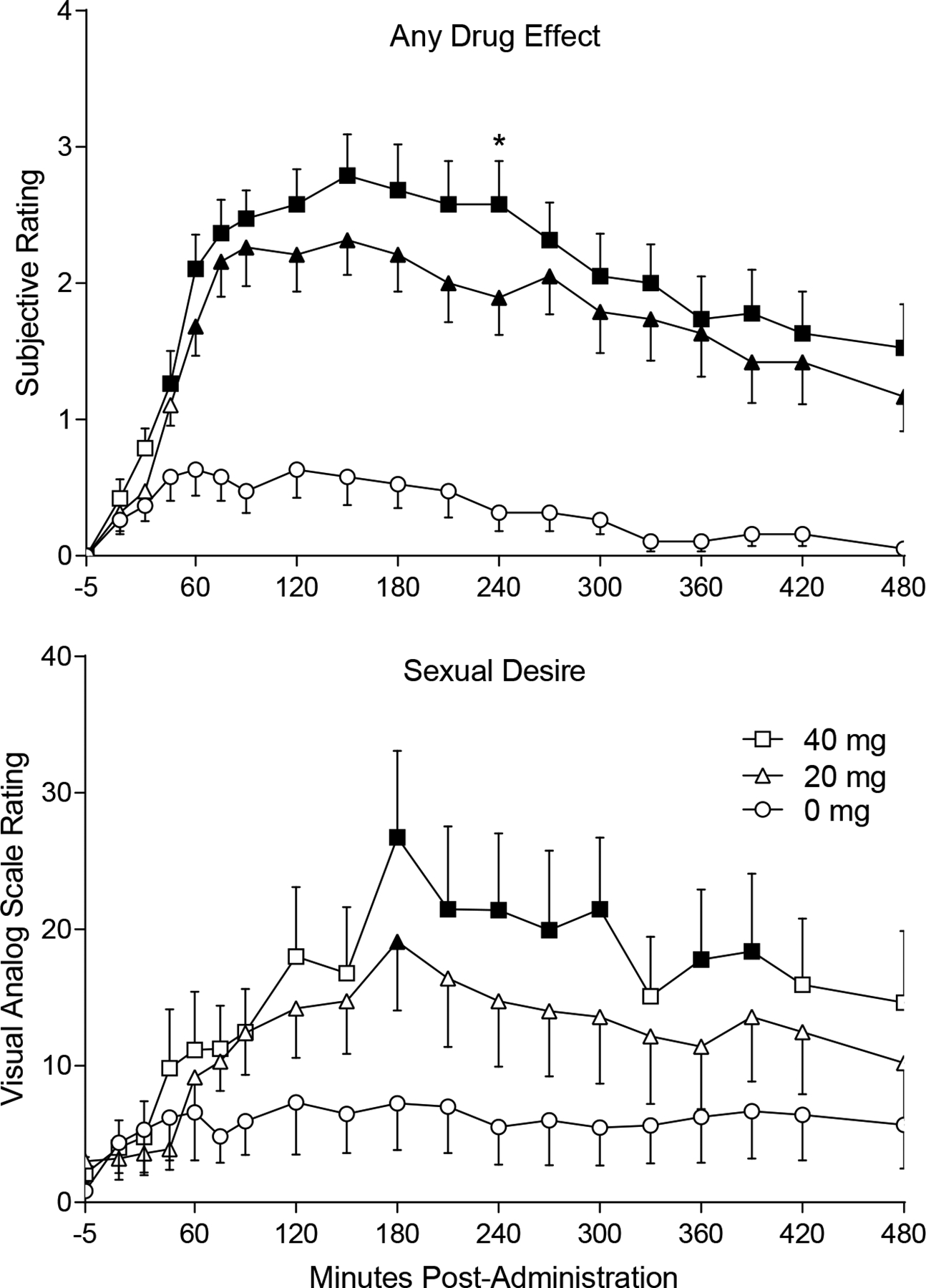
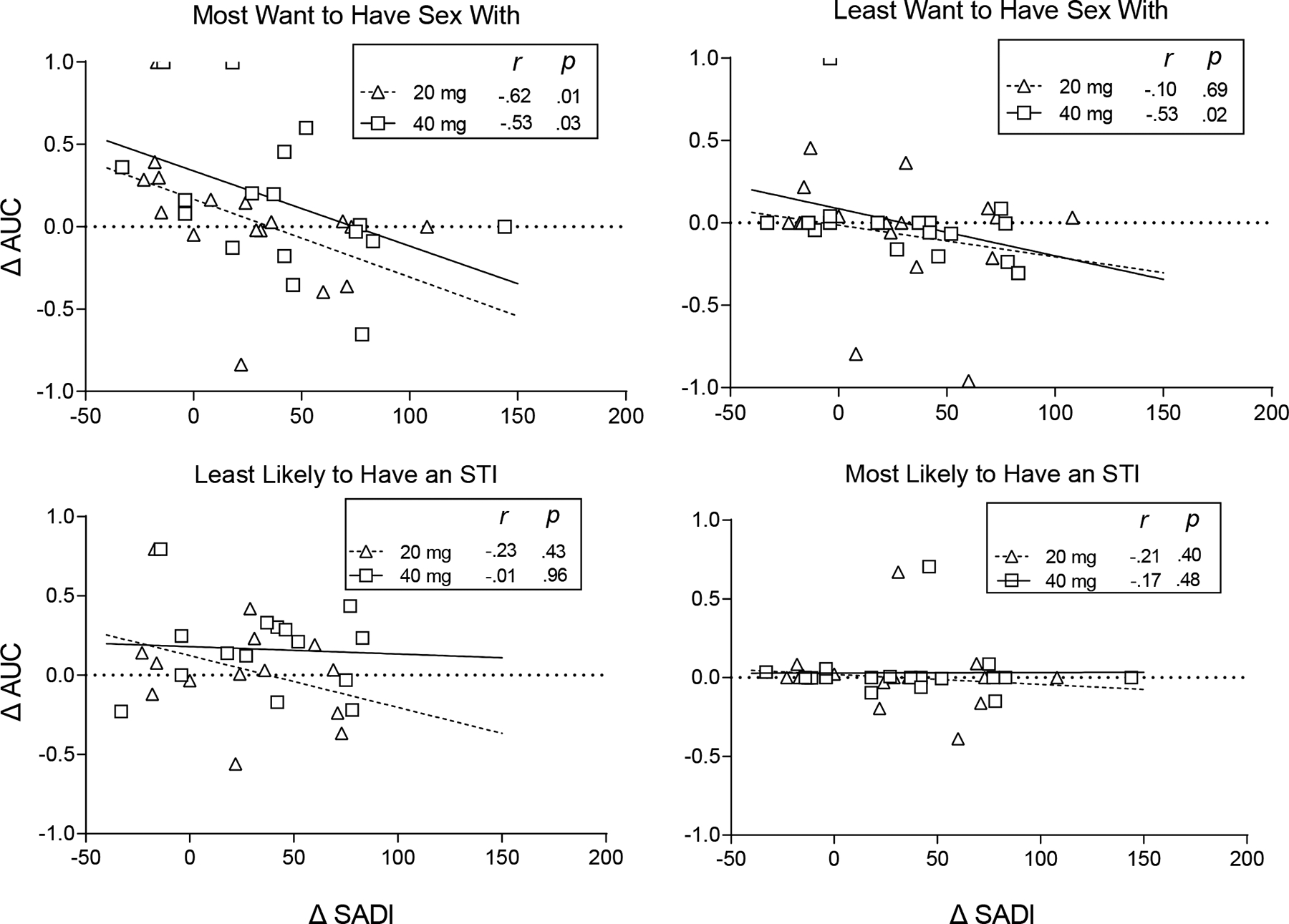
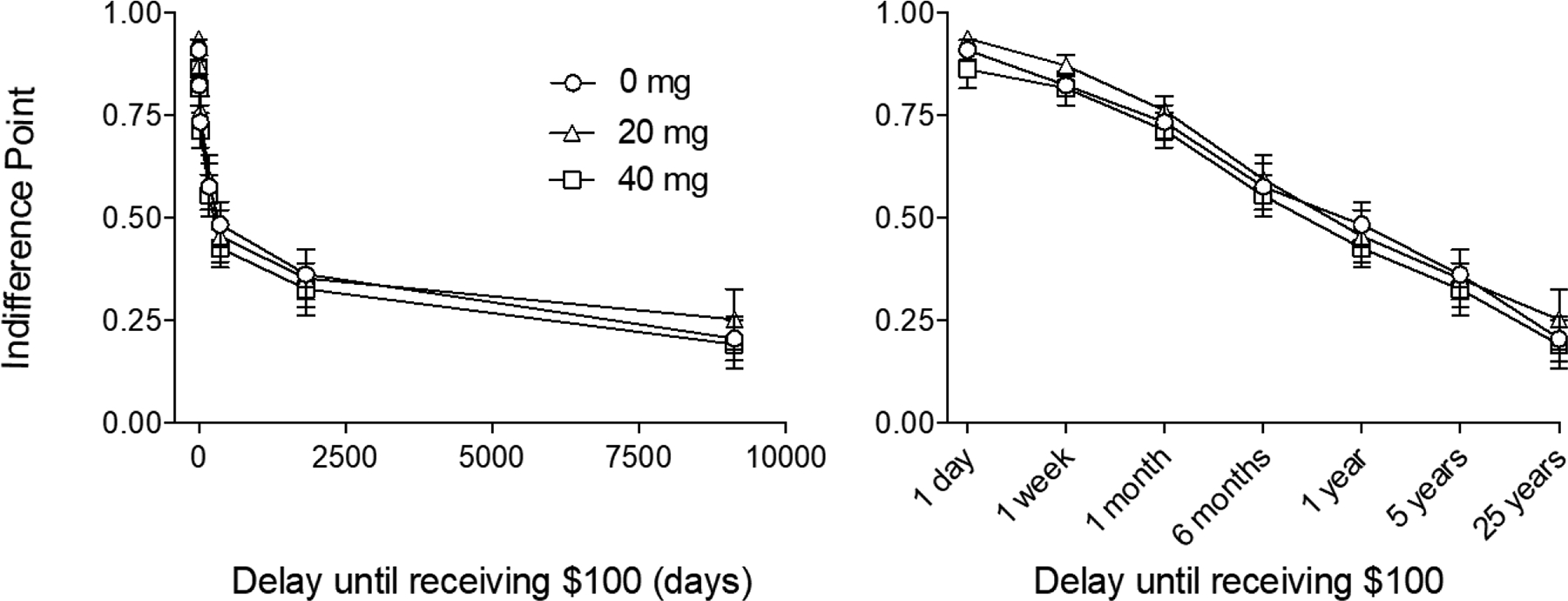
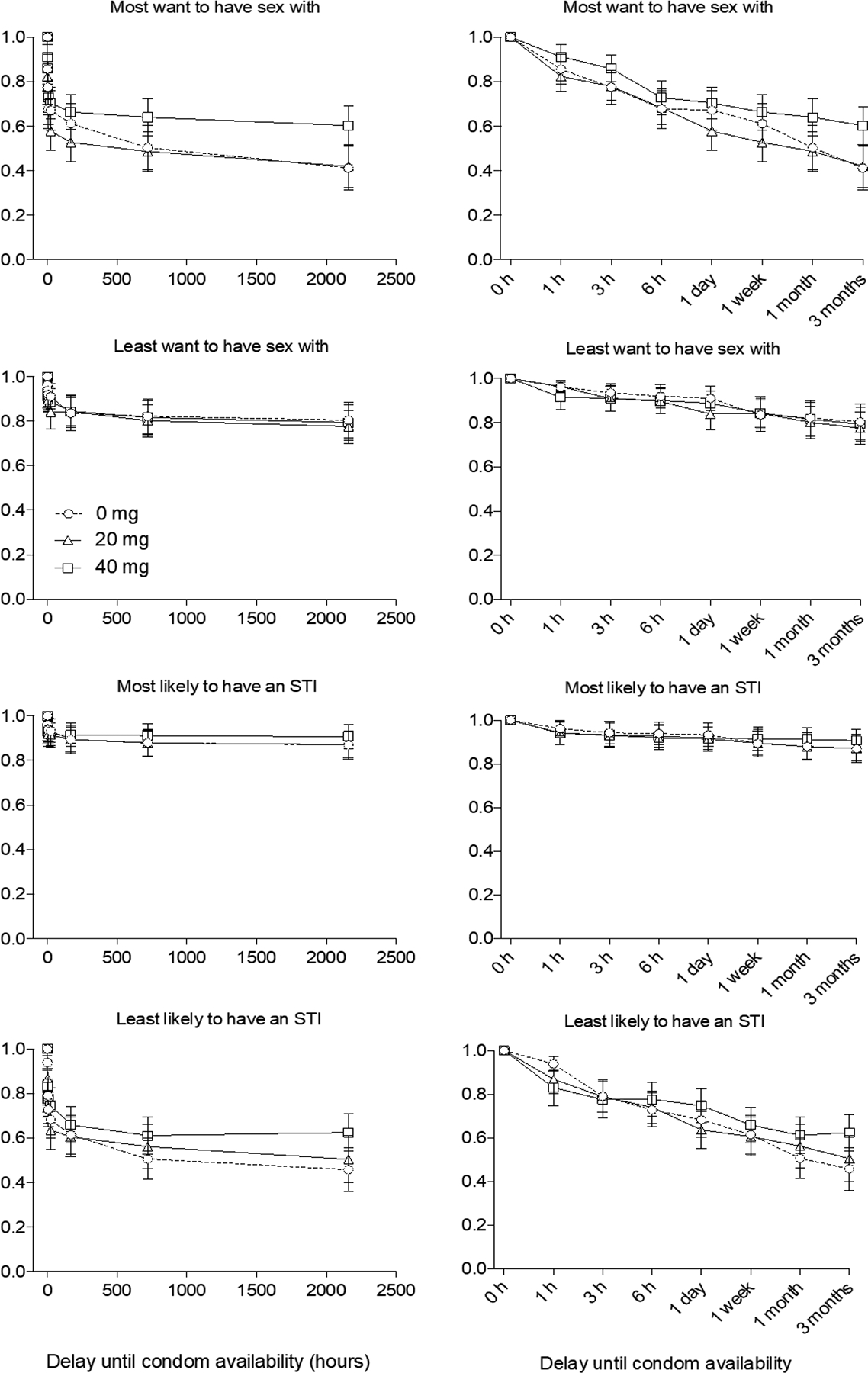
Correlational evidence has linked methamphetamine use and HIV sexual risk behavior, but the direct effects of methamphetamine on sexual desire and sexual decision making in humans have not been tested. This study was designed to test the effect of methamphetamine administration on sexual desire and hypothetical condom-use decisions as measured by the Sexual Delay Discounting Task. Recreational stimulant users ( = 19) participated in this within-subject, placebo-controlled study comparing the effects of 0 mg, 20 mg, and 40 mg of oral methamphetamine. Compared to placebo, methamphetamine caused dose-related and time-related increases in a single-item sexual desire rating and some standard stimulant abuse liability ratings, as well as dose-related increases in the Sexual Arousal and Desire Inventory (SADI; a multidimensional scale capturing positive and negative aspects of desire/arousal). However, methamphetamine caused no significant mean differences in likelihood of condom use within the Sexual Delay Discounting Task or the Monetary Discounting Task. SADI scores were negatively correlated with change from placebo in condom use likelihood in the Sexual Delay Discounting Task for some partner conditions (i.e., decreased reported likelihood of condom use in participants who experienced increased desire/arousal and vice versa). These mixed results may be consistent with methamphetamine's role as both a treatment for attention-deficit/hyperactivity disorder and as a drug of abuse associated with increased delay discounting, and they suggest that methamphetamine's effects on discounting may be modulated by the reinforcing properties of what is being discounted. Delay discounting may be an understudied element of risky sexual decision making, particularly among individuals who use methamphetamine. (PsycInfo Database Record (c) 2022 APA, all rights reserved).
相关证据表明,冰毒使用与艾滋病毒性风险行为有关,但冰毒对人类性欲和性决策的直接影响尚未得到检验。本研究旨在通过性延迟折扣任务来测试冰毒给药对性欲和假设使用避孕套决策的影响。本研究为一项在参与者内进行的安慰剂对照研究,共纳入了 19 名娱乐性兴奋剂使用者。该研究比较了 0mg、20mg 和 40mg 口服冰毒对性欲的影响。与安慰剂相比,冰毒引起了剂量和时间相关的单一项目性欲评分和一些标准兴奋剂滥用倾向评分的增加,以及性唤起和欲望量表(SADI;一种捕捉欲望/唤起的积极和消极方面的多维量表)的剂量相关增加。然而,在性延迟折扣任务或货币折扣任务中,冰毒并未引起避孕套使用可能性的显著平均差异。在性延迟折扣任务中,SADI 评分与避孕套使用可能性的变化呈负相关,对于某些伴侣条件(即,对于经历欲望/唤起增加的参与者,报告的避孕套使用可能性降低,反之亦然)。这些混合结果可能与冰毒作为治疗注意力缺陷多动障碍的药物和作为与延迟折扣增加相关的滥用药物的作用一致,并且表明冰毒对折扣的影响可能受到所折扣的强化特性的调节。延迟折扣可能是风险性行为决策中一个研究不足的因素,尤其是在使用冰毒的个体中。(美国心理协会,2022)。