Institute of Health and Environment, Seoul National University, Seoul 08826, Korea.
Graduate School of Education, Kyung Hee University, Seoul 02447, Korea.
Int J Environ Res Public Health. 2020 Sep 24;17(19):6981. doi: 10.3390/ijerph17196981.
long-term effects of ambient pollutants used to be defined in cohort studies using biomarkers. Health effects on young adults from long-term exposure to particulate matters (PM) in residential ambiance have received less attention.
using the data of population-representative aged 19-29 in Seoul, the relationship between obesity and PM levels of the living district was examined. We defined obesity as Body Mass Index (BMI) 25 kg/m and more. Survey logistic regression was conducted according to individual residence periods in the current municipality. Individual characteristics were adjusted overall and were age-specific; aged 19-24 and 25-29.
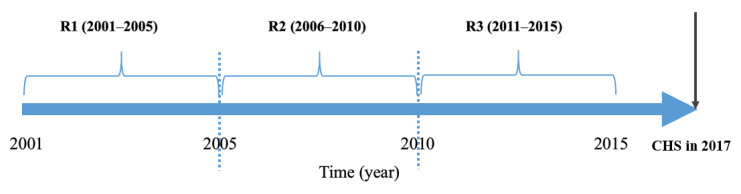
study population was 3655 (1680 (46%) men and 1933 aged 19-24 (52.9%)) individuals. Relationship between length of residence in municipalities with a greater level of PM from 2001-2005 and obesity was increased over the residing period; 10 years ≤ (odds ratio (OR) 1.071, 95% confidence interval (CI) 0.969-1.185), 15 years ≤ (1.120, 1.006-1.247), and 20 years ≤ (1.158, 1.034-1.297) in aged 19-29. Age-specific effects showed slight differences.
Although PM levels are currently decreasing, higher levels of PM exposure in the residential area during the earlier lifetime may contribute to obesity increase among young adults.
过去,使用生物标志物在队列研究中定义环境污染物的长期影响。人们对长期暴露于居住环境中的颗粒物(PM)对年轻成年人的健康影响关注较少。
利用首尔具有代表性的 19-29 岁人群的数据,研究了居住区域中 PM 水平与肥胖之间的关系。我们将肥胖定义为身体质量指数(BMI)≥25kg/m²。根据个人在当前城市的居住时间,采用调查逻辑回归来进行分析。对个人特征进行了总体调整,同时根据年龄进行了调整,分为 19-24 岁和 25-29 岁。
研究人群为 3655 人(1680 名男性(46%)和 1933 名年龄在 19-24 岁的人(52.9%))。2001-2005 年期间,居住在 PM 水平较高的城市中的时间与肥胖之间的关系随着居住时间的延长而增加;10 年≤(比值比(OR)1.071,95%置信区间(CI)0.969-1.185),15 年≤(1.120,1.006-1.247),20 年≤(1.158,1.034-1.297),在 19-29 岁人群中。年龄特异性效应略有差异。
尽管目前 PM 水平正在下降,但在早年居住环境中暴露于更高水平的 PM 可能会导致年轻成年人肥胖率增加。