Daher Dahlia, Deracinois Barbara, Baniel Alain, Wattez Elodie, Dantin Justine, Froidevaux Renato, Chollet Sylvie, Flahaut Christophe
UMR Transfrontalière BioEcoAgro N° 1158, Univ. Lille, INRAE, Univ. Liège, UPJV, YNCREA, Univ. Artois, Univ. Littoral Côte d'Opale, ICV-Institut Charles Viollette, F-59000 Lille, France.
Ingredia S.A. 51 Av. Lobbedez-CS 60946, 62033 Arras Cedex, France.
Foods. 2020 Sep 24;9(10):1354. doi: 10.3390/foods9101354.
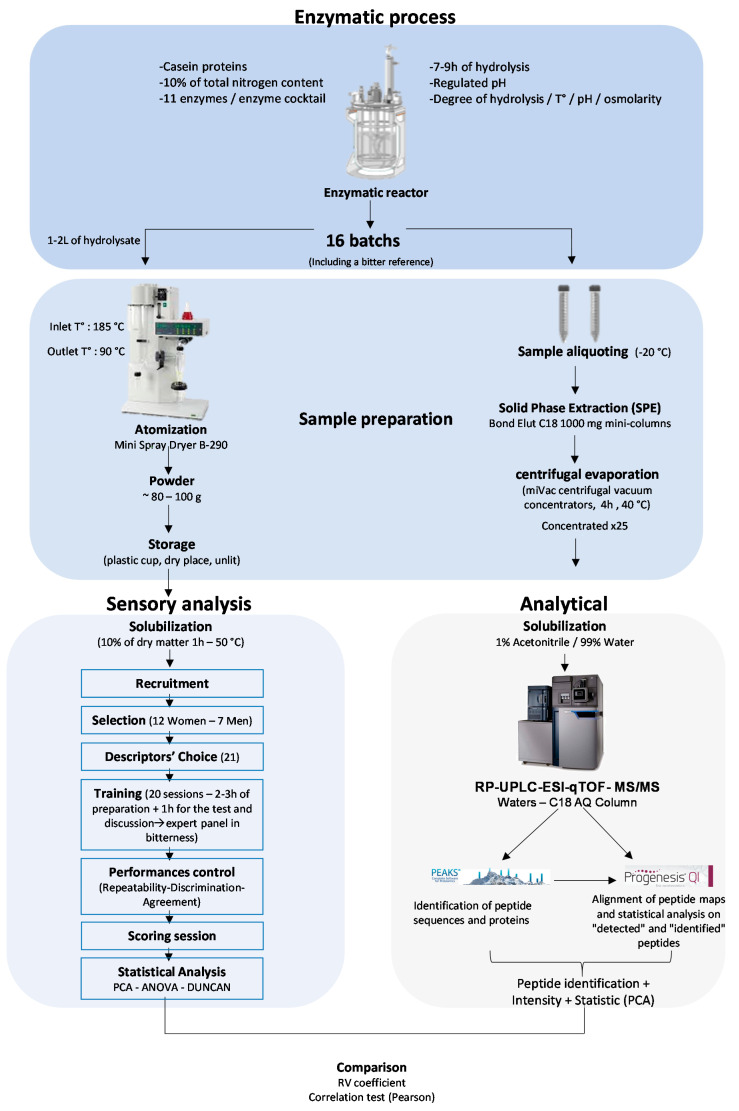
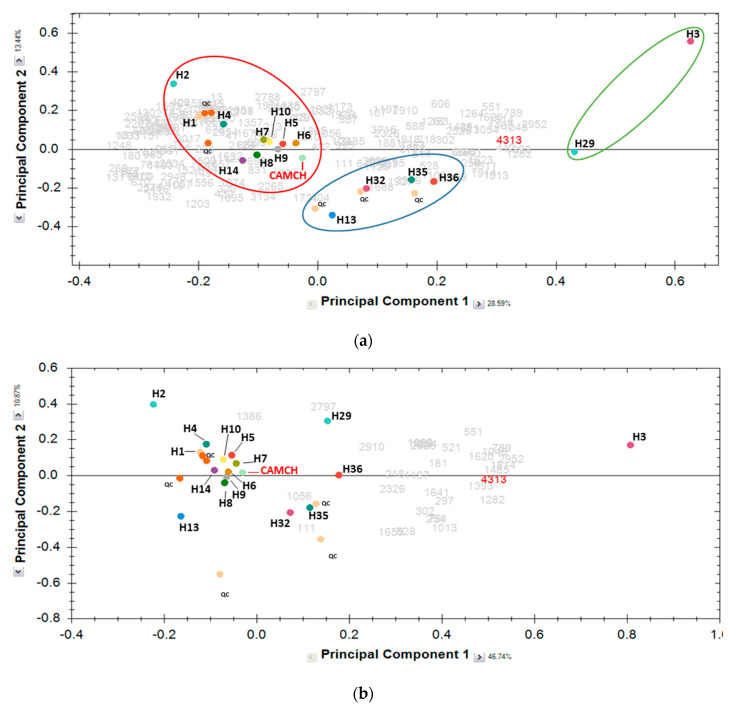
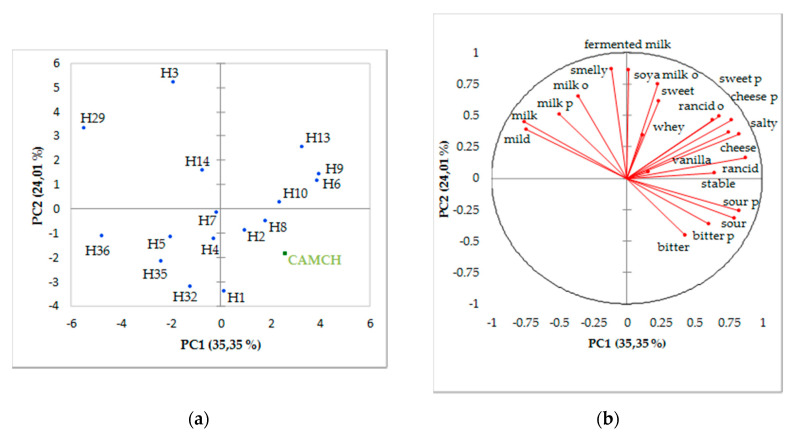
Enzymatic hydrolysis of food proteins generally changes the techno-functional, nutritional, and organoleptic properties of hydrolyzed proteins. As a result, protein hydrolysates have an important interest in the food industries. However, they tend to be characterized by a bitter taste and some off-flavors, which limit their use in the food industry. These tastes and aromas come from peptides, amino acids, and volatile compounds generated during hydrolysis. In this article, sixteen more or less bitter enzymatic hydrolysates produced from a milk protein liquid fraction enriched in micellar caseins using commercially available, food-grade proteases were subjected to a sensory analysis using a trained and validated sensory panel combined to a peptidomics approach based on the peptide characterization by reverse-phase high-performance liquid chromatography, high-resolution mass spectrometry, and bioinformatics software. The comparison between the sensory characteristics and the principal components of the principal component analysis (PCA) of mass spectrometry data reveals that peptidomics constitutes a convenient, valuable, fast, and economic intermediate method to evaluating the bitterness of enzymatic hydrolysates, as a trained sensory panel can do it.
食品蛋白质的酶促水解通常会改变水解蛋白的技术功能、营养和感官特性。因此,蛋白水解物在食品工业中具有重要意义。然而,它们往往具有苦味和一些异味,这限制了它们在食品工业中的应用。这些味道和香气来自水解过程中产生的肽、氨基酸和挥发性化合物。在本文中,使用市售的食品级蛋白酶,对由富含胶束酪蛋白的乳清蛋白液体部分产生的16种或多或少带有苦味的酶促水解产物,采用经过训练和验证的感官小组进行感官分析,并结合基于反相高效液相色谱、高分辨率质谱和生物信息学软件对肽进行表征的肽组学方法。质谱数据主成分分析(PCA)的感官特征与主要成分之间的比较表明,肽组学是一种方便、有价值、快速且经济的评估酶促水解产物苦味的中间方法,就像训练有素的感官小组所做的那样。