Department of Computational and Systems Biology, School of Medicine, University of Pittsburgh, Pittsburgh, PA 15213.
Department of Pediatrics, Division of Pediatric Infectious Diseases and Immunology, Cedars-Sinai Medical Center, Los Angeles, CA 90048.
Proc Natl Acad Sci U S A. 2020 Oct 13;117(41):25254-25262. doi: 10.1073/pnas.2010722117. Epub 2020 Sep 28.
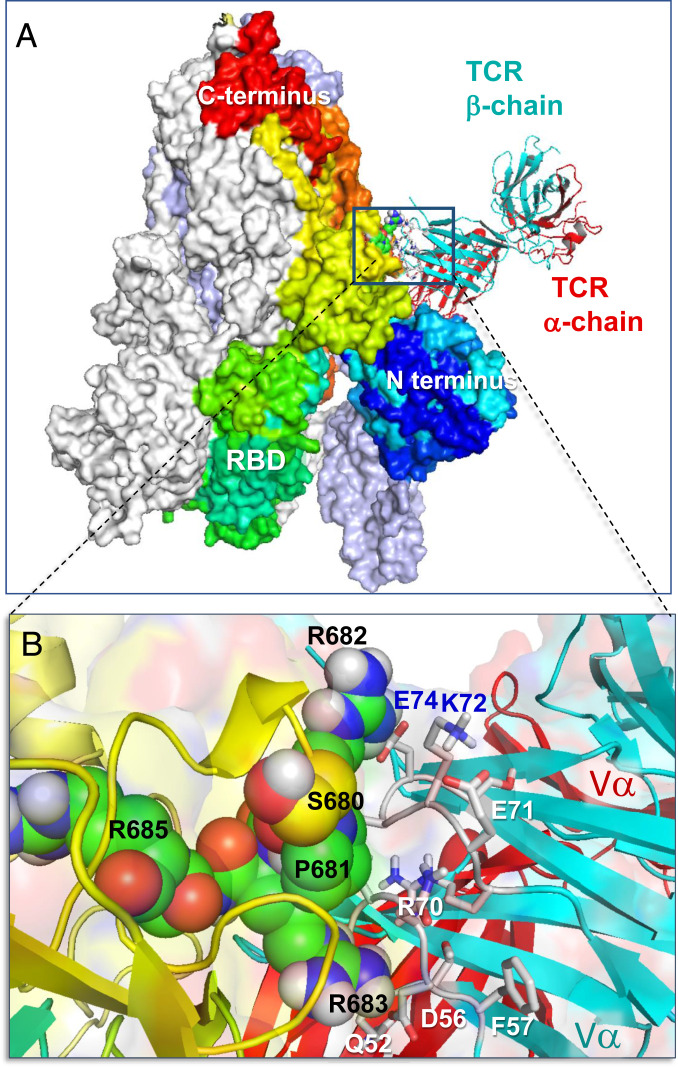
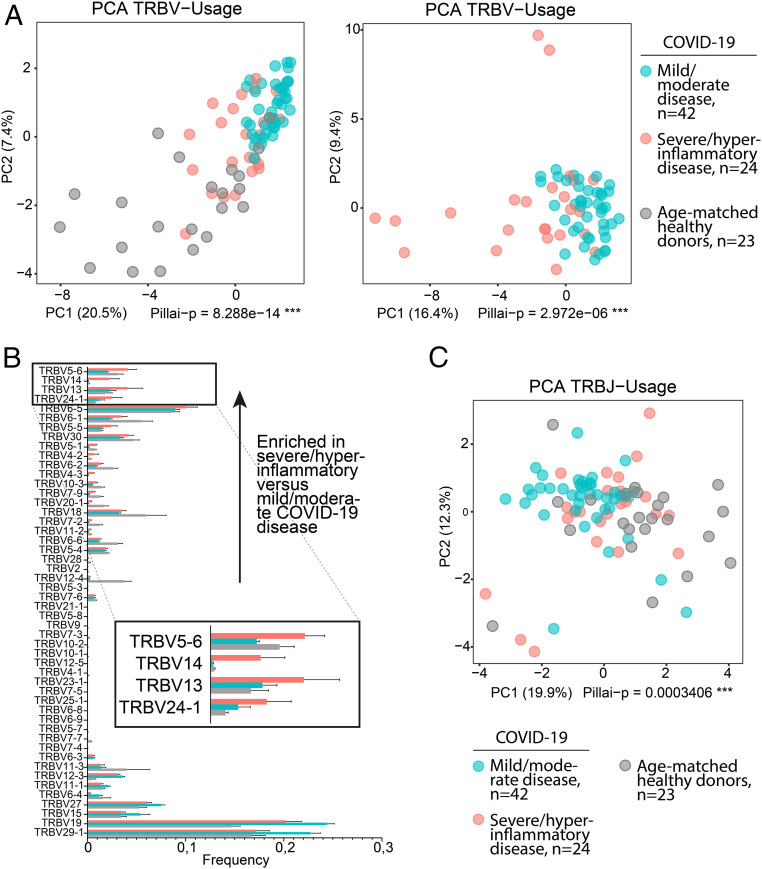
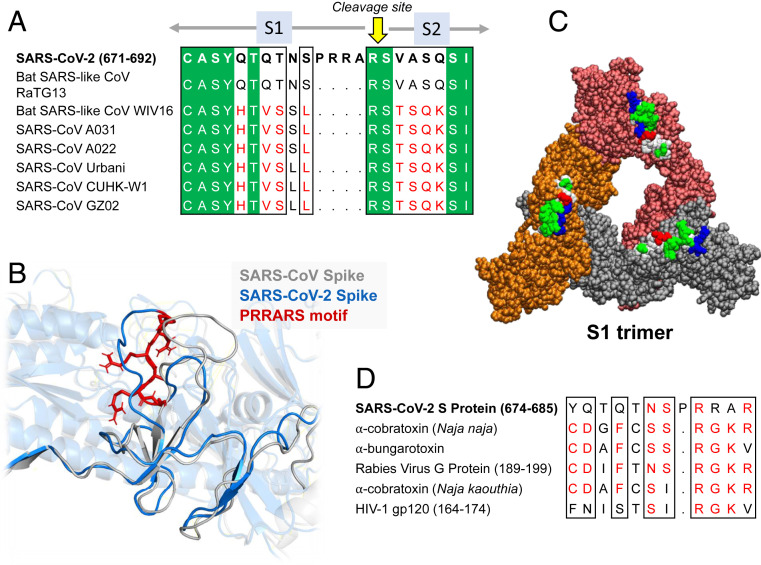
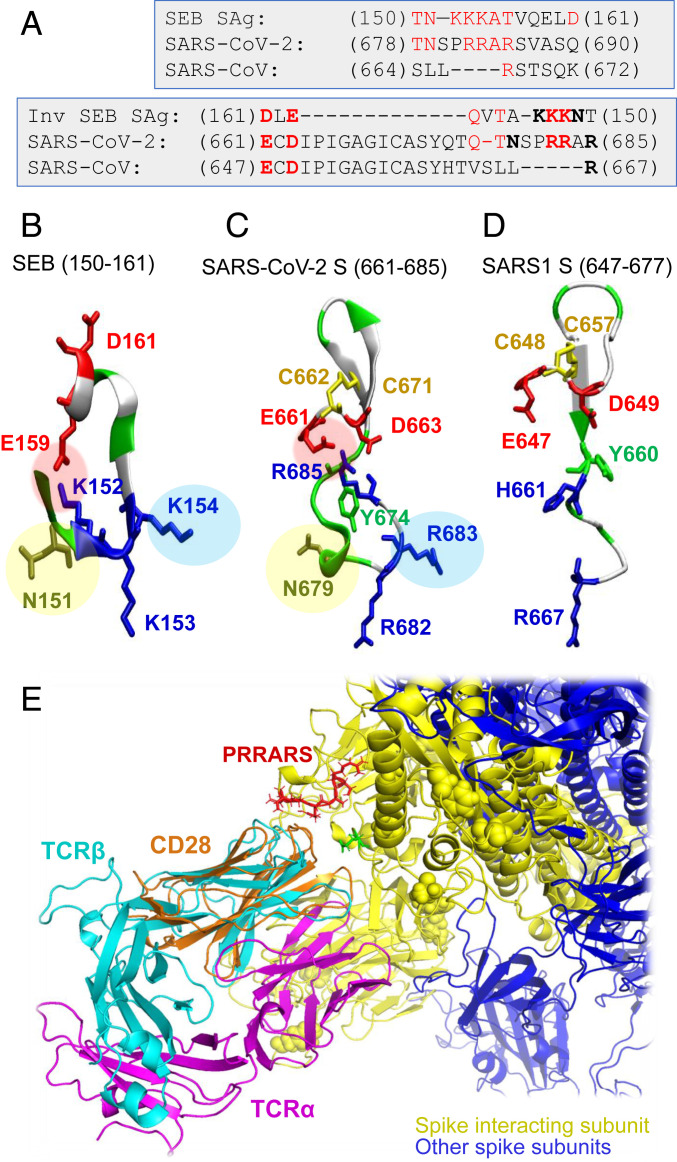
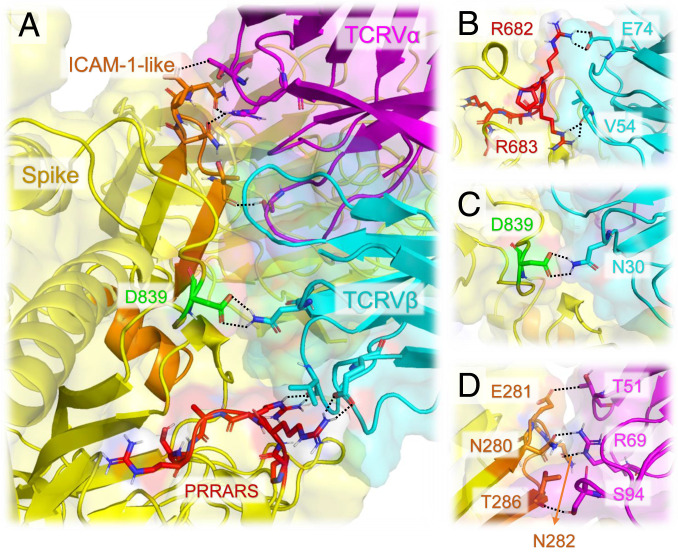
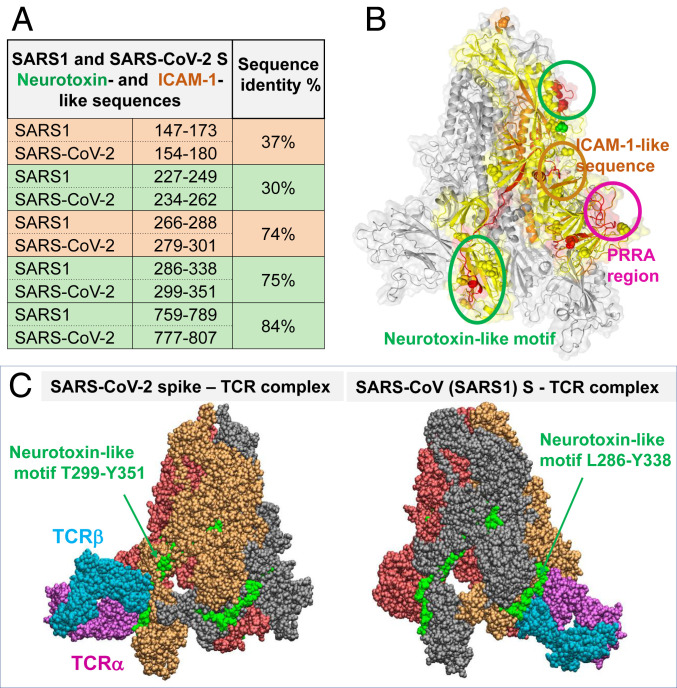
Multisystem Inflammatory Syndrome in Children (MIS-C) associated with COVID-19 is a newly recognized condition in children with recent severe acute respiratory syndrome coronavirus 2 (SARS-CoV-2) infection. These children and adult patients with severe hyperinflammation present with a constellation of symptoms that strongly resemble toxic shock syndrome, an escalation of the cytotoxic adaptive immune response triggered upon the binding of pathogenic superantigens to T cell receptors (TCRs) and/or major histocompatibility complex class II (MHCII) molecules. Here, using structure-based computational models, we demonstrate that the SARS-CoV-2 spike (S) glycoprotein exhibits a high-affinity motif for binding TCRs, and may form a ternary complex with MHCII. The binding epitope on S harbors a sequence motif unique to SARS-CoV-2 (not present in other SARS-related coronaviruses), which is highly similar in both sequence and structure to the bacterial superantigen staphylococcal enterotoxin B. This interaction between the virus and human T cells could be strengthened by a rare mutation (D839Y/N/E) from a European strain of SARS-CoV-2. Furthermore, the interfacial region includes selected residues from an intercellular adhesion molecule (ICAM)-like motif shared between the SARS viruses from the 2003 and 2019 pandemics. A neurotoxin-like sequence motif on the receptor-binding domain also exhibits a high tendency to bind TCRs. Analysis of the TCR repertoire in adult COVID-19 patients demonstrates that those with severe hyperinflammatory disease exhibit TCR skewing consistent with superantigen activation. These data suggest that SARS-CoV-2 S may act as a superantigen to trigger the development of MIS-C as well as cytokine storm in adult COVID-19 patients, with important implications for the development of therapeutic approaches.
儿童多系统炎症综合征(MIS-C)与 COVID-19 相关,是一种新近在近期严重急性呼吸综合征冠状病毒 2(SARS-CoV-2)感染的儿童中认识到的病症。这些儿童和伴有严重高炎症的成年患者表现出一系列症状,强烈类似于中毒性休克综合征,这是细胞毒性适应性免疫反应在病原体超抗原与 T 细胞受体(TCR)和/或主要组织相容性复合体 II 类(MHCII)分子结合时引发的升级。在这里,我们使用基于结构的计算模型证明,SARS-CoV-2 刺突(S)糖蛋白表现出与 TCR 高亲和力的结合基序,并且可能与 MHCII 形成三元复合物。S 上的结合表位带有 SARS-CoV-2 特有的序列基序(不存在于其他 SARS 相关冠状病毒中),其在序列和结构上与细菌超抗原金黄色葡萄球菌肠毒素 B 高度相似。这种病毒与人类 T 细胞之间的相互作用可能会因来自 SARS-CoV-2 的一种罕见突变(D839Y/N/E)而增强。此外,界面区域包括 2003 年和 2019 年大流行的 SARS 病毒之间共享的细胞间粘附分子(ICAM)样基序的选定残基。受体结合域上的神经毒素样序列基序也表现出与 TCR 结合的高趋势。对成年 COVID-19 患者的 TCR 库分析表明,那些患有严重高炎症疾病的患者表现出与超抗原激活一致的 TCR 倾斜。这些数据表明,SARS-CoV-2 S 可能作为超抗原触发儿童 MIS-C 以及成人 COVID-19 患者的细胞因子风暴的发展,这对治疗方法的发展具有重要意义。