Bae Jung Yun, Choi Kyung Un, Kim Ahrong, Lee So Jung, Kim Kyungbin, Kim Jee Yeon, Lee In Sook, Chung So Hak, Kim Jeung Il
Department of Orthopedic Surgery, Pusan National University Yangsan Hospital, Yangsan-si, Gyeongsangnam-do 50612, Republic of Korea.
Department of Pathology, Pusan National University Hospital, Busan 49241, Republic of Korea.
Exp Ther Med. 2020 Nov;20(5):107. doi: 10.3892/etm.2020.9225. Epub 2020 Sep 18.
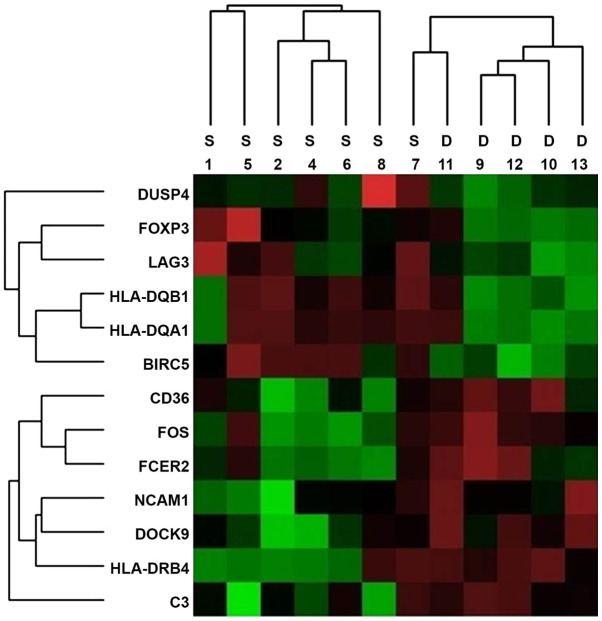
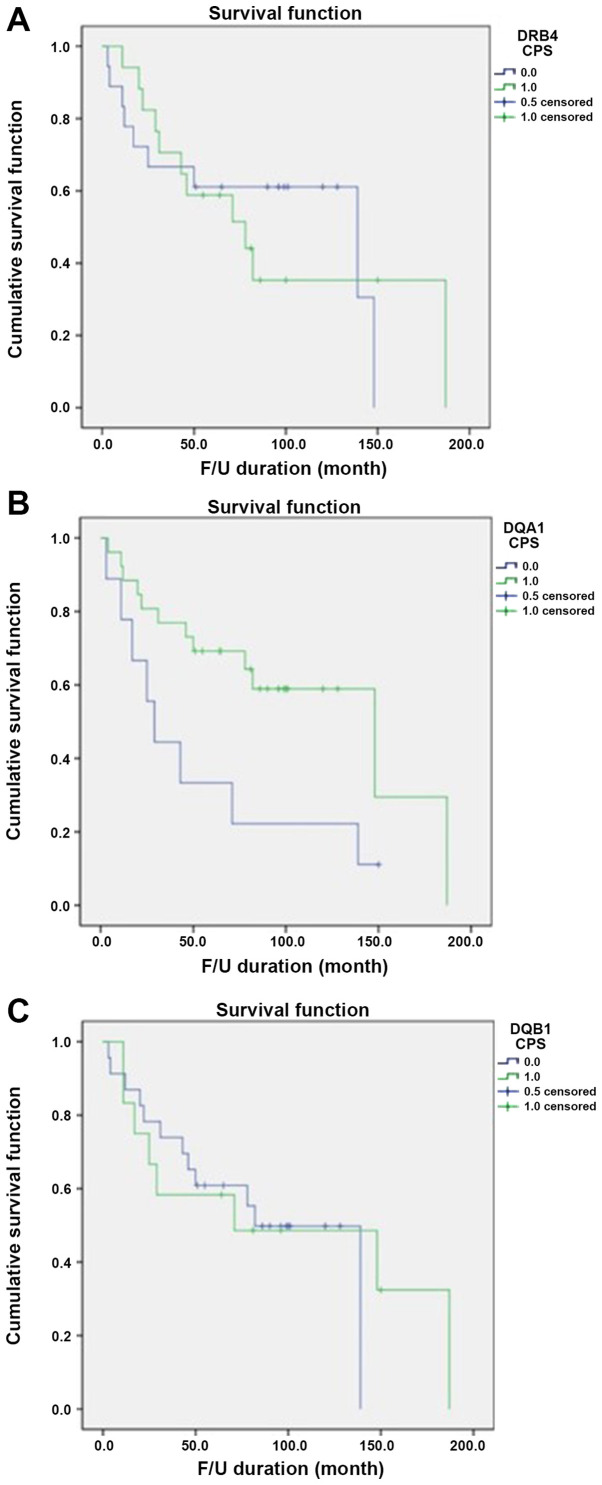
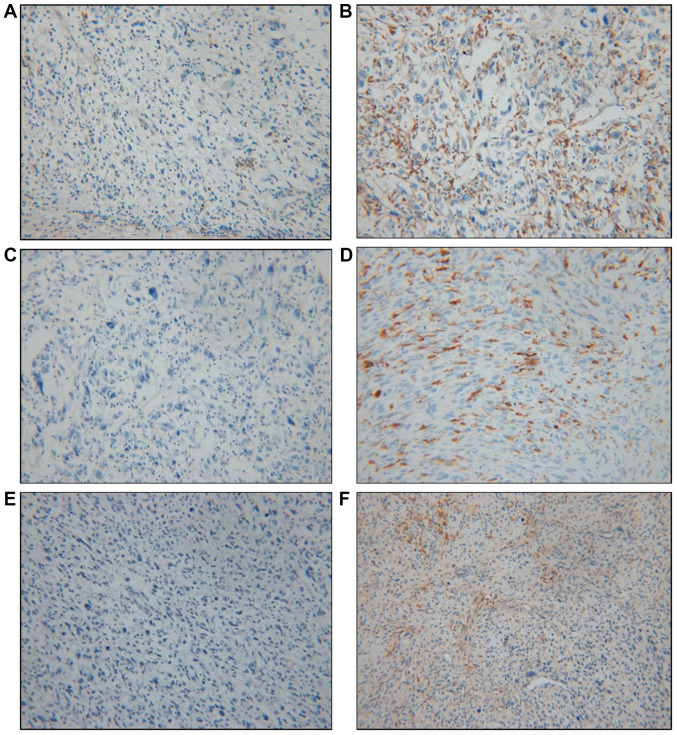
High-grade soft-tissue sarcoma (STS) is a highly malignant neoplasm with a poor overall prognosis. Numerous prognostic factors determine tumor progression and patient outcomes. Various immune-associated cells identified in the tumor microenvironment have important roles in various tumor types. The present study was performed to evaluate the expression of immune-associated genes and to elucidate the association between these genes and the prognosis in high-grade STS. A total of 12 formalin-fixed, paraffin-embedded tissue samples of high-grade STS were subjected to gene expression analysis using the NanoString nCounter System and another 35 samples were used for immunohistochemistry. For comparative analysis, the patients were divided into two groups according to overall survival (OS). The expression levels of 770 genes were first analyzed using the nCounter PanCancer Immune Profiling Panel. Immunohistochemistry was then performed for the most significantly altered genes. Subsequently, the association between gene expression and prognosis of high-grade STS was evaluated. Of the 770 immune-associated genes analyzed, several genes were identified as being differentially expressed between the two groups. Based on gene expression levels and fold change, 13 representative genes were identified; 7 of the 13 candidate genes (C3, CD36, DOCK9, FCER2, FOS, HLA-DRB4 and NCAM1) were significantly overexpressed in the poor prognosis group, while the other 6 immune-associated genes (BIRC5, DUSP4, FOXP3, HLA-DQA1, HLA-DQB1 and LAG3) were increased in the good prognosis group. By immunohistochemistry, the expression of the 13 immune-associated genes was confirmed to be significantly different between the two groups. Expression of HLA-DQA1, HLA-DQB1 and HLA-DRB4 was observed in 74.3, 34.3 and 48.6% of tumors, respectively. HLA-DQA1 and HLA-DQB1 were significantly decreased, whereas HLA-DRB4 was significantly increased in the poor prognosis group. Of note, expression of HLA-DQA1 was associated with a significantly longer OS (P=0.028). In conclusion, HLA-DQA1 expression was significantly associated with long-term survival and may therefore be an immune biomarker for good prognosis in high-grade STS.
高级别软组织肉瘤(STS)是一种高度恶性的肿瘤,总体预后较差。众多预后因素决定肿瘤进展和患者结局。在肿瘤微环境中鉴定出的各种免疫相关细胞在多种肿瘤类型中发挥重要作用。本研究旨在评估免疫相关基因的表达,并阐明这些基因与高级别STS预后之间的关联。总共12份高级别STS的福尔马林固定、石蜡包埋组织样本使用NanoString nCounter系统进行基因表达分析,另外35份样本用于免疫组织化学。为进行比较分析,根据总生存期(OS)将患者分为两组。首先使用nCounter泛癌免疫分析面板分析770个基因的表达水平。然后对变化最显著的基因进行免疫组织化学检测。随后,评估基因表达与高级别STS预后之间的关联。在分析的770个免疫相关基因中,有几个基因在两组之间存在差异表达。根据基因表达水平和倍数变化,鉴定出13个代表性基因;13个候选基因中的7个(C3、CD36、DOCK9、FCER2、FOS、HLA-DRB4和NCAM1)在预后较差组中显著过表达,而其他6个免疫相关基因(BIRC5、DUSP4、FOXP3、HLA-DQA1、HLA-DQB1和LAG3)在预后良好组中表达增加。通过免疫组织化学,证实两组之间13个免疫相关基因的表达存在显著差异。分别在74.3%、34.3%和48.6%的肿瘤中观察到HLA-DQA1、HLA-DQB1和HLA-DRB4的表达。在预后较差组中,HLA-DQA1和HLA-DQB1显著降低,而HLA-DRB4显著增加。值得注意的是,HLA-DQA1的表达与显著更长的OS相关(P=0.028)。总之,HLA-DQA1表达与长期生存显著相关,因此可能是高级别STS预后良好的免疫生物标志物。